Africa-Press – Uganda. More than 23,000 doses of Covid-19 vaccines are set to expire in Adjumani District early next month over hesitancy by refugees in the various settlements to get vaccinated against the virus.
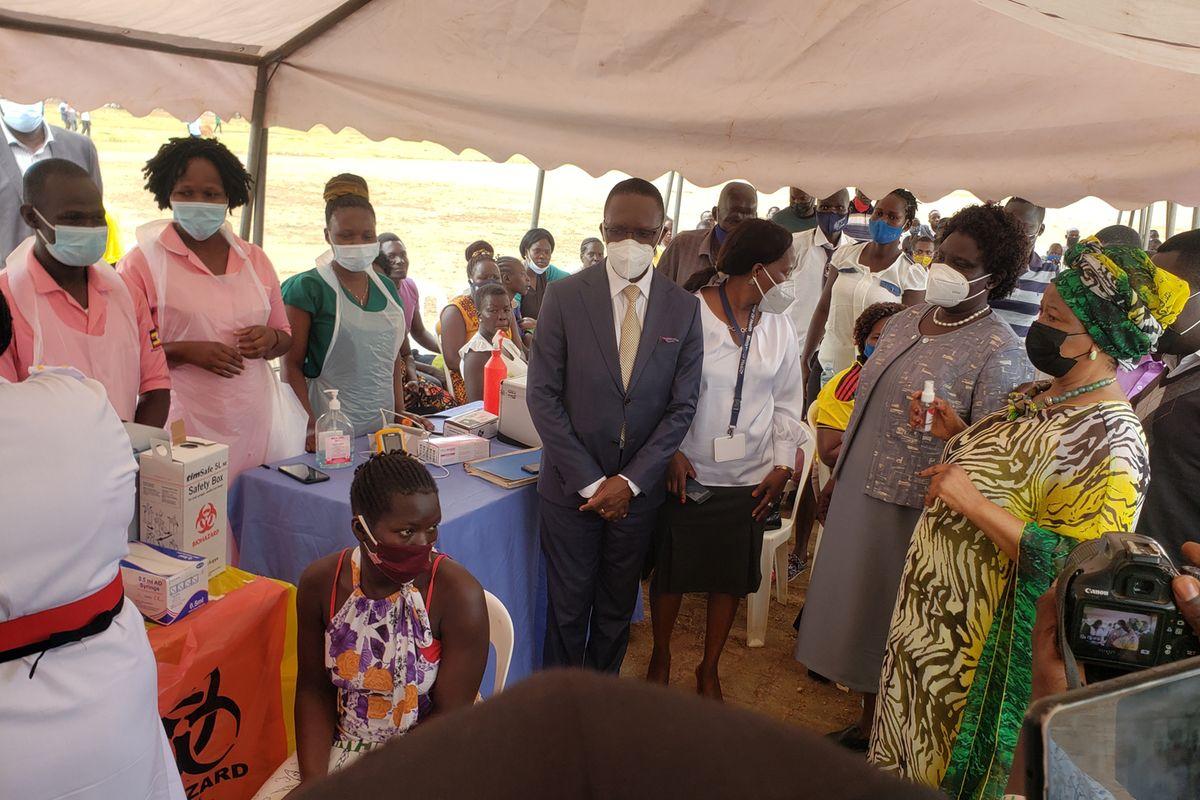
In December 2021, the district received a total of 96,000 (Johnson & Johnson) doses of Covid-19 vaccines to be shared among the refugees and host communities in the district. Last month, it received up to 9,240 doses of Moderna and 1,330 of Sinova.
However, information Daily Monitor has accessed from the district health department indicates that the vaccine uptake among the refugees has remained as low as 19 percent.
On Tuesday, Dr Dominic Drametu, the district health officer, said the refugees, for several reasons, are hesitant to receive the jabs and that the vaccines could expire next month as a result.
Before the second phase of the vaccination, 84,644 of the targeted 117,750 citizens were vaccinated (72 percent) while only 16,562 (19 percent) of the targeted 87,377 refugees had been vaccinated.
Whereas the overall average vaccine coverage in the district stands at 49.3 percent (both refugees and nationals), Dr Drametu said a combined 2,000 doses of Sinovac and Moderna as well as another 21,000 doses of Johnson and Johnson are set to expire early next month.
“On Thursday next week, we will have a special taskforce meeting together with OPM and UNHCR and partners to discuss remedies of how to improve uptake of the vaccines among refugees and ensure the vaccines don’t expire,” he added.
“We really need to be tough on the refugees, if they need safety, then they must embrace the vaccination exercise,” Dr Drametu added.
Mr Moses Nyang, the Refugee Welfare Council III chairperson for Adjumani District, explained that the refugees were not willing to embrace the vaccines due to several myths and misinformation being spread among them.
“As leaders from all the 19 settlements, we have learnt that some religious leaders have been discouraging the refugees from accepting the vaccines and the leaders have been poor in mobilising the refugees,” Mr Nyang said.
“The approach that has been used where vaccines were taken to food distribution centres was poor because refugees have a negative mindset about the food centre,” Mr Nyang added.
Mr James Gai Garang, a refugee from Ayilo settlement, said: “Many refugees think and believe that when one gets vaccinated, they (men) will become impotent and that misinformation has scared away many refugees.”
Mr Ben Anyama, the district chairperson, appealed to OPM and UNHCR to increase surveillance and scale up vaccination among the refugee population.
Mr Robert Andeyo, the settlement commandant for Pagirinya settlement, told this newspaper that the biggest challenge being faced by the vaccination team is the myth and cultural beliefs of the refugee communities.
“…we are really in running battles with them because they have a strong attachment to their culture, they always attach these vaccinations to their reproductive systems,” Mr Andeyo said.
For More News And Analysis About Uganda Follow Africa-Press