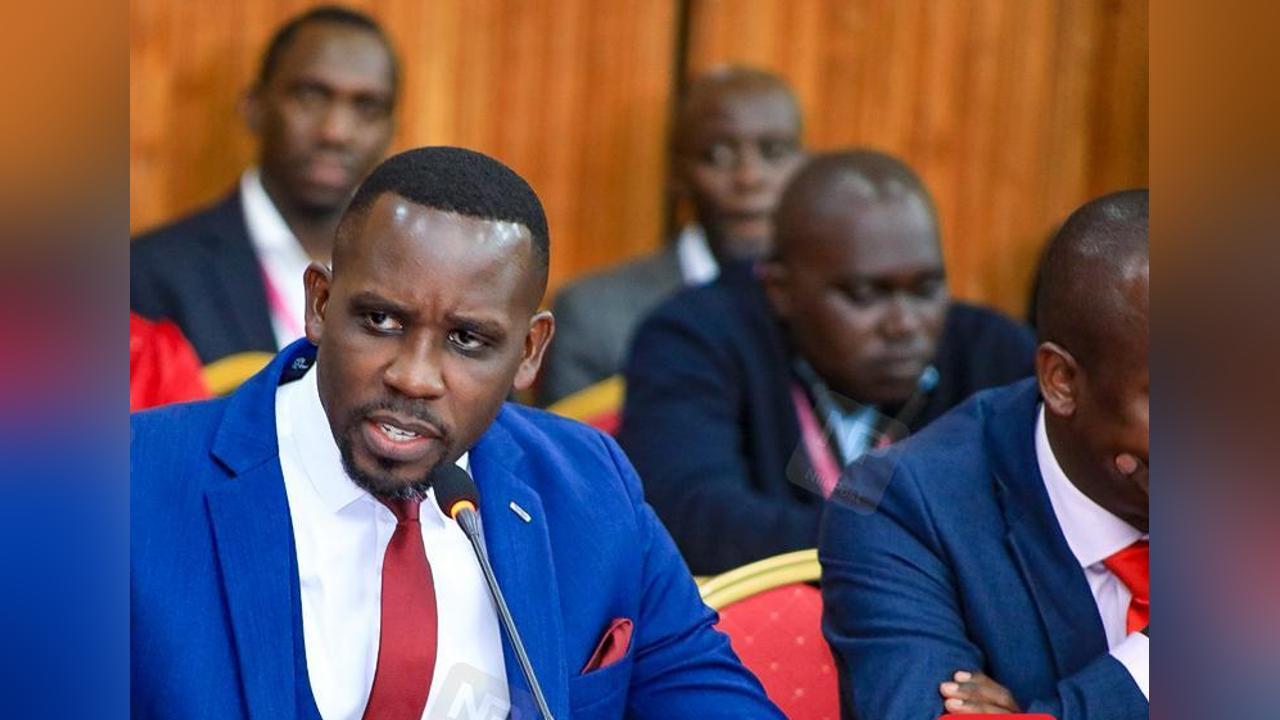
Africa-Press – Uganda. The Leader of Opposition in Parliament, Joel Ssenyonyi, has urged lawmakers to reject the proposed Protection of National Sovereignty Bill, describing it as unconstitutional and harmful to citizens’ rights.
Ssenyonyi made the submission before a joint committee of Parliament comprising defence and legal affairs, chaired by Wilson Kajwengye and Baka Mugabi.
Appearing alongside shadow cabinet members including Muwada Nkunyingi, Asinansi Nyakato, and Charles Tebandeke, Ssenyonyi argued that the bill should be rejected in its entirety, citing what he called “fatal constitutional defects” and infringement on fundamental rights.
He told the committee that the proposed law could undermine patriotism and unfairly target Ugandans, particularly those in the diaspora.
“There are numerous Ugandans who live in the diaspora and they remit over $2.5 billion annually to our country, yet this law risks deeming them foreigners. When did government cease to care about its citizens to the extent of regarding them as non-citizens?” Ssenyonyi said.
He further argued that many Ugandans have been forced into exile due to political persecution but have not renounced their citizenship.
“Consider political leaders born in Uganda, registered voters and duly elected leaders who are forced into exile. Under this law, once they cross the border to save their lives, they risk being classified as foreigners,” he said.
Ssenyonyi also warned that the bill could weaken multiparty democracy by restricting political party financing.
“By placing a cap on ‘foreign’ money, which includes diaspora remittances, the Minister of Internal Affairs is given excessive control over opposition party funding. This creates room for abuse if approval is withheld,” he said.
He further claimed that aspects of the bill mirror restrictive foreign legislation, citing Russia’s “foreign agent” framework, which he said has been used to suppress civil society and opposition voices.
According to Ssenyonyi, the proposed law could also negatively affect non-governmental organisations, humanitarian work, and the broader economy by discouraging foreign investment and increasing unemployment.
The joint committee is expected to continue receiving submissions from opposition parties, civil society organisations, and other stakeholders before compiling its report on the bill.
For More News And Analysis About Uganda Follow Africa-Press