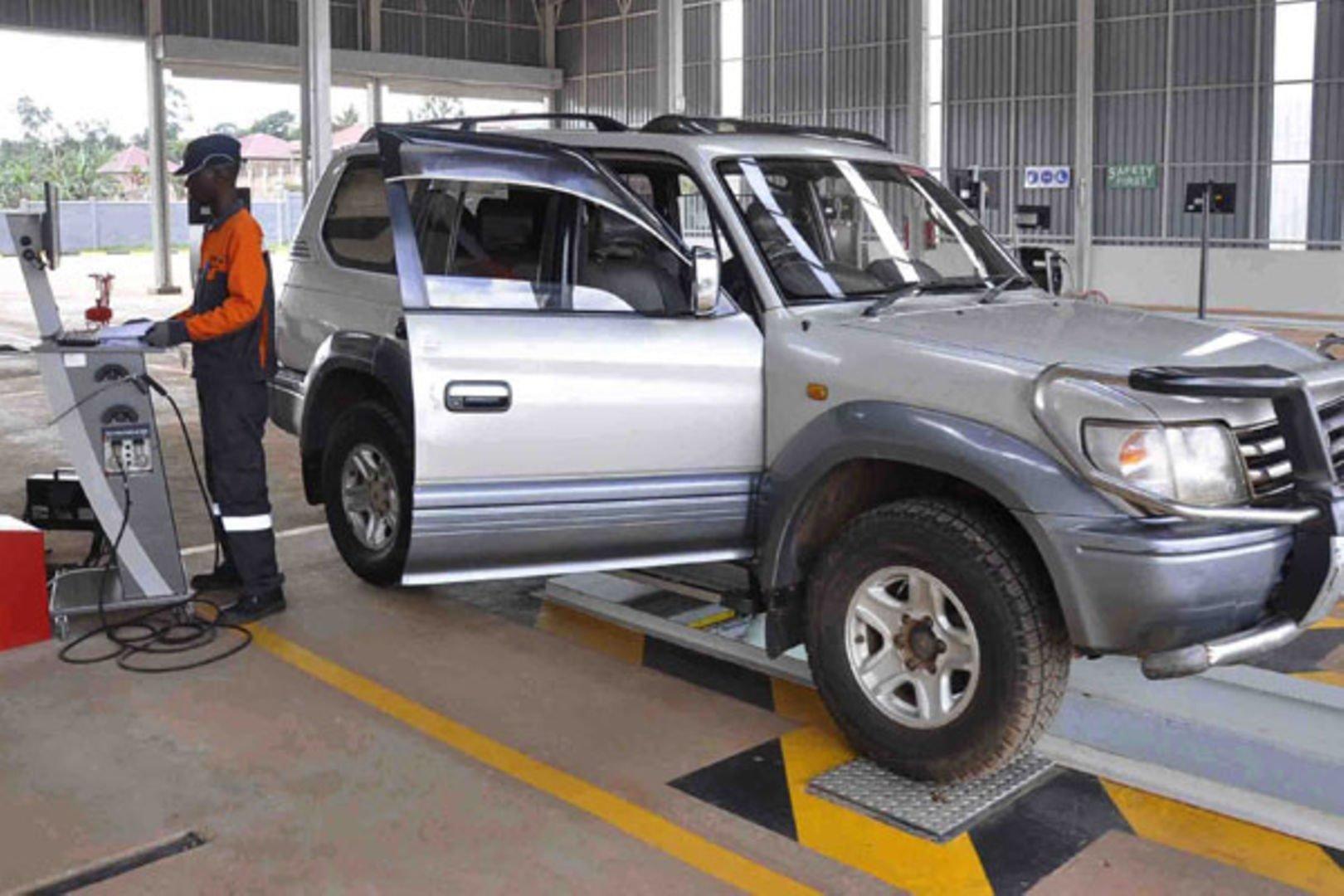
Africa-Press – Uganda. The government yesterday formally inked a multi-billion settlement agreement with Swiss firm Société Générale de Surveillance (SGS), bringing an end to a contentious inspection deal plagued by conflicts and corruption. The resolution marks the conclusion of a more than decade-long chapter that has incurred significant financial losses for taxpayers.
Taxpayer funds were already lost in structuring the moribund deal, navigating conflicts, and investigating corruption allegations, including by Parliament, the Inspectorate of Government, and the Public Procurement and Disposal of Public Assets Authority (PPDA).
Press has established that no measures have been taken against individuals accused and proven culpable in several investigations, despite the government’s agreement to settle with SGS.
The taxpayer will also pay Shs109b to the aggrieved SGS after the government cancelled their contract. Already, the government has secured authorisation from Parliament to borrow Shs33b to fund part of the settlement.
The part payment cash is contained in the multi-trillion shilling supplementary budget that the House passed last week.
The compensation, according to the Budget Committee report on the Supplementary request, is for “the initial investment in mandatory motor vehicle inspection following the Cabinet decision for [the] government to take over the provision of the service.”
Attorney General Kiryowa Kiwanuka cited a conflict of interest when press on December 8 reached out to him about the deal.
“You have to call the Deputy Attorney General. I don’t handle that matter because I used to represent SGS when I was in private practice,” he said.
In October, Deputy Attorney General, Jackson Kafuuzi told legislators that Uganda would pay not less than Shs200b to compensate SGS.
“The Shs200b statement was a slip of the tongue,” he said in an interview on December 12, adding, “The actual amount is Shs109b. The government will take over and fully own the assets of SGS and the same shall be used for motor vehicle inspection. We’ve negotiated and agreed to pay Shs109b. SGS will send its lawyers into the country and on December 15, we will sign a settlement agreement.”
The inquiry
In June 2017, then Speaker of Parliament Rebecca Kadaga instructed the Committee on Physical Infrastructure to investigate concerns regarding the mandatory vehicle inspection and the contract awarded to SGS. Questions arose about SGS meeting the deadline without fulfilling its contractual obligations.
The committee’s inquiry resulted in conflicting reports, with the majority advising against contract cancellation, emphasising potential financial repercussions for Ugandan taxpayers.
The contract specified that termination by the government or the Works ministry would incur a payment to SGS, either 75 percent of the total investment value or 100 percent of the provider’s expected income, whichever is greater. The majority report proposed a three-month suspension for contract review and renegotiation, while the minority report called for immediate termination, citing deficiencies in the vehicle inspection system.
During the debate, most MPs favoured cancelling the contract, but then Attorney General William Byaruhanga cautioned against hasty decisions. Despite the warning, the Cabinet signed the mandatory vehicle inspection contract in March, triggering a legal dispute with SGS.
The report highlighted price disparities proposed by SGS, especially for motorcycles, viewed as an attempt to exploit the public. Parliament uncovered collusion between the Works ministry officials and SGS, violating procurement regulations. The Works ministry and SGS drew up the contract without oversight from the Attorney General Chambers, raising concerns.
Parliament also criticised contract provisions for automatic renewal and a monopoly clause favouring SGS, restricting competition from local garages capable of performing vehicle inspections. The report noted outstanding concession fees and unpaid VAT by SGS during the investigation.
No action
On July 1, 2020, Parliament tasked the House Committee on Physical Infrastructure to examine the status of implementation of the recommendations in the committee report on the inquiry into the mandatory inspection of motor vehicles in Uganda.
Parliament’s majority report had noted severe lapses in the corporate governance at the Works ministry characterised by “ethical breaches with impunity, inept record keeping especially about decision making and weak supervisory controls.”
The report cited complaints of insubordination by some errant officials whose unabated unethical conduct remains unpunished such as Mr Ronald Amanyire, who travelled to South Africa at the invitation of Workshop Electronics Limited, one of the suppliers of mobile vehicle testing equipment, without the approval of the Accounting Officer.
The committee learned that the IGG investigated the conduct of Mr Amanyire in October 2018 and found him culpable for making a secret trip to South Africa at the invitation of one of the SGS suppliers (Workshop Electronics Ltd) without permission from the Permanent Secretary of the Works Ministry contrary to the public service standing orders.
The IGG report further noted that Mr Amanyire’s trip to South Africa brought him in conflict of interest since his relationship with Workshop Electronics Ltd was due to his involvement in the SGS contract as a member of the contract management team.
Works PS Bageya Waiswa informed the committee that the ministry had initiated disciplinary action against Mr Amanyire before the ministry’s Rewards and Sanctions Committee based on the IGG report and other acts of gross misconduct by the officer.
Cause for concern
The committee was further informed that the ministry was awaiting the solicitor general’s guidance and clearance of the administrative charges against Mr Amanyire to be able to proceed with disciplinary action against him.
While the committee report on the inquiry into mandatory inspection of motor vehicles in Uganda, which recommended disciplinary action against Mr Amanyire, was presented to Parliament on February 13, 2018, and was followed by the IGG report of October 10, 2018, which confirmed Amanyire’s unethical conduct in the procurement of SGS, disciplinary action against Mr Amanyire was initiated in June, 2020, over two years later. This the legislators noted was concerning.
“This apparent laxity by management of MoWT [Ministry of Works and Transport] to discipline Mr Amanyire has propagated a culture of impunity at the ministry thereby creating room for future re-occurrence of similar unethical practices. Indeed, the Committee learned that Mr Amanyire continued to engage in acts of gross insubordination as elaborated by his immediate supervisor, the commissioner of transport regulation and safety in an internal memo to the director of transport dated June 17, 2020,” legislators noted.
Tender Process
In 2008, it was revealed that the initial tendering process for mandatory motor vehicle inspection services was flawed due to the use of the wrong procurement method—prequalification of providers instead of open/restricted international bidding. The process was subsequently terminated but the House committee criticised the head of the contracts committee and Commissioner of Quality Management Sebuga Kimeze, along with committee members Karuma Kagyina, Justine Ongom, Patience Kabije, and Robert Rwanga for conducting a flawed tendering process for about a year.
The committee later learned that the bidding document eventually used for procurement was approved by PPDA in a April 5, 2010 letter. Parliament had also wanted the Criminal Investigations Directorate (CID) of the police to carry out independent investigations on the alleged unethical practices in the procurement process in which SGS emerged winner. Sources told that this recommendation was never acted on.
Source: Monitor
For More News And Analysis About Uganda Follow Africa-Press