Africa-Press – Uganda. Opposition political parties and leaders have persistently advocated for political reforms and a change in leadership using parliamentary and legal channels.
They have leveled allegations against President Museveni, accusing him of election irregularities, human rights violations, and corruption.
However, despite these continuous efforts, Museveni and his ruling National Resistance Movement (NRM) maintain a firm hold on power in Uganda.
The President has been in office since 1986 and has secured multiple re-elections, prompting allegations of election manipulation and intimidation by the opposition.
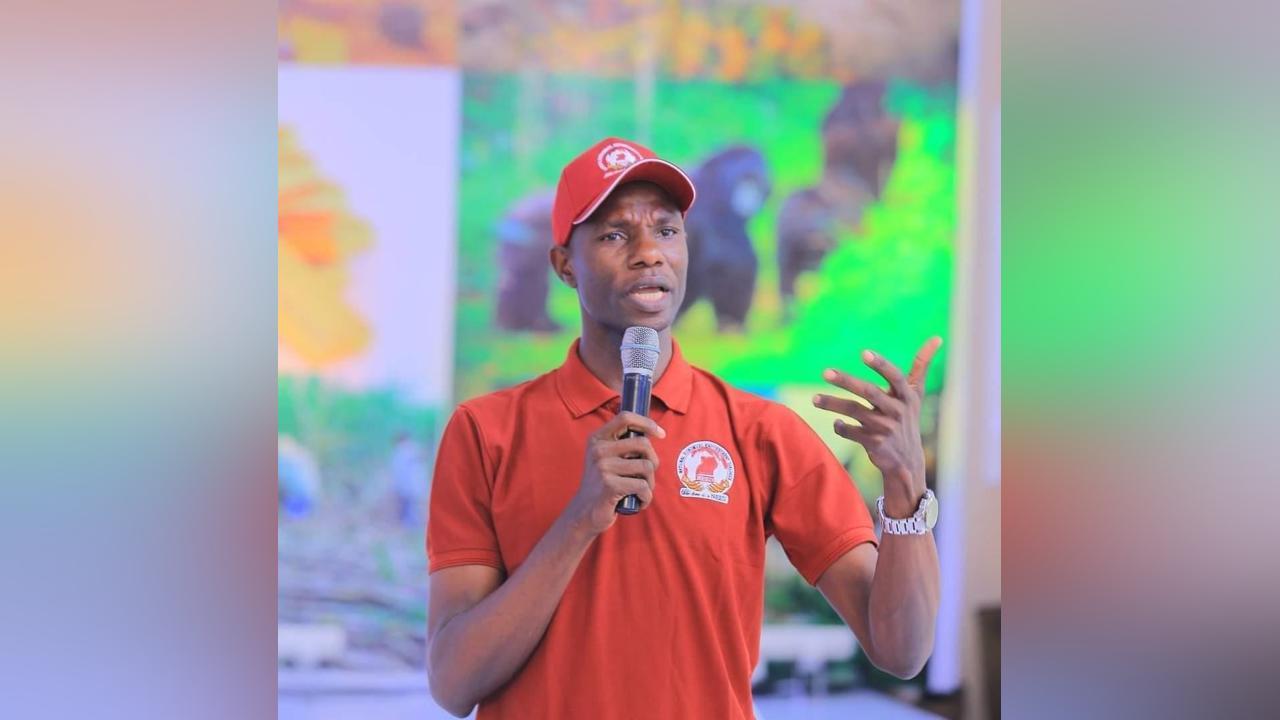
In an interview with The Nile Post, Asuman Odaka, the Secretary General of the National Economic Empowerment Dialogue (NEED), insisted that all indications suggest President Museveni possible exit from power before 2026.
T
Excerpts below
*******************************
First things first: Who is Asuman Odaka?
Asuman Odaka is a village boy from Tororo. He was born on November 22 1982. (My) father is Ochieng Muhammad Asuman and my mother is Biryeri Fatumah Rajab. Place of Origin is Abongit village, Parish Gwaragwar, Sub county is Kisoko in West Budama North. The county is West Budama in Tororo District:
I come from a family of seven, five boys and two girls. I happened to be the second born.
I went to Kisoko Boys’ Primary School in Tororo, O’level I went to Manjasi High School and then A’Level Jinja College School. From there I went to Makerere University to do economics before I crossed over to law.
(I) lost my father when I was in primary 6. The death of the father shocked (my) mother who was left permanently sick and helpless to this day.
This made me the automatic, available head of family. To which I had to juggle between looking after my sick mother, studying, and looking after my sibling to whom I had to offer parenthood.
What inspired you to enter politics?
Parenthood, at less than 14 years, has partly shaped me into leadership and politics.
The issue that shaped my consciousness to politics is the state of health care services I confronted while nursing my father and what I have gone through with my mother.
I have encountered the worst of our healthcare sector, which increasingly realised were bad decisions made by incompetent leaders. The only way such would be changed to help the lowest and poorest of our communities is when we, people who have gone through the worst, are in charge.
How is the National Economic Empowerment Dialogue (NEED) preparing for the 2026 general elections?
We are organising. You know we are a new party and we are building grass root structures. We don’t want to have any position in this country not contested for. As NEED we don’t want to have scenarios where you go for a contest and there are some places where National Resistance Movement (NRM) goes unopposed.
What is the response of people across the country to your message about economic empowerment?
We have not yet got disappointed. We are getting encouragement from the people. We have gone past the stage of listening to us. The people are at the stage of understanding us. Other areas across the country are already embracing the party.
What could be the one thing that could unite Ugandans politically and socially and help remove barriers in economic empowerment?
I think the issue of the saint concept of leadership. The saint concept of leadership will sprout its influence towards economics. It can make economic opportunities available to all. It can make politics something that is participatory. What Ugandans want is equal opportunity. Once we give equal opportunity, Ugandans will unite. The issues of tribalism, sectarianism are only in the political sphere.
Your party president, Joseph Kabuleta, and NEED have been accused of disseminating sectarian messages. Are you concerned that the way your message is delivered could affect your credibility?
I want to tell you that it is from the perspective of the regime. The person who is accusing us of a sectarianism message is the regime. When you have power and use it badly like Mr. Museveni and his regime, they can (accuse you of anything). What NEED and the party president has been advocating for is equal opportunities for all Ugandans. When you speak against evil, (the regime doesn’t want to hear that). As NEED we know that Uganda is for us all, we are multi-religious, we are multi-ethnic.
What is your perspective on the current political and social situation in Uganda and how it is affecting citizens?
I think we are in the middle of what everybody would be calling transition. Because the conversation as it is now in the country is about moving from one era to another era. If you look at the opposition this side seems not to be in the middle of it. The others in the government seem to be doing it without wanting the involvement of others. When a leader gets to 80 years, there must be a conversation about who is coming next. The individual political parties would now be having individual proposals of transition agenda. A country would also be having a transition agenda being discussed at national level. And the party in power would also be doing the same and then we have a meeting point because the country is for all of us.
The meeting point would help us on what to agree on and how to move forward. If we don’t do that then it will lead us to crashing. When you look at the history of this country, saint conversation would be taking place.
How do you interpret Uganda’s 61st independence anniversary and what significance does it hold for the country?
Anniversaries are normally supposed to be on the point of reflection. How have you moved from the first day to where you are? That is the essence of the anniversaries. Political independence anniversary for Uganda would not be as it is today. This entity called Uganda was a British creation without our own consent as Ugandans. 61 years would now be a reflection. What is the conversation about the continuity of Uganda as a country? We are celebrating 61 years without talking about the foundation issues.
These days I hear people talking about identity politics versus interest politics. We need to rethink the current governance system. I am calling for the provincial governance system because the other alternative of unity has failed. If the unitary governance system has failed, let’s try another one. These things called corruption, tribalism, and sectarianism cannot be so prevalent under another alternative system of governance.
What is your opinion on the recent statement made by the NRM Chairperson and Electoral Commission member, Dr Tanga Odoi, claiming that Uganda would be better off if the current government had taken power in 1962?
I think he was telling a lie because from 1962 to 1982, you would see that there were national assets that were created but when Museveni came into power, they were destroyed. When Museveni came we had 14 hospitals that were serving those regional (areas). Those hospitals at the moment some of them have been destroyed.
We had technical institutions of learning which some of them have been turned into universities which is unproductive. Institutions such as Busitema. When Museveni came he found the country with one referral hospital and that is Mulago.
Mulago has been turned into a semi private hospital. So, the health care system has actually worsened. When he came into power he found secondary schools which were offering almost free education. All of them are now more expensive than the private ones.
When Museveni came into power he found this country with a robust banking system including indigenous banks. Today Uganda is operating without a single indigenous banking system. The Museveni regime has reversed the trajectory of development of this country for 37 years.
Despite the opposition’s attempts to dislodge President Museveni from power, it appears that none have been successful. In your opinion, what should be done?
For me I don’t think that there should be a lot of effort in removing Museveni (from power). Of course Museveni is a big factor in this. Even if you remove Museveni today and leave the system he has created here, I am telling you whatever issues we are content with will be partial. I think what should be done today we need to recognize that all of us have a role to play. I have called for opposition unity in this country.
We need to have a candid conversation. We all seem to be competing amongst ourselves. I think Museveni is history because at 80 years old I can not begin making Museveni a big factor. The other day I saw him moving using a walking stick and you know what that means.
All signs show that Museveni is going. If you look at the rate at which he is handling the national issues, all signs show that he is tired. For me who talks to the people in the corridors of power (there is information that) Museveni has accepted and he sees the possibility of not (contesting) in (2026).
Do you believe it is possible for Gen Muhoozi Kainerugaba to become the president of Uganda?
First of all, I think it wouldn’t be a very big curse for him to become president of Uganda. I would have no problem with Muhoozi becoming the president of this country as long as he follows the law. My problem with him is that Museveni is bending for his rules, Muhoozi is breaking the laws. The problem is the legality of his process. He may have all the rights but the problem is that (he is not following the law). This country is not a monarchy.
Robert Kyagulanyi and NUP leaders believe that discrediting President Museveni abroad can help remove him from power. What is your opinion about this strategy?
There is no country that survives in isolation. If the (foreign) influence sustains the stay of this regime, then Kyagulanyi has seen it well. If you look at Museveni’s governance style it rests on four pillars including the military, economy, politics and the foreign front. Now anybody who wants to confront Museveni understands where to touch. Kyagulanyi seems to have mastered the foreign pillar of Museveni.
Some politicians claim that President Museveni’s and his son Gen Muhoozi’s actions could ultimately lead Uganda towards political anarchy. What is your viewpoint on this claim?
I see a possibility of that. You see this continuous battering of the people on the streets, some are brothers and sisters of the same military. The pain the civilian is facing is the same pain the military are facing. The impunity in which Gen Muhoozi is acting is hurting many men in uniform. I know many who can’t speak out because they want to play by the rules. It will not be a long time before they say. If Muhoozi continues with impunity, I am telling you there may be some men in uniform who may say let’s confront this monster. And we could end up there.
Given the current political situation, do you think it is still possible for the opposition to unite in Uganda?
There are still elements within the opposition that are clear minded with an agenda and they can unite to confront the monster.
Those in bed with Museveni is actually a plan that Museveni wants to throw those grouping in disarray so that there cannot be a proper conversation and resolutions to confront him. He can disorganize political parties but the opposition is a feeling, opposition is dissent. The ordinary people understand the situation and what to do more than us. There is time for everything.The time is coming.
What is your assessment of the current Parliament in Uganda, considering opinions that suggest it is heavily influenced by President Museveni?
This Parliament is so far one of the most disappointing Parliament we have had. It is the Parliament we thought was full of young people that understands the dynamic of the young population unfortunately it is a parliament that has just become what they call a rubber stamp. The Parliament that is just stamping everything, the Parliament that passes laws and you (wonder).
This Parliament is a disappointment. It is an institution of Mr. Museveni to aid his continuity and impunity. It is the Parliament that just disappoints Ugandans.
Source: Nile Post
For More News And Analysis About Uganda Follow Africa-Press