Africa-Press – Uganda. April 25, 1962, stands as a defining moment in Uganda’s political history, when the country held its last legislative elections before the end of British colonial rule, effectively determining the leadership that would usher the nation into independence.
The elections, conducted months ahead of Uganda’s independence on October 9, 1962, were pivotal in shaping the country’s first post-colonial government and political direction.
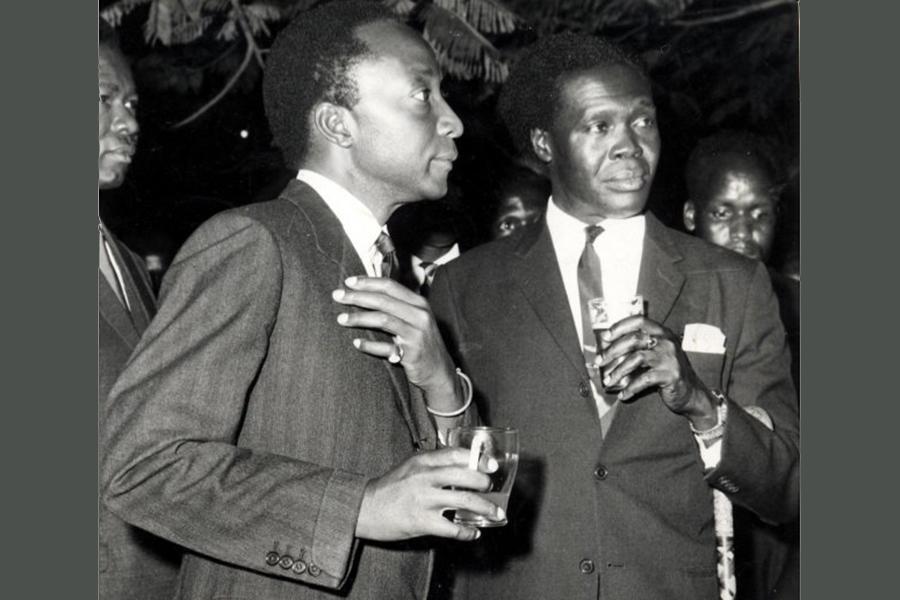
At the centre of the contest were two dominant political forces: the Uganda People’s Congress (UPC), led by Milton Obote, and the Democratic Party (DP), headed by the incumbent Prime Minister Benedicto Kiwanuka.
The campaign reflected deep political, regional, and religious divisions. The UPC positioned itself as a nationalist movement advocating for unity across Uganda’s diverse regions, drawing significant support from the north and parts of the west.
In contrast, the DP enjoyed strong backing in the central and southern regions and was widely associated with Catholic political networks.
A decisive factor in the election outcome was the role of Buganda, then the most politically influential kingdom in the protectorate. Relations between Buganda, the colonial administration, and the DP had deteriorated in the lead-up to the vote, creating an opening for a new political alignment.
This led to the emergence of Kabaka Yekka (KY), a monarchist movement that sought to protect Buganda’s autonomy and the authority of the Kabaka. In a strategic move, UPC entered into an alliance with KY to consolidate support and counter the DP’s influence.
Under the constitutional arrangement at the time, Buganda’s representation in the National Assembly was unique. Instead of direct elections, its 21 representatives were selected by the Lukiiko, Buganda’s traditional assembly. The Lukiiko overwhelmingly endorsed KY loyalists, effectively delivering all 21 seats to the UPC-KY alliance.
Outside Buganda, where constituencies were directly contested, UPC secured 37 seats while DP won 24. When combined with KY’s 21 seats, the alliance commanded a parliamentary majority of 58 seats, giving it control of the National Assembly.
The outcome marked a significant political shift. Milton Obote replaced Benedicto Kiwanuka as Prime Minister, positioning him to lead the country at independence and oversee the transition from colonial administration to self-rule.
The 1962 elections were not only a contest for power but also a reflection of the complexities of Uganda’s emerging national identity—balancing traditional institutions like Buganda’s monarchy with modern political parties and state structures.
In the months that followed, the UPC-KY alliance would form the government that formally received the instruments of power from Britain, ending decades of colonial rule.
The vote also marked the birth of Uganda’s first independent Parliament, setting precedents for the country’s governance, even as the alliances forged during this period would later face strain in the years after independence.
More than six decades later, the events of April 25, 1962 remain central to understanding Uganda’s political foundations and the dynamics that have continued to shape its governance.
For More News And Analysis About Uganda Follow Africa-Press