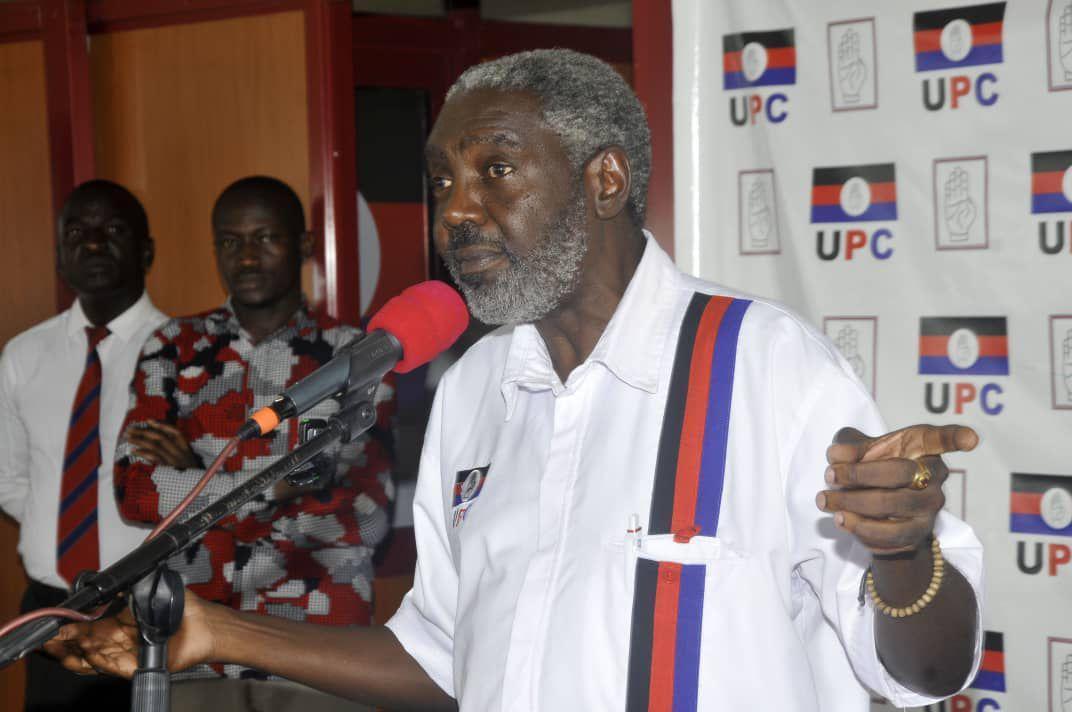
Africa-Press – Uganda. Jimmy Akena, the President of the Uganda People’s Congress (UPC), has criticised ongoing property demolitions in parts of the country, accusing authorities of enforcing regulations harshly and without adequate communication to affected citizens.
Speaking at the party’s headquarters in Kampala, Akena said he encountered security personnel escorting heavy machinery demolishing structures along a roadside, an incident that delayed his arrival and raised concerns about how evictions are being handled.
“I found a wheel loader escorted by military and police destroying people’s property,” Akena said, questioning whether clear notices or deadlines had been issued to those affected.
He acknowledged that some developments may be in the wrong places but argued that enforcement should be humane and orderly. According to him, many of those targeted are ordinary Ugandans whose livelihoods depend on small roadside businesses.
“When somebody is doing the right thing in the wrong place, how do you remove them? You do not destroy their lives in the process,” he said.
Akena warned that abrupt demolitions risk worsening economic hardship, noting that many families rely on such businesses to pay school fees and service loans.
“Many of these people are already struggling with loans and high interest rates. Destroying their property without proper engagement shows a lack of concern,” he added.
The UPC leader called for better planning, communication, and consultation before enforcement actions are carried out, urging authorities to adopt approaches that balance order with social protection.
He also renewed calls for reforms to address high lending rates, arguing that the cost of credit remains a major burden on Ugandans trying to sustain small enterprises.
Beyond the demolitions, Akena criticised what he described as broader governance and economic challenges, including rising living costs and limited support for citizens.
He said political leaders must prioritise the welfare of ordinary Ugandans rather than policies that undermine livelihoods.
“We must speak for the people of Uganda. If they are not benefiting, then who are we working for?” he said.
Akena further questioned public spending and electoral practices, raising concerns about accountability and the use of taxpayer resources.
He urged leaders to promote transparency, fairness, and inclusive decision-making, warning that failure to do so risks deepening public frustration.
On governance, Akena said Uganda needs a Parliament that represents all citizens and operates independently in the public interest.
He emphasised the need for leadership that listens to citizens’ concerns and addresses economic challenges affecting households.
Despite the criticism, Akena said his party remains committed to advocating for policies that protect livelihoods, improve economic conditions, and ensure fair treatment of citizens.
“We must find ways of doing things that work for the people of Uganda,” he said.
For More News And Analysis About Uganda Follow Africa-Press