Africa-Press – Angola. The identification of the dead and missing, within the scope of this International Red Cross project, is done “through testimonies, “counting the people who traveled on each vessel on departure and arrival and those who died” during the trip, as well as other tools, which include media news and images
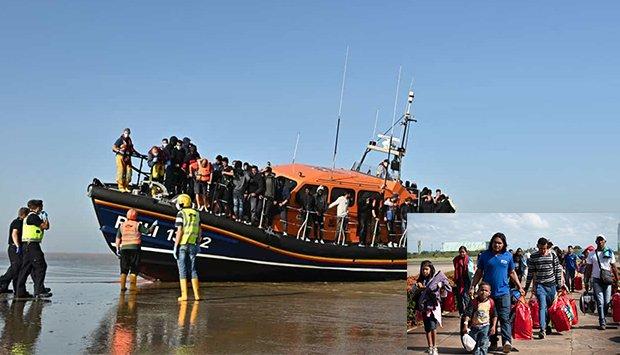
The Red Cross has identified 101 people dead or missing at sea in the last year while trying to reach the Canary Islands, Spain, as part of a pilot project aimed at responding to requests from migrant families whose whereabouts are unknown.
The project “Missing people on a migratory route” arrived in the Canary Islands (in the Atlantic) in September 2021, after an experience in Italy, and has so far made it possible to identify 101 people sought by families, who were thus able to grieve, revealed Cruz Spanish Red, in a statement released yesterday, on the eve of the International Day of Victims of Enforced Disappearance, instituted by the United Nations.
This year, 45 cases of boat arrivals in the Canary Islands were investigated, which led to the conclusion that 308 people who belonged to these groups were missing or dead, and 101 requests from families looking for migrants were resolved.
The “search for dead or missing persons on a migratory route” occurs in three contexts, according to the Red Cross: “a vessel left, but did not reach the destination coast; the vessel arrived with dead people; people died on the boat, but the bodies disappeared at sea”.
The identification of dead and missing persons, within the scope of this International Red Cross project, is carried out “through testimonies”, by “counting the number of people who traveled on each vessel on departure and arrival and of those who died” during the trip, as well as from other tools, which include news from the media and images recorded by other sources, according to the same statement released today.
The Red Cross “does not certify death, but builds the account of what probably happened, based on confirmed facts and the possibilities of survival”, explains the statement.
“About 19,000 people in migratory processes are considered missing on the Mediterranean migratory route, according to the International Organization for Migration (IOM), between 2014 and 2019”. according to the same information note.
“Only 13% of the bodies were recovered and, therefore, identified as missing”, underlines the Red Cross, which explains that “the large number of unresolved cases from African countries, the high number of missing people and the need to identify the dead migrants to help families face the ambiguous loss” will take the project to the Mediterranean coasts of Spain, namely, the regions of Andalusia, Murcia, the Valencian Community and the Balearic Islands.
The West African route, which crosses the Atlantic Ocean and the west coast of Africa to the Canaries, is known to be extremely dangerous due to strong sea currents.
Even with such dangers, this route has attracted more and more migrants, especially from sub-Saharan African countries, who wish to reach European territory, the vast majority aboard very precarious and overcrowded vessels.
Spain, along with Greece, Italy, Malta or Cyprus, is one of the countries on the so-called “front line” in terms of irregular migrant arrivals in Europe.
There are more migrants and refugees
The UN has updated the number of Venezuelan migrants and refugees who have left their country in recent years to escape the political, economic and social crisis that affects Venezuela to 6.81 million.
The data were updated by the UN’s Interagency Coordination Platform for Refugees and Migrants (R4V), which in July 2022 reported that 6.15 million Venezuelans were abroad.
The data released focus on Latin America and the Caribbean, where, according to R4V, 5.75 million Venezuelans are now based (5.09 million in July 2022).
The record shows an increase in Venezuelan immigrants in Colombia, Brazil, Bolivia, Uruguay, Argentina, Panama, Costa Rica, Guyana and Curaçao. They also point to a “slight” decrease in the number of Venezuelan citizens in Mexico, Peru and Ecuador.
However, the number of Venezuelans in the US is not precise, despite representatives of the Human Rights Center at the Andrés Bello Catholic University (in Caracas) saying that emigration to that country is increasing.
According to R4V, Colombia continues to be the country in the region with the largest number of Venezuelan migrants and refugees, 2.48 million, followed by Peru (1.22 million), Ecuador (502.2 thousand), Chile (448.1 thousand) and Brazil (358.4 thousand).
There are currently 144,500 Venezuelans in Panama, 82,900 in Mexico and 20,100 in Costa Rica.
In the Southern Cone region, Argentina is the country with the most Venezuelans (171 thousand), followed by Uruguay (22 thousand), Bolivia (13.8 thousand) and Paraguay (5.9 thousand). In the Caribbean area, 115,300 Venezuelans are in the Dominican Republic, 28,500 in Trinidad & Tobago, 19,600 in Guyana, 17,000 in Aruba and 17,000 in Curaçao. There are still 1,060 Venezuelans in other countries around the world, according to R4V.
At the end of 2020, Venezuela had a population of 28,515,829 people. The political, economic and social crisis in the country has worsened since January 2019, when the then president of parliament, the opponent Juan Guaidó, publicly swore to assume the functions of interim president of the country, until he removed Nicolás Maduro from power, convening a government of transition and free and democratic elections.
In September 2021, the Organization of American States warned that the emigration of Venezuelans could reach seven million by 2022, surpassing the 6.7 million of the exodus verified in Syria.
Entry into Ceuta
Morocco on Sunday stopped hundreds of migrants who wanted to enter Ceuta “by force”, reports the EFE news agency. .
Sources from the Government Delegation informed EFE that the city of Ceuta went through one of the nights of greatest migratory pressure of the entire summer, as there were attempts at illegal entry both by land and by sea.
It was the Guardia Civil that alerted the Moroccan authorities to this occurrence, after having seen, using thermal cameras, about a hundred sub-Saharan immigrants descending the mountain that goes by the name of Mujer Muerta, with the intention of leaving the country for the Beliones area and towards Benzú, already in Ceuta. Moroccan forces immediately tried to put an end to the onslaught, but in the meantime they stopped the migrants.
This was not, however, the only onslaught of the night, as there was another massive attempt to enter illegally via sea, through the Tarajal border area. At that time, agents of the Moroccan Gendarmerie, alerted by the Guardia Civil, would also prevent around 50 migrants from carrying out their mission.
For More News And Analysis About Angola Follow Africa-Press