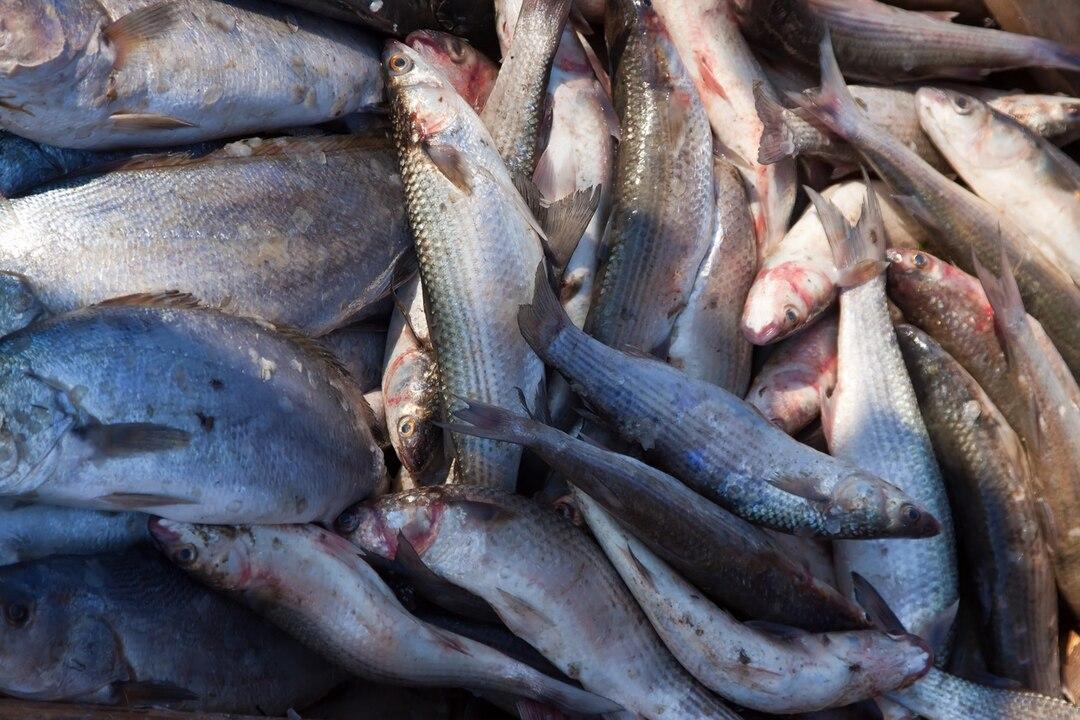
Africa-Press – Angola. The Angolan fishing sector registered the capture of 277,000 tons of various fish from January to December of the current year, exceeding the Total Allowable Catches (TAC), the minister of Fisheries and Marine Resources, Carmen dos Santos, said Monday in Namibe Province.
Speaking to the press at the end of a working visit to the municipality of Tômbwa, the minister clarified that, since the lifting of the ban, production has increased and reached double the permitted catch limit.
She revealed that artisanal fishing recorded a significant weight regarding the increase of the catches, emphasizing that it was being undersized and is currently almost reaching the catch levels of industrial and semi-industrial fishing.
The minister added that this year the ministry was accurate in its statistics and data collection, highlighting the need for corrective measures and verifying how many boats should be removed from industrial, semi-industrial and artisanal fishing operations.
“We have to offer alternative conversion programs for fishermen and other operators who work at sea”, she assured.
On the other hand, Carmen dos Santos lamented the insistence of operators who rely on illegal fishing, stating that this practice affects statistics, accelerates informality, impacts the value chain, and impacts employability.
According to the minister, when looking at employability, it is clear that the informality occurring in fishing affects the value chain to a greater extent than the losses incurred in fishing.
In the same event, the minister delivered three computers and two motorcycles to the women fish processors members of the Ukãi Wapama project, composed of 500 women, which aims to contribute to poverty reduction through the social and economic empowerment of this segment of the population working in fish processing.
At the time, the provincial governor of Namibe, Archer Mangueira, praised the project, emphasizing that it will support women fish processors in the literacy process, capacity building in financial literacy and digital integration and mentoring in the creation and management of small businesses.
On the other hand, the project spokesperson, Junice Fernandes, stated that it will last ten months, with a work methodology that will follow several phases, such as the identification of the target group through cooperatives and associations, the organization of literacy and digital integration classes, training for operators and small businesses, among other phases.
She announced that the project will be led by the association of women fish processors and will have the institutional support of the Tômbwa municipal administration, mobile phone company program Unitel Money, National Institute for Employment and Vocational Training (INEFOP), and Food and Agriculture Organization (FAO), field schools.
The official emphasized that the project has a budget of 3.5 million kwanzas, to be disbursed through the Participatory Budget (PB) and the social responsibility of local companies and artisanal fishing cooperatives.
For More News And Analysis About Angola Follow Africa-Press