Africa-Press – Angola. Angola spent $817 million on importing 1.02 million metric tons of liquid fuels in the first quarter of 2026, with the market registering a 23% reduction in overall acquisitions compared to the previous period.
From January to March 2026, 1,022,408 metric tons were acquired and marketed, comprising 52.4% diesel, gasoline (32.9%), fuel oil (6.1%), MGO (3.8%), Jet A1 (3.4%), and illuminating kerosene with 1.4%.
The data was presented on Monday in Luanda by the Director-General of the Petroleum Derivatives Regulatory Institute (IRDP), Luís Alves Fernandes, while reviewing the activities carried out by companies in the petroleum derivatives sector in the first quarter of the year.
He stated that imports account for 82.7%, which translates into the country’s main source of supply.
The Luanda Refinery contributed 15.9% of the total volume, a performance conditioned by the scheduled maintenance shutdown that began on February 15, while the Cabinda Topping Plant (Cabgoc) accounted for the remaining 1.4%.
Liquid fuels and market share
Regarding sales and market share, Sonangol Distribuição e Comercialização maintains its leadership with 60.8%, followed by Pumangol with 21.3%, Sonangalp (8.0%), TotalEnergies (7.2%) and Etu Energy with 2.7 percent of sales.
Cooking Gas (LPG)
In the gaseous fuels segment, 108 million LPG of Liquefied Petroleum Gas (LPG) were introduced into the domestic market. The Angola LNG plant was the main source of supply, guaranteeing 82.8% of the total volume.
Gas sales registered a decrease of 13.5% compared to the last quarter of 2025. The country’s capital, Luanda, remains the largest consumption center, absorbing 53.1% of the national total, followed by the provinces of Benguela (9.9%) and Huíla (7.0%).
Data indicates that Sonangol Gas and Renewable Energies dominate this market with a 78% share.
Lubricants and Storage Capacity
During the period under review, the country traded approximately 9,706 m3 of lubricants, of which 13.4% of the total are from domestic production, compared to 86.6% of imported products.
In terms of infrastructure, Angola has an installed onshore storage capacity of 1.2m3 (cubic meters), of which 1.1 m3 are destined for liquid fuels.
The increase in LPG (cooking gas) storage capacity was driven by the commissioning of the Barra do Dande Ocean Terminal (TOBD), raising the capacity to 113,727 Metric Tons (m3).
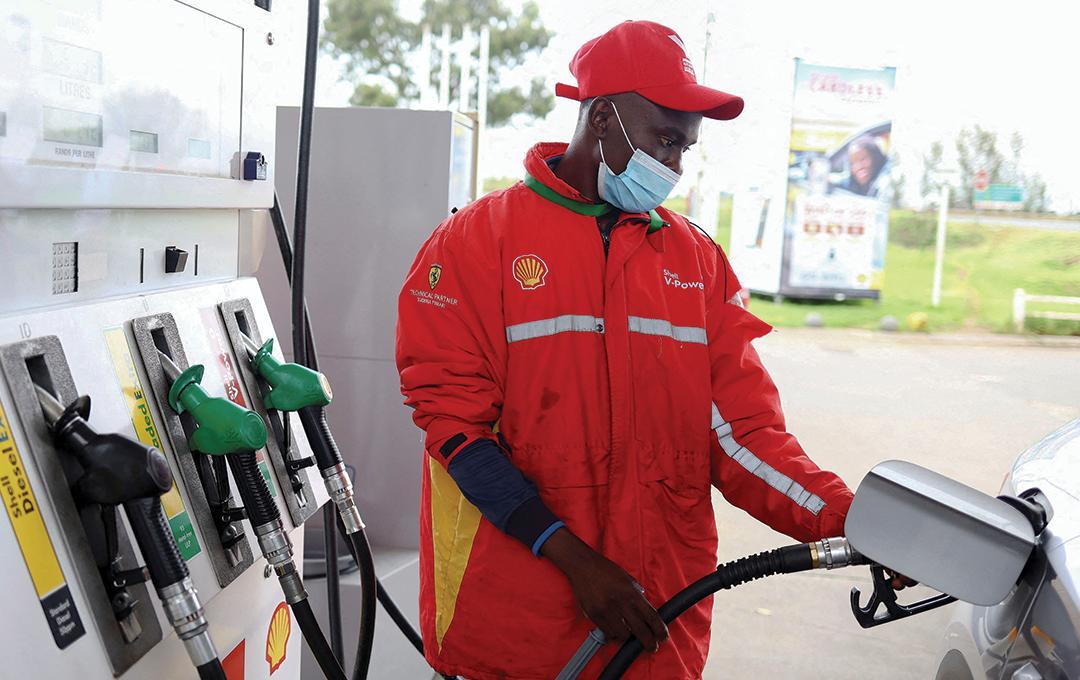
At the end of the quarter, the country had 1,221 service stations, of which 933 were in operation. Private agents hold the largest share of the retail network, with 44.8% of operational positions.
For More News And Analysis About Angola Follow Africa-Press