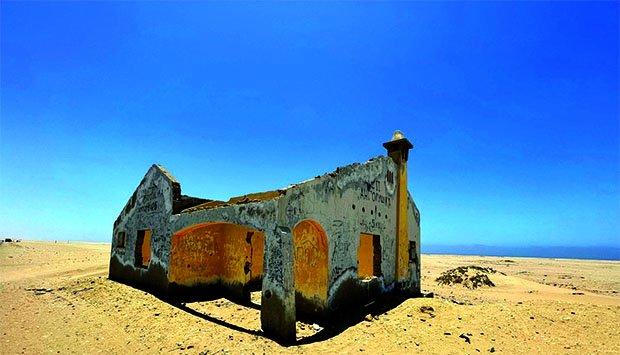
Africa-Press – Angola. The Angolan musicologist and composer Víctor Gama presents, starting tomorrow, in the Namibe desert, the project “Tectonik: Tômbwa – Café Mito da Utopia”, which includes a “pop-up” exhibition, a research laboratory and the projection of films, in one of the ruins of the houses of anglers, next to the road between Moçâmedes and the municipality of Tômbwa.
Produced by PangeiArt, the project has several dimensions, such as anthropological, cultural and artistic, inspired by the life, work and disappearance of the Angolan anthropologist Augusto Zita N’Gonguenho, who died in the 1980s, as a result of the armed conflict, in the southern region of the country. .
Started in 2006, the project is based on the fragmented notes of the late anthropologist Zita N’Gonguenho, which were found in South Africa in the late 1990s, and “intends to recover his concepts, analysis and archive”, explains Victor Gama , who has been in Tômbwa for over a week, with the South African writer Stacy Hardy, for the preparation of the international artistic intervention.
The author of the project also mentions that the research by the anthropologist Zita, “Towards an anthropology of Utopia: formation of utopian identities”, is a thesis widely referenced in the book “Utopia”, by the Renaissance philosopher in the 16th century, Thomas Moore, by English nationality, and which Zita associated with European colonial expansionism.
As an argument, he said, he used examples from the Portuguese administrative system, and chose the road and the houses of anglers, built in the second half of the 20th century, as places of field research. Victor Gama considers that Zita N’Gonhuenho’s research methodology, although unknown to the population and authorities of Namibe, included scientific methods as well as ancient systems of divination derived from the animistic belief that all matter is imbued with a spiritual essence.
For a month, the project will serve as a research site, to explore and re-enact Zita’s ideas and radical research methodologies, in order to expose and counter dominant modes of colonial and post-colonial thought and practice, which have produced catastrophic results for the planet and its species.
“Café Mito da Utopia” opens to the public on the 1st of July, with an exhibition of notes by the anthropologist Augusto Zita, Angolan poetry, local art and the screening of documentaries about the desert, and will serve as a meeting point for artists, poets , musicians, thinkers, members of local communities and the general public.
The project counts with the collaboration of the South African writer Stacy Hardy, the architect Paula Nascimento, the filmmaker Kiluanje Liberdade and the director Francisco Keth.
In addition, to accompany the project and with a parallel program, a group of 16 international researchers, from South Africa, are on their way to the city of Ondjiva, in Cunene, bound for the city of Namibe. Organized by the University of the Western Cape, in South Africa, the group will contribute with lectures in Lubango, Moçâmedes and Tômbwa. Also in Lubango, the researchers will visit some teaching and research institutions, to interact with both professors and students, and with the authorities of the Provincial Government of Huíla, with the aim of creating links in the field of scientific and artistic exchange.
For More News And Analysis About Angola Follow Africa-Press