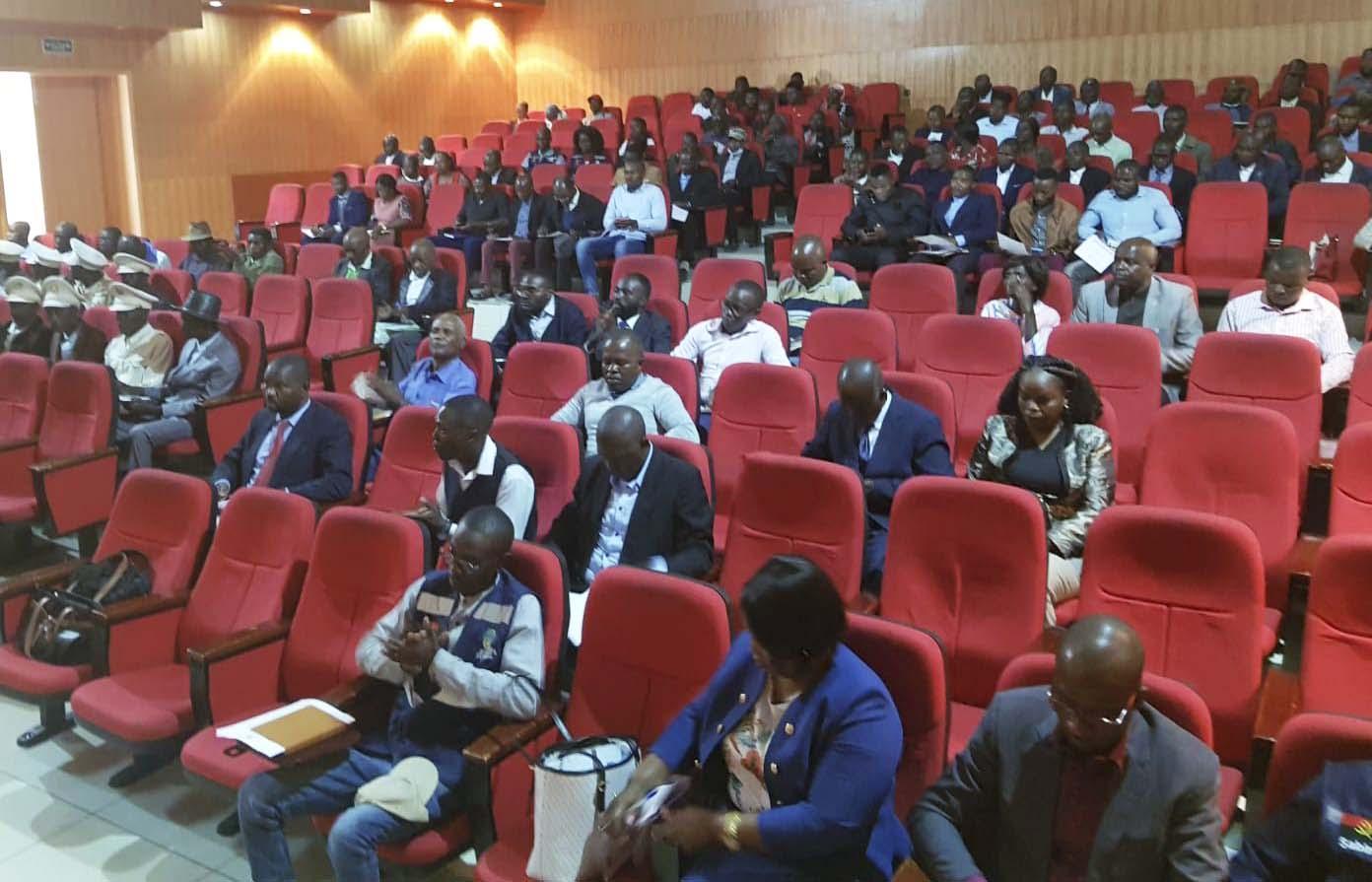
Africa-Press – Angola. The authorities of the municipality of Bailundo, Huambo province, met Monday, with various members of civil society, with the aim of obtaining contributions, to reach consensus in the preparation of the Participatory Budget (OP- 2024).
The meeting to collect contributions, held at the Cultural Center of the municipal town, 75 kilometers north of the city of Huambo, was attended by traditional authorities, ecclesiastical entities, members of civil society organizations and public officials.
The participants chose, among the priorities, the expansion of the school network, the expansion of the electricity and drinking water distribution network, the construction of more health infrastructure and the consequent improvement of medical/medicine assistance, the requalification of secondary roads and tertiary institutions in all communes and the promotion of agriculture.
They also pointed out the need for greater investment in the areas of social action, basic sanitation and fisheries.
When speaking at the meeting, the administrator of the municipality of Bailundo, Irineu Sacaála, appealed for the continued collaboration of the population in presenting contributions on the real difficulties of each of the localities, so that they can be resolved jointly, aiming to promote the well-being of be common.
The municipality of Bailundo, one of the 11 that make up the province of Huambo, has an extension of seven thousand and 65 square kilometers and an estimated population of 372 thousand inhabitants, distributed in 70 commercial towns, 573 villages and 80 ombalas and neighborhoods, which comprise its five communes: Hengue, Lunje, Bimbe, Luvemba and Sede municipal.
The Participatory Budget, approved by Presidential Decree 234/19, of 22 July, is a tool that the Angolan Executive adopted in the process of administrative deconcentration and decentralization to make it more participatory, whether at the level of elaboration or implementation.
The legal diploma enshrines the active participation of members of management committees, made up of representatives of civil society with the capacity to identify problems and define priorities in the preparation of municipal budgets.
For More News And Analysis About Angola Follow Africa-Press