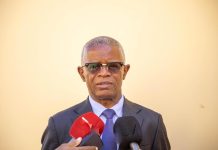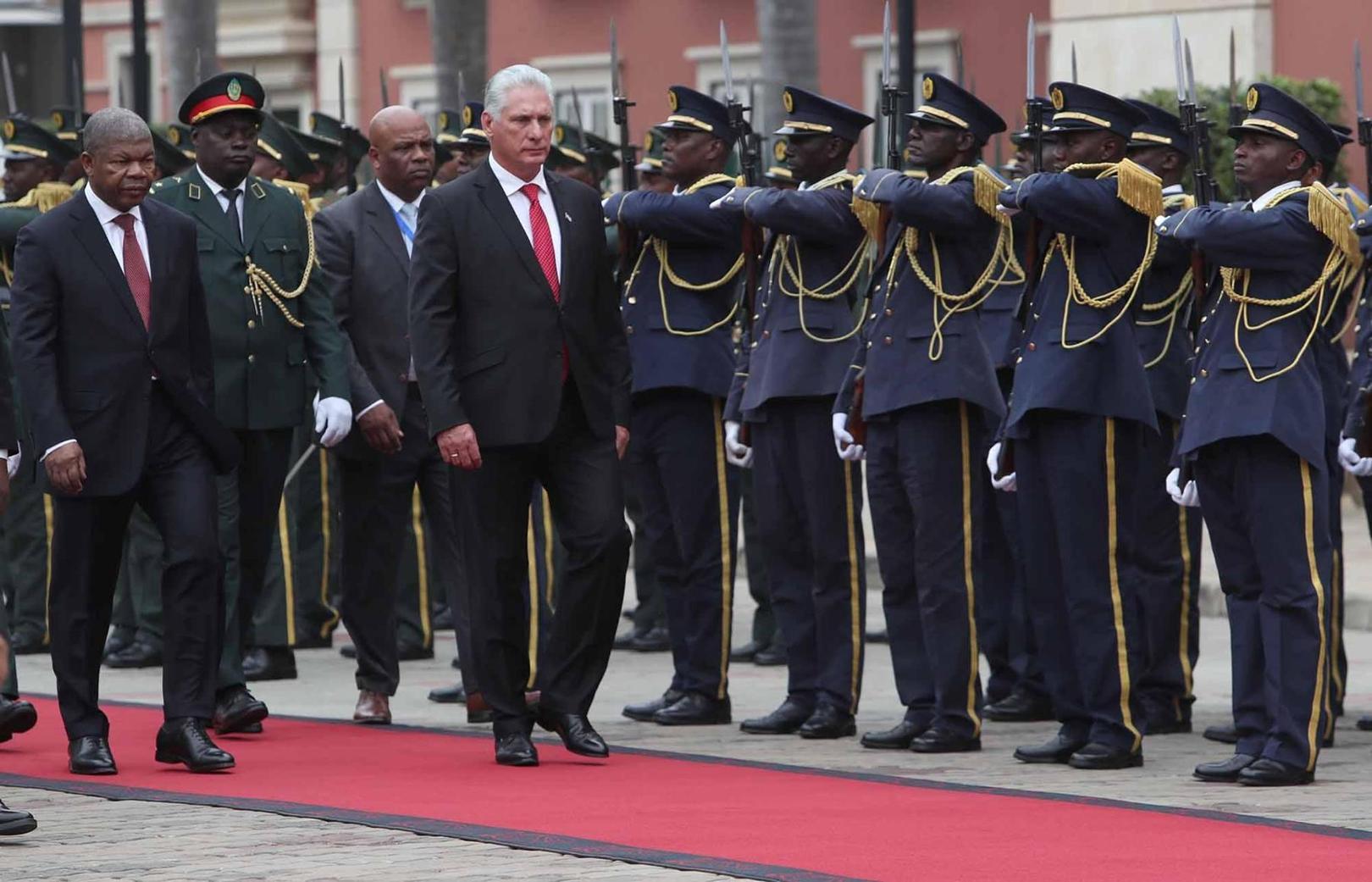
Africa-Press – Angola. The President of the Republic of Cuba, Miguel Mario Díaz-Canel Bermúdez, is at the Presidential Palace, where he will analyze and plan with his Angolan counterpart, João Lourenço, actions to strengthen bilateral cooperation relations.
Upon his arrival at the Palace, the Cuban President received greetings from the Angolan Statesman and obeyed protocol procedures, before a private meeting between the two.
At the Presidential Palace, according to the work schedule official talks will take place at the level of government delegations and the signing of three cooperation agreements.
As part of the programme, Miguel Mario Díaz-Canel Bermúdez is also expected to speak at a Special Session of the National Assembly (AN) for today.
The Cuban statesman, who has been in Luanda since Sunday (20) for a State visit, leaves Angola on Tuesday (22) for South Africa, where he will participate in the BRICS Summit.
Bilateral Relations
Angola and Cuba established diplomatic relations on November 15, 1975, four days after Angola’s independence (November 11).
The two countries maintain a privileged collaboration today, with emphasis on the areas of defense and security, health, education, science and technology, as a result of the General Cooperation Agreement that has been in force since 1976, within the framework of their diplomatic relations established the previous year.
These bilateral relations are based on a strong brotherhood and solidarity forged since Independence.
The first visit of a Cuban Head of State to the country took place with Fidel Castro Ruz, in March 1977, little more than a year after the one made to Cuba by António Agostinho Neto, the first Angolan President.
It is estimated that at least 450,000 Cubans, including military doctors, teachers, engineers and other professionals, have been in Angola for 16 years.
Over several decades, Cuba has also received several hundred Angolans, either individually or through government scholarships.
In light of the General Cooperation Agreement, it is estimated that more than 40,000 Angolans were trained in Cuba in the specialties of agriculture, health, civil construction, social communication, education, military, defense and security, transport and political science, music and theater.
For More News And Analysis About Angola Follow Africa-Press