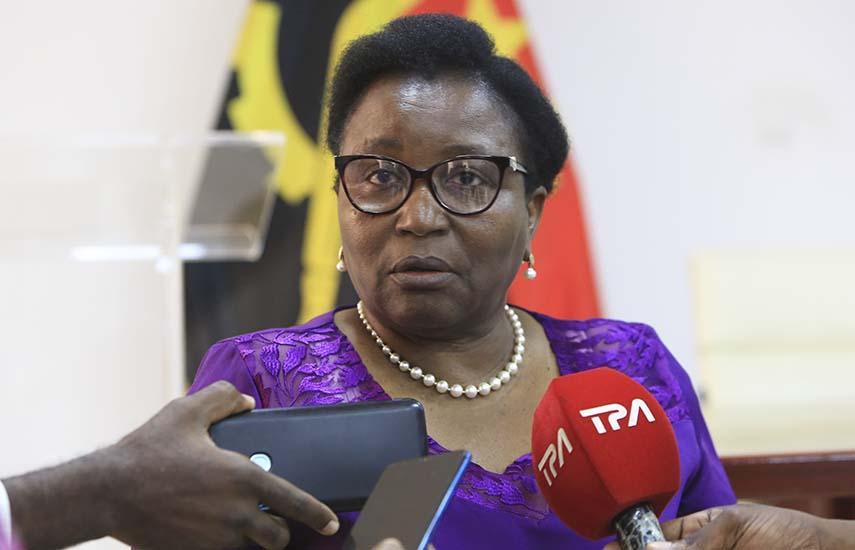
Africa-Press – Angola. Representative Florbela Malaquias considered the Peace Agreement of April 4, 2002, the second biggest event in the country, after the achievement of National Independence, on November 11, 1975.
The leader of the Angolan Humanist Party (PHA) was speaking in an interview, in Luanda, on the occasion of Peace and National Reconciliation Day, to be celebrated this Thursday (4), across the country.
He justified that the anniversary represents the end of an internal war, between brothers, which “is often difficult to end”, but that “we Angolans managed to put an end to it and put the country on the path towards development”.
The parliamentarian highlighted the fact that peace is a fundamental element for a society to survive and persist.
“When there is no peace, there are no possibilities for life, progress and construction as it is a fundamental element for a society to survive and persist”, he maintained.
Florbela Malaquias recognized, however, that peace is also a “quite volatile” element and that, because of this, it must be well cared for and preserved through dialogue and tolerance.
He added that such care also involves strengthening reconciliation between politicians, religious people and society in general, due to the fact that there is still “some hate speech between politicians.
“It really bothers us that, 22 years after the achievement of peace, some politicians have not been able to definitively turn the page, that is, to adopt a position of peace, in favor of peace and to preserve peace”, he expressed.
In his view, politicians should be more patriotic and tolerant, above all always bearing in mind that “Angola is the homeland of all of us”.
Florbela Malaquias, the only woman who leads a political party in the country, and with a parliamentary seat, understands that, in 22 years of peace, “much greater steps could be taken than those that have been taken”, especially in the health sectors, education and social security.
In this regard, he defended a fierce fight against corruption and greater transparency in State institutions.
In his view, corruption is “a cancer that hinders the country’s development”, and that what favors this evil is the “absence of transparency in institutions”.
“When a monetary fraction is allocated to a certain work, and more than two thirds of that fraction evaporates in corruption, that work loses the quality of what had been foreseen in the beginning. These are things that, appearing small and fragmentary, shorten the path of development”, he exemplified.
infrastructures versus human capital
Florbela Malaquias recognized that, in the country’s 22 years of peace, many social infrastructures were built, but she also defended more investment in human capital, as a provider of social advances.
In his opinion, the country should already have its inventors, because other nations developed on the basis of this assumption.
She admitted, however, that there had been some progress in the area of women’s empowerment, with the appointment of many women to management and leadership positions.
“However, practice still does not give us satisfactory data. Just look at the streets and see that the largest number of people walking are women”, he maintained.
The PHA leader says she does not understand how the male sector, which was generated and born by the female sector, “can be so brutal towards their own mothers”.
Tune in to the peacemaking discourse
Representative Rosa Branca, from the MPLA, third secretary of the National Assembly, also defended a political discourse more harmonized with the meaning of peace, that is, “a pacifying, constructive discourse that seeks harmony”.
He stated that his desire is for young politicians to have the responsibility of maintaining a more constructive discourse that seeks harmony in society and pacification of spirits.
The legislator, who is part of the Constitutional and Legal Affairs Committee of the Angolan Parliament, also recommended a better redistribution of wealth to promote economic growth and development.
For Rosa Branca, a better redistribution of wealth and income will help not only with economic growth and development, but also with the pacification of spirits.
He regretted, however, the fact that there are still several outbreaks of conflict around the world that have been negatively impacting the world economy, including that of Angola.
For his part, deputy Eugénio Manuvakola, from UNITA, emphasized the need to respect peace, which results from several agreements, including that of Alvor, signed on January 15, 1975.
The politician, one of UNITA’s signatories to the Lusaka Agreements, which preceded the April 4 agreement, encouraged Angolans to value all agreements signed in the country, in favor of peace and national reconciliation.
“Peace in Angola results from several agreements, so we need to respect them (all) and talk about the future of the country.” he said.
The deputy regretted, however, that in 22 years of peace, “Angola has not yet fully embarked on development”, which is why he suggested that the country “must necessarily move towards some obligations such as human development, among others”.
After having lived decades of their history in war (from 1961 to 1974) against the Portuguese colonial power, and, from 1975, in the fratricidal war, the Angolans managed, in 2002, to silence their weapons and begin a process of national reconciliation.
On April 4, 2002, before Angola and the world, the military leadership of the Angolan Armed Forces (FAA) and the UNITA Military Forces signed the agreement that definitively sealed the peace process, beginning a new era of stability and hope for Angolans.
For More News And Analysis About Angola Follow Africa-Press