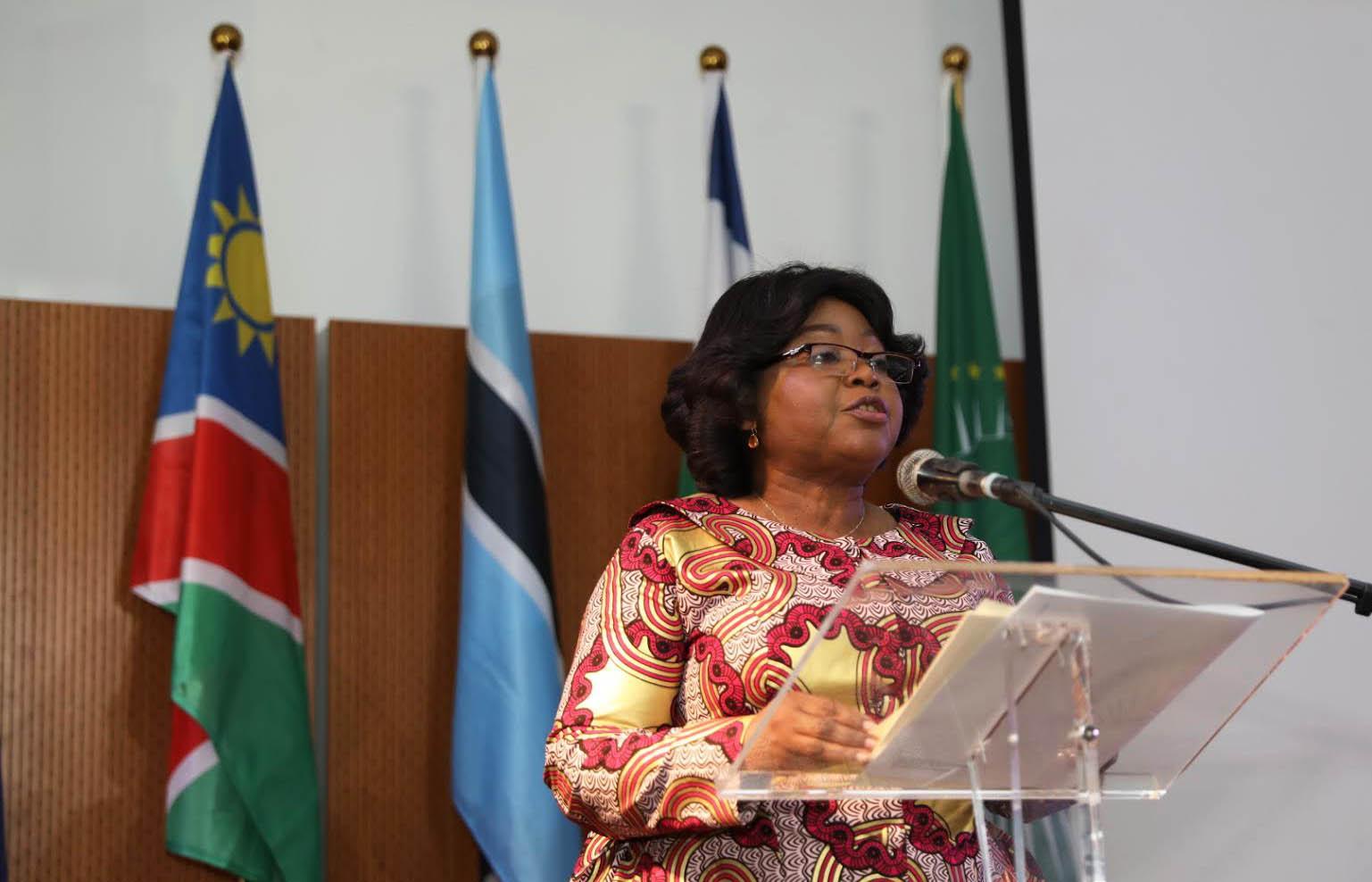
Africa-Press – Angola. The Vice-President of the Republic, Esperança da Costa, this Thursday reaffirmed the commitment of the Angolan authorities to the fight against climate change, as it constitutes one of the greatest challenges facing humanity.
Esperança da Costa was speaking at the opening ceremony of the Regional Conference of the Pan-African Organization for Women (OPM), which takes place under the motto “The Resilience of African Women: The Contribution of the Agriculture Sector to Adaptation to Climate Change”.
On the occasion, the Vice-President of the Republic underlined that Angola has prioritized national and international environmental issues, due to the damage that this phenomenon has caused, as well as the Sustainable Development Objective (SDG) of the 2030 Agenda and the Paris Agreement on Climate .
The leader stressed that the country has contributed to global efforts, having approved the National Strategy for Climate Change, which establishes a 2021-2035 vision.
The Strategy promotes adaptation and resilience throughout the national territory, resulting in programs to mitigate the drought and other extreme events that have devastated the south of the country.
According to Esperança da Costa, as part of the strategy to combat drought in southern Angola, the Government built the Cafu Canal to transfer water from the Cunene river to the Chanas region of the same province.
The project aims to create conditions for the development of agriculture and livestock, thus benefiting more than 230 thousand inhabitants.
The Vice-President also added that Angola has specific objectives and targets on climate issues and sustainable development.
He added that the country defined the contribution to reducing carbon in electricity production by 2025 and outlined complementary actions for the sustainable management of forests, transport and agriculture.
Esperança da Costa stated that in Africa, women and youth constitute the majority of the main food producers, around 70 percent of the workforce and productive potential.
He considered that these fringes of society are not involved in high-value activities such as processing, agribusiness, marketing and export.
She defended the need to increasingly increase the resilience of African women, at a time when they continue to be most affected by the impact of climate change, often the cause of large and forced population displacements and poverty.
“We therefore defend access to land ownership, improved financial inclusion of women and young women, access (…) to the main agricultural markets, more training and access to new technologies and the digital world”, he emphasized.
He pointed out that women play an important role in the process of mitigating and adapting to climate change, as they continue to raise their voices in favor of the environment while positioning themselves as staunch defenders of this cause.
He recalled that Angola assumed this month the rotating presidency of the Southern African Development Community (SADC), highlighting food and nutritional security and the industrialization of the sub-region as the most important program to support regional aspirations to boost south-south cooperation. .
In her speech, Esperança da Costa highlighted her support for food and nutritional security in the challenge of contributing to a world with greater climate justice, more equality and peace.
The Pan-African Organization of Women was created 61 years ago with the aim of guaranteeing the effective and responsible participation of women in the socio-economic and cultural development of Africa, and creating all the conditions for them to participate and have space in the most diverse sectors.
The Vice-President, Esperança da Costa stressed that more than mitigation, it is necessary to opt for adaptation mechanisms, strengthening the motto “Africa that we want”, of Agenda 2063.
He considered that the Malabo Declaration provides an opportunity to assess the materialized aspects and propose a more impactful revision, within the scope of the challenges of agriculture and climate change, which represent a real threat to humanity and the maintenance of life on the planet.
For More News And Analysis About Angola Follow Africa-Press