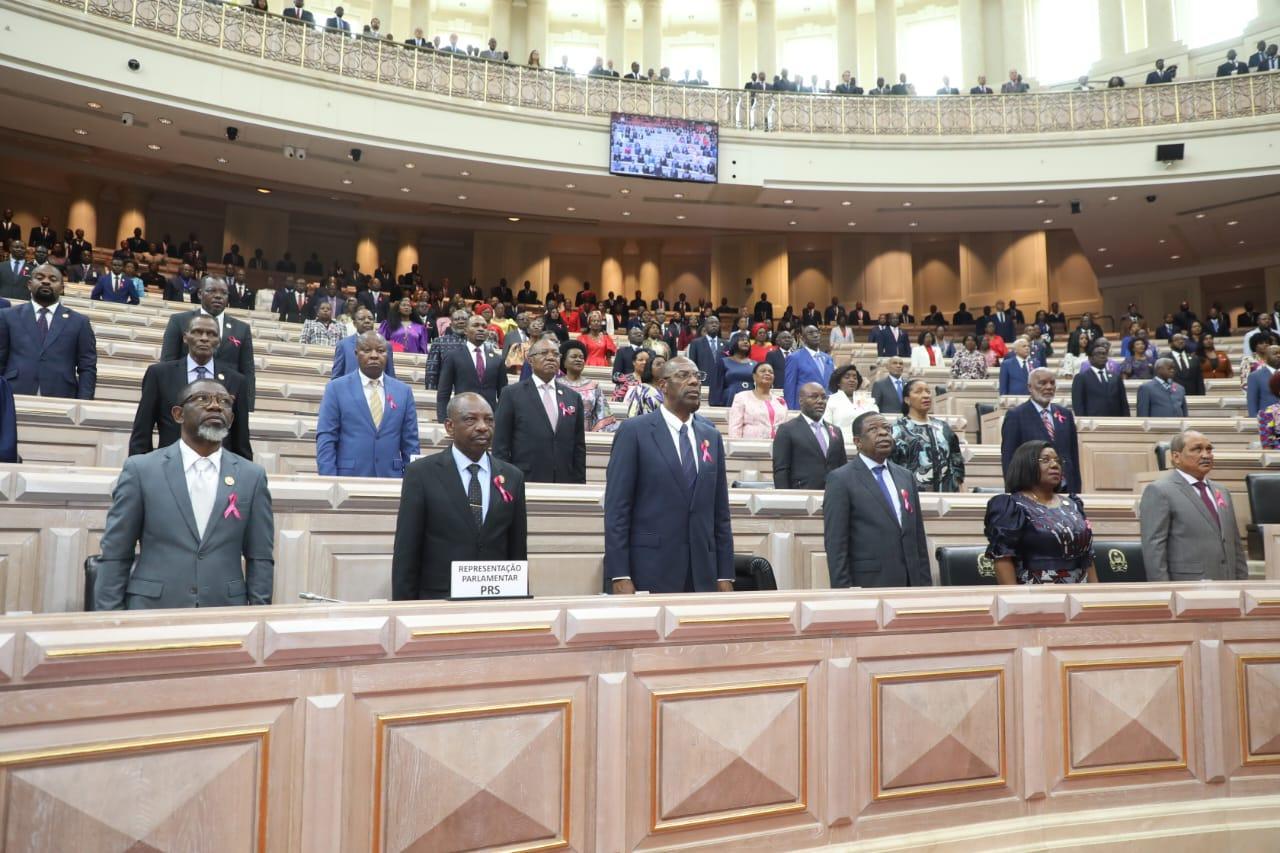
Africa-Press – Angola. The MPs of the National Assembly (parliament) approved in general terms, on Monday (15), in Luanda, two Bills that create the national conservation areas of Serra do Pingano and Morro do Moco.
The two legal instruments were approved separately during the 5th plenary meeting of the 4th legislative session of the V legislature.
The draft law relating to Serra do Pingano was approved with 167 votes in favor, no votes against and no abstentions, and now goes to a specialized discussion phase.
The two Bills will allow the establishment of the Serra do Pingano, in the province of Uíge, and the Morro do Moco, in the province of Huambo, as environmental conservation areas, since they represent important habitats for species of the tropical rainforest.
The secretary of State for the Environment, Yuri Valter de Sousa Santos, presented the two proposals to the National Assembly, emphasizing that the legislation constitutes strategic instruments for the protection of biodiversity and for the promotion of Angola sustainable development.
Regarding the Serra do Pingano, the official explained that the future protected area will have an approximate extension of 2,838 square kilometers, covering the municipalities of Uíge, Quitexe, Ambuíla and Songo.
He said it is an ecosystem of high scientific value, considering it the southernmost forest system in the bio-geographical regions of Guinea-Middle and Congo, with humid forests that harbor numerous endemic, threatened, and critically endangered species.
According to the official, the region has a significant faunal diversity, with dozens of species of butterflies, reptiles, amphibians, and birds, many of which have a restricted distribution.
He warned, however, that this natural heritage faces strong pressures resulting from poaching, deforestation, extensive agriculture, recurring fires, and illegal charcoal production, issues that have accelerated habitat degradation.
Yuri de Sousa Santos also mentioned that local communities face significant socioeconomic difficulties, such as a scarcity of basic services and formal employment opportunities, which has reinforced the unsustainable dependence on natural resources.
To address this scenario, the proposed law establishes long-term goals, including the protection of biodiversity, the promotion of sustainable ecotourism, the integration of communities in the management of the area, and the strengthening of environmental oversight, as well as medium-term goals related to scientific surveys, sustainable financing, and the creation of support infrastructure.
Regarding Morro do Moco, the Secretary of State explained that the initiative aims to protect one of the last and most important remnants of Angola’s Afromontane forest.
He emphasized that the mountainous massif, being the highest point in the country, has high ecological, cultural, and geographical value, playing an essential role in water and climate regulation and soil conservation in Angola central region.
The official also highlighted that Morro do Moco functions as a natural “water tower,” being the origin of several springs that supply communities and sustain local agricultural activity, in addition to constituting a critical habitat for endemic and threatened species, many of which exist exclusively in this area.
He explained that the two proposals are part of the Executive’s environmental policy and the National Development Plan, which foresees the creation of three new conservation areas by 2027.
With the approval of Serra do Pingano and Morro do Moco, Angola will fulfill two of the phases of this goal, with the future submission of the proposal for the creation of the Cumbira Forest conservation area in the Cuanza-Sul planned, thus reinforcing the country’s commitment to international conventions on biodiversity and to a sustainable development model.
For the deputies, the approval of the legislation represents another key step towards the conservation of national flora and fauna, with great prospects for the growth of tourism, and providing better conditions for the populations residing in the area.
The MPs also appealed for the integration of these local communities into the objectives of environmental development proposed by the draft law.
The parliamentarians also expressed concern about the protection of flora and fauna in the face of poaching, as well as illegal logging.
They reiterated the need for the Executive to make every effort to materialize the idea of a sustainability model in the Serra do Pingano and Morro do Moco.
For More News And Analysis About Angola Follow Africa-Press