Africa-Press – Angola. The Angolan State’s investment in the Lobito Corridor will have positive effects due to the technical capacity and experience of the companies in the consortium that won the tender for its exploration, considered, this Thursday, economist Henrique Pascoal.
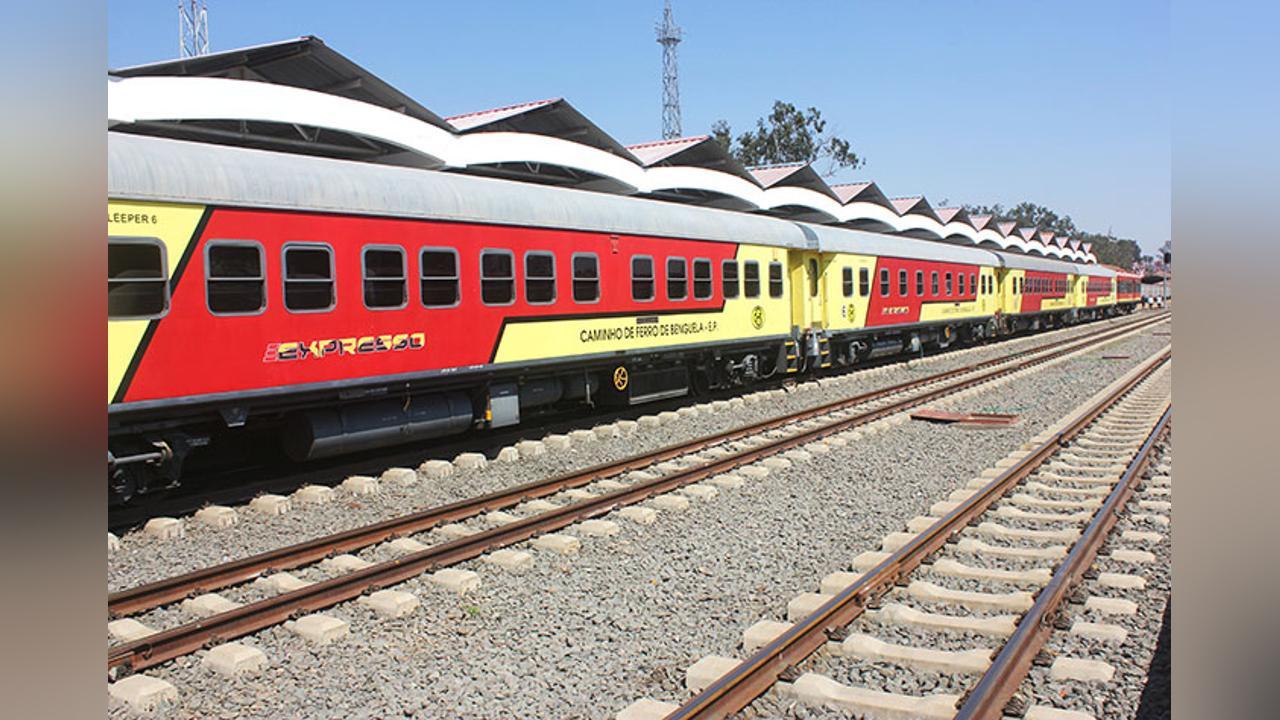
These are the companies Trafigura, Vecturis and Mota-Engil, which make up the consortium called Lobito Atlântic Railway, already in operation since the 4th of July, when the concession of rail and logistics services was signed with the Ministry of Transport.
This agreement aims at operating and maintaining the railway line of the Benguela Railway (CFB), from Lobito (Benguela) to Luau (Moxico), in order to streamline the transport of goods between the Atlantic Ocean and the copper and cobalt mines of the Democratic Republic of Congo and Zambia.
Henrique Pascoal said that on the part of the Angolan State, the project has been operational for some time, but expressed concern about the time taken to transport goods from Angola to those countries and vice versa.
For him, the time factor is fundamental. He defends the need for faster, more accurate trains, both freight and urban, with timetables that meet the needs of the population.
“Looking at our city train, it would be nice to shorten the travel time. We have many people who live in Cubal or Ganda working in Lobito or Benguela and at the end of the day they would be back in their homes”, he suggested.
The economist also referred to the incompatibility between the railway lines in Angola and Congo, a concern expressed for some time by the Board of Directors of the CFB. Because of this, convoys only reach the DR Congo border.
In his view, this situation causes delays in the programs for transporting goods, so it is necessary that the States involved resolve the problem as soon as possible.
He also spoke about the importance of Catumbela International Airport for the Lobito Corridor, saying that “the delay in its certification is seriously compromising the aspirations of citizens”.
“It is an infrastructure allocated to the Lobito Corridor, which will serve the entire southern region and if it does not work, it will cause constraints. Businessmen from other countries intend to come directly to Benguela province to prospect and invest in their businesses”, he explained.
On the other hand, according to him, the tourism sector would not be depending only on small cruise ships and tourists traveling on the Rovos Rail train, but on those who would come to spend their holidays in the national territory.
“The hotel sector would increase its revenues and consequently the State would also gain from taxes”, he added.
On the visit of politicians and businessmen from Zambia and DRC to the oil infrastructures, he justified with the fact that Angola is the second largest oil producer in Africa, a situation that is arousing a lot of interest for the supply of this product to these countries.
Zambia, for example, expressed the need to build a railway branch to connect Angola to that country, starting from the Angolan town of Luacano, in Moxico province, a situation confirmed by the President of the Republic, João Lourenço
For this purpose, its president Hakainde Hichilema was in Benguela province, who visited the Lobito Refinery, also known as Sonaref.
For the economist, the Angolan State could take the opportunity to explore other valences, as Angola has arable land, water and energy that it could sell to these countries and bring significant returns to its economy.
“We could use our agriculture to supply these landlocked countries with domestic production, as South Africa or Namibia does,” he said.
The Lobito Corridor is transnational, crossing Southern Africa. It asserts itself as one of the main axes for the circulation of raw materials, products and goods, not only within the countries it crosses, but above all due to the connection it establishes with the international market through the Port of Lobito, which ensures a high percentage of international trade volume of the entire SADC region.
For More News And Analysis About Angola Follow Africa-Press