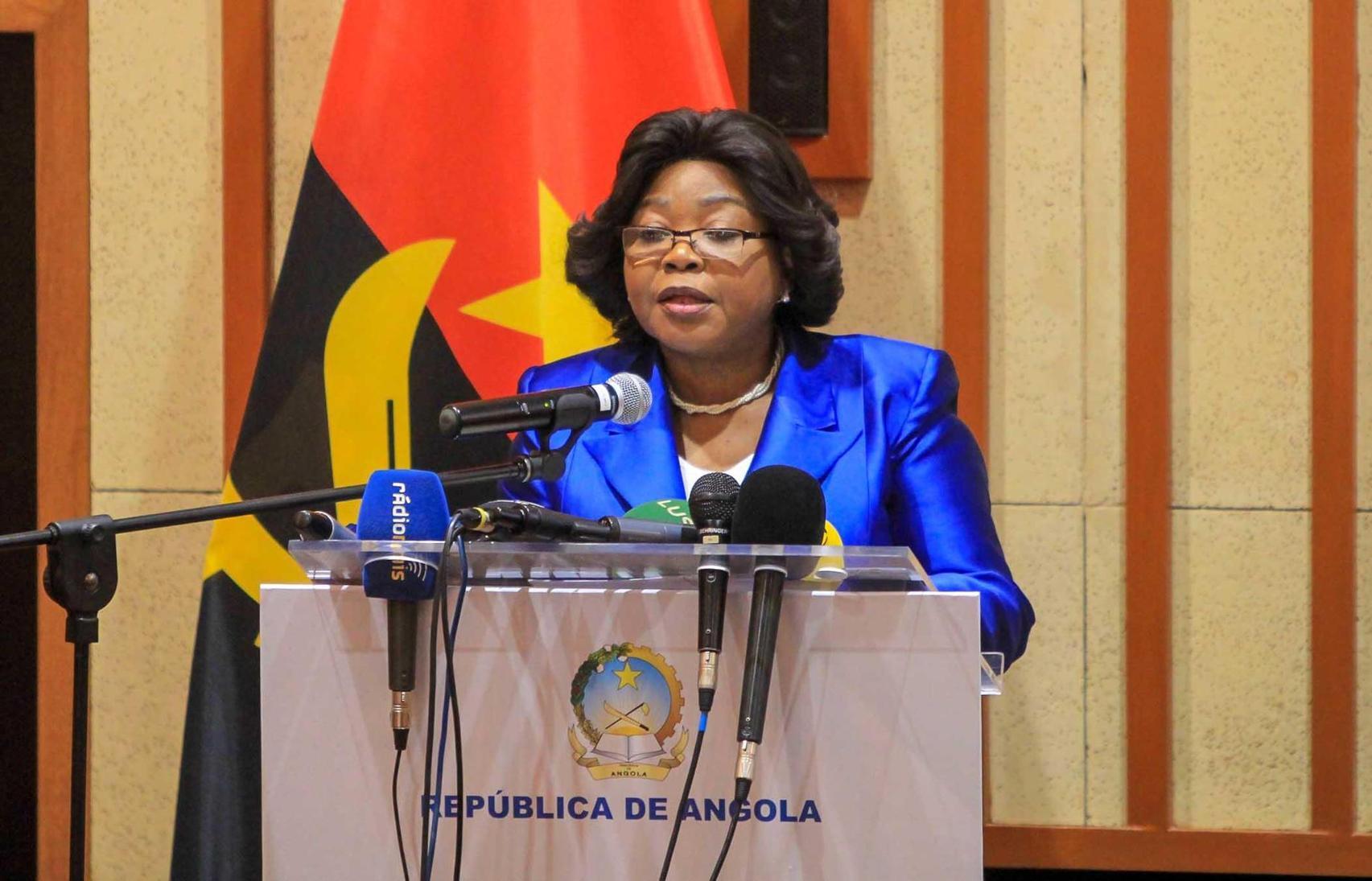
Africa-Press – Angola. The Vice-President of the Republic, Esperança da Costa, informed this Thursday, in Luanda, that the Executive will pay special attention to gender equity in Higher Education, making available 300 postgraduate scholarships with inclusive character.
Speaking at the solemn opening of the Academic Year 2023/2024, Esperança da Costa said that the topic motivated the carrying out of a diagnostic study, through which the preparation of an Action Plan for equal access for women in Education is underway Higher education and postgraduate studies, aiming to mitigate factors detrimental to gender inclusion, postgraduate training and career progression.
He recalled that 300 scholarships were made available for the aforementioned postgraduate courses, with an inclusive nature, with the obligation to allocate 50 percent of these scholarships to women.
According to the Vice-President, the training of teachers for levels of education prior to higher education has been a focus of great attention from the Executive, with the materialization of the Legal Regime for the Training of Early Childhood Educators and Teachers in Primary and Secondary Education, approved in October 2020 by Presidential Decree.
To this end, he informed that financial support will be made available to improve the infrastructures of ISCED-Huíla, ISCED-Uíge, ISCED-Huambo and the Escola Superior Pedagógica do Bengo, to improve course curricula, especially in digital skills , with teacher training, without leaving the process of curricular harmonization.
He highlighted that the issue of integrating digital technologies and tools is one of the Executive’s priorities for the national education system.
In the Higher Education subsystem, he argued, digitalization will make distance learning possible, using e-learning tools; the provision of digital textbooks, creation of online libraries and the use of digital platforms for admissions, registrations, grading and other administrative tasks.
Considers investment in the computerization of the services of Higher Education Institutions and in their presence on the Web to be inevitable, in the creation of an Angolan Education Research Network Project “Angola Research Education Network”, which will allow for the interconnection of Higher Education Institutions, in the implementation of the “Virtual University”.
According to the Vice-President of the Republic, this assumption will provide educational institutions with tools for online teaching, considering it necessary to invest in the digital skills of teachers and non-teaching staff.
“Digitalization can improve accessibility, efficiency and innovation in higher education, but it also presents challenges, such as ensuring equitable access and data security”, he stressed.
To facilitate and improve the creation of statistical data relevant to decision-making and management of the Higher Education Subsystem, it announced, shortly, the implementation of the Integrated Information and Management System of this Subsystem.
These are platforms for creating new Higher Education institutions and new courses, as well as collecting data for the statistical yearbook and registering professionals and research and development institutions.
It understands that external evaluation promotes transparency in management, international recognition and competitiveness, so that in an increasingly globalized market, the quality of education directly impacts a country’s competitiveness.
He informed that this year the National Institute for Assessment, Accreditation and Recognition of Higher Education Studies (INAAREES) began the process of evaluating Higher Education, taking as a starting point the self-evaluation of undergraduate courses and then the external evaluation of medical and health sciences courses.
As a result of the self-evaluation process, carried out in the first semester of the current year, it became known that of the total of 1356 legally created courses, 600 were evaluated, with 84 participating in this process out of a universe of 101 higher education institutions legally created.
Esperança da Costa also announced that this year the external evaluation process will be carried out, followed by accreditation, focusing on medicine and health sciences.
Around 70 evaluators will participate in this action, including highly prestigious national and international experts, according to the Vice-President.
As I said, the goal is to evaluate, by 2027, all courses and/or undergraduate programs and complete one cycle of institutional evaluation and two cycles of teaching performance evaluation.
In the field of science, he made it known that the Executive has promoted initiatives to improve research and development of innovation and entrepreneurship.
He informed that the creation of a National Scientific Repository, with open access, is underway, with the support of the European Union and UNESCO, which will provide greater access to knowledge.
In his view, innovation is the driving force of progress, which is why the Executive has invested in the construction of the Luanda Science and Technology Park, highlighting the recognition of its role in the development of entrepreneurship, in the ecosystem supporting innovation and growth business.
“With the completion of the Luanda Science and Technology Park, scheduled for 2025, our young people will benefit, among others, from infrastructures, laboratories and offices to support startups, research and development activities”, explained Esperança da Coast.
The Vice-President of the Republic addressed words of appreciation to the teachers, who recognized “the hard work they do in favor of the training of young people”.
“We will continue to support and invest in the main pillars of development to guarantee a prosperous and innovative Angola for future generations”, he stressed.
For More News And Analysis About Angola Follow Africa-Press