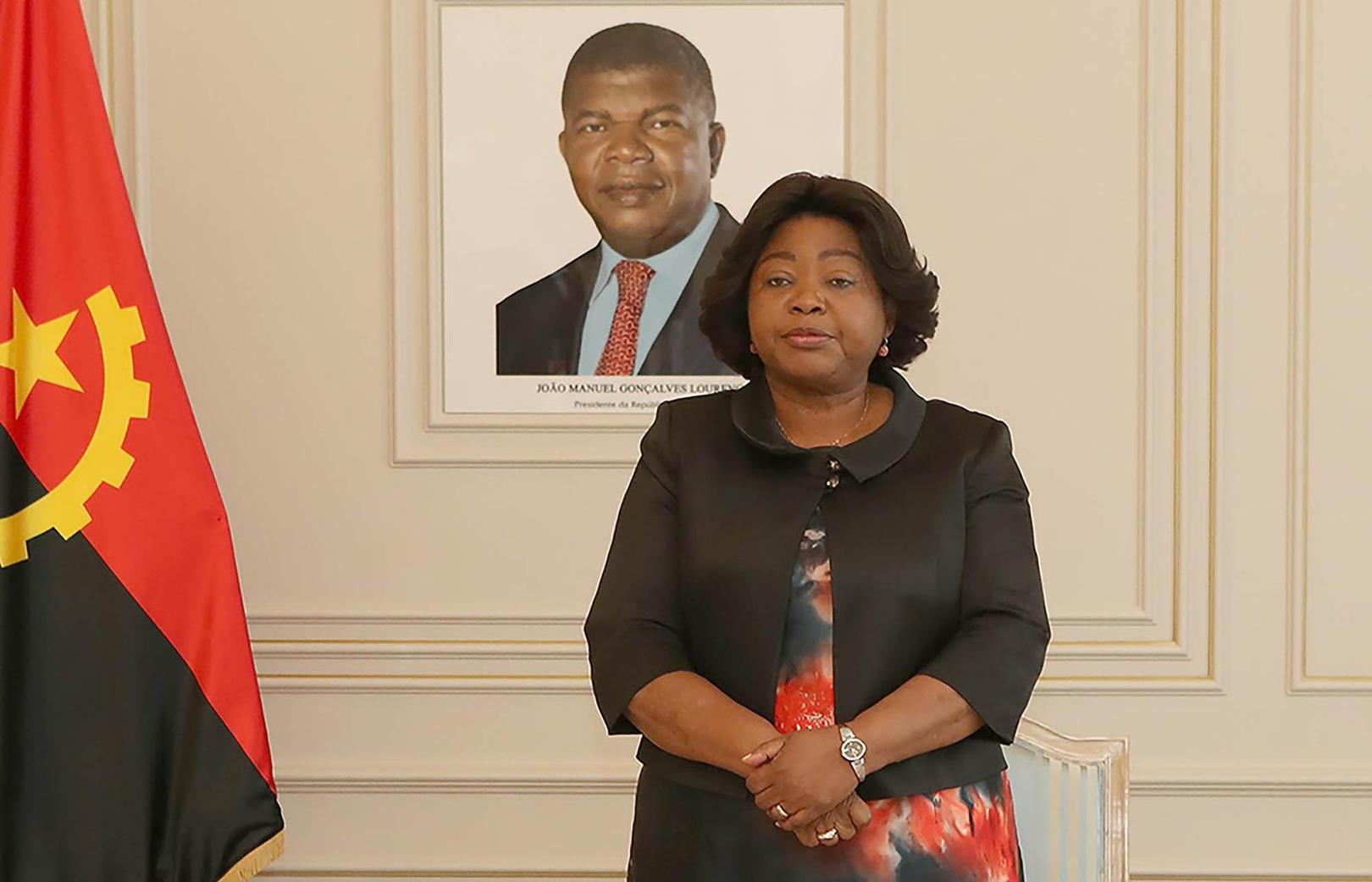
Africa-Press – Angola. The Angolan Government’s engagement in combating climate change on a continent-wide level was emphasized, this Tuesday, in Luanda, during an audience granted by the Vice-President of the Republic, Esperança da Costa, to members of the Southern Africa Center for Sciences and Services for Climate Change Adaptation and Sustainable Soil Management (SASSCA).
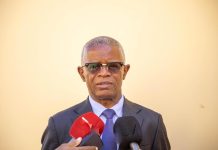
The information was provided to the press, at the end of the hearing, by the Angolan minister of Higher Education, Science, Technology and Innovation, Maria do Rosário Bragança Sambo, outgoing president of the SASSCAL Council of Ministers.
“The Vice-President made a point of receiving the delegation, above all, to emphasize the commitment of the Angolan Government and the President of the Republic with full engagement in the fight against climate change”, explained the minister, whose two-year rotating mandate ends this month.
On the occasion, according to Maria Bragança, the Vice-President referred to Angola’s participation in the African Summit, held this month in Nairobi (Kenya), in which she defended, among other “key” measures for the success of this challenge, the promotion of a fairer and more balanced global partnership, within the framework of climate change.
The members of the SASSCA Council of Ministers also spoke about aspects linked to the organization’s need for financial sustainability, ratification of the treaty by all member states, its transformation into an international institution, as well as the creation of conditions for the construction of a center of excellence, planned for the province of Huambo.
Namibia is the only country that has ratified the SASSCA treaty, among the five members, with Angola, Botswana, Zambia and South Africa having administrative procedures underway.
Regarding production, the outgoing president mentioned that there are positive aspects of the institution’s work, linked above all to the development of scientific research projects to be developed in the second phase of this organization’s project, called “SASSSCA-2”.
In his opinion, although much is still required, it is important to note that there has been some progress in this regard, especially when consulting the latest UNESCO reports on science.
Maria Bragança predicted better financial conditions, so that there will be greater investment in scientific and technical matters.
The hearing was attended by the Minister of Higher Education and Research of Mali, Bourema Kansaye, and the Minister of Agriculture, Water and Agrarian Reform of Namibia, Anna Shiweda, members of SASSCAL, who expressed the availability of cooperation between their countries and Angola in matters of combating climate change and beyond.
The Namibian ruler, whose country shares the Cuvelai water basin with Angola, stated that her country has made gains with integration into SASSCAL, in particular with Angola, with regard to the supply and integrated management of water resources, a scarce good in its territory.
He pointed out the exchange of experience in water purification as an area in which both can develop.
“We will deepen the reinforcement of cooperation regarding water supply for the benefit of our people”, he stressed, highlighting the need to prevent issues related to floods and droughts.
He promised to work towards the expansion of the organization, so that it can gain the largest number of financial partners, having expressed the desire to see all SADC countries join SASSCAL, since climate problems have no borders.
The Southern African Science and Services Center for Climate Change Adaptation and Sustainable Land Management (SASSCA) is a joint initiative by Angola, Namibia, Botswana, South Africa and Zambia, and in partnership with Germany, which aims, among others, respond to the challenges of global changes in member countries.
For More News And Analysis About Angola Follow Africa-Press