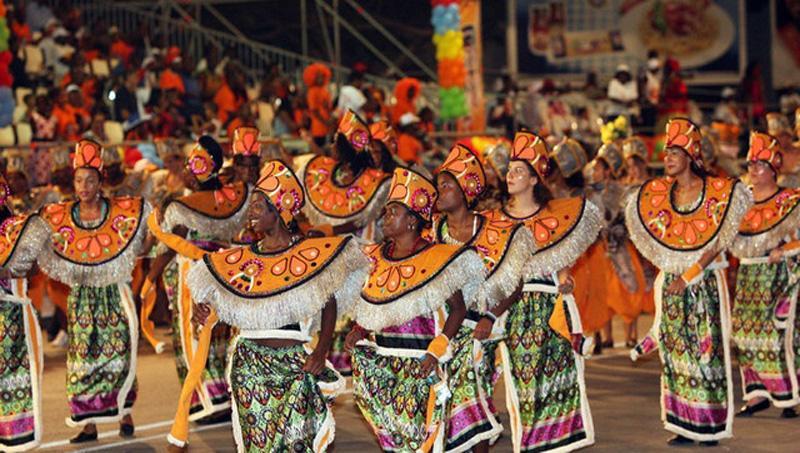
Africa-Press – Angola. The president of the Provincial Carnival Cooperative (COPAC), in Huíla, Pedro Mussunda, defended Wednesday, in Lubango, greater dissemination of Angolan folk dances, as this is the only way they will be known and preserved by the new generation.
Regarding the International Folklore Day, which is being celebrated wednesday, the cultural researcher considered it important to create more effective and “strong” mechanisms that allow children and young people to keep in touch with the typical rhythms of each region, to ensure the continuity of these styles.
He admitted that traditional dance has gone through numerous transformations and influences, in the face of globalization, therefore, the preservation of roots must constitute a commitment of each citizen, especially the older ones, so that they transmit these values of national identity to the new generations.
He argued that it was fundamental to include, now, the study of some of these dances in the school curriculum, to instill in students the pertinence of their preservation, for the maintenance of national history.
“This scientific exercise must combine material and financial resources for deeper research on traditional dance, which allows reaching the most remote places in the systematic study of this art”, he said.
According to Pedro Mussunda, folklore represents a set of traditions and popular manifestations established by legends, myths, proverbs, dances and customs, which are passed down from generation to generation.
Folklore Day is celebrated on August 22, a date chosen because the creator of the original term (folklore), William John Thoms, a British archaeologist, officially expressed the imprint on this day, in 1846, in a publication.
Thus, folklore is understood as a set of practices and knowledge of a certain people. This set has generational transmission and includes dances, songs, characters, typical foods, traditional narratives.
For More News And Analysis About Angola Follow Africa-Press