By Adérito Ferreira
Africa-Press – Angola. The achievement of peace, on April 4, 2002, in addition to the internal gains, proven with the reconciliation of children from the same homeland and the reconstruction of the country, brought external strengths to Angola thanks to its vocation and ability to pass on these experiences to others.
After achieving, on their own, the solution to an internal – in quotation marks – conflict, in the context of the Cold War, the Angolan authorities put into practice the principles of their foreign policy, enshrined in the Constitution.
Among these, emphasis is placed on “Non-interference in the internal affairs of other States”, “Cooperation with all peoples for peace, justice and progress of humanity” and “Peaceful resolution of conflicts”.
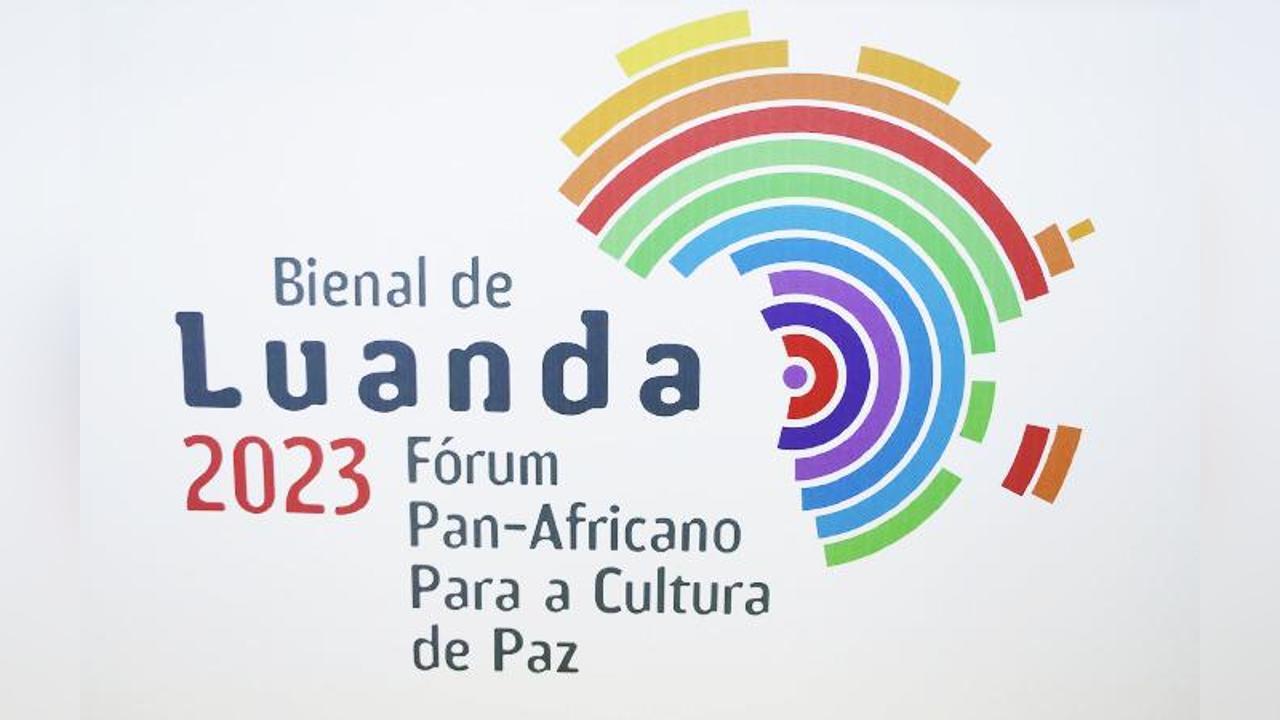
Within this framework, among several initiatives, there is the holding, in partnership with the African Union and UNESCO, every two years, of the Pan-African Forum for the Culture of Peace in Africa – Luanda Biennial.
Next year (2025), the event will have its fourth edition, after those held in 2019, 2021 and 2023.
As if doing school, the Luanda Biennale has served as a stage for promoting cultural diversity and African unity to cultivate peace, on a continent with wars and conflicts of all kinds, due to this, unable to absorb the benefits of its vast natural and human resources crucial to its development.
The event has as its backdrop the strengthening of the pan-African movement for a culture of peace and non-violence, through multilateral partnerships between governments, civil society, artistic and scientific communities, the private sector and international organizations.
In due course, the Conference of Heads of State and Government of the African Union (AU) adopted Decision 558/XXIV, in January 2015, which recommended that the organization’s Commission consult with UNESCO and the Government of Angola, for the organization of the Pan-African Forum for the Culture of Peace in Africa.
The idea that guided the heads of state was to align the event with the Action Plan for a Culture of Peace in Africa, approved in Luanda, at the 2013 Pan-African Forum on “Sources and Resources for a Culture of Peace”.
When, in May 2018, he officially visited France, the President of Angola, João Lourenço, reaffirmed to the director-general of UNESCO, Audrey Azoulay, the country’s commitment to holding the first Biennale, in 2019, which was repeated in 2021 and 2023.
The event brought together, over three days, 850 participants, including heads of state and government, officials from the African Union, UNESCO, the UN and individuals from the African diaspora from 63 countries and 80 partners.
One of the biggest attractions was the panel “Young people, actors in promoting the culture of peace and social transformations on the continent / High-level Dialogue”, in which the Angolan Head of State, João Lourenço, participated, among other dignitaries.
This commitment by the Executive is one of many towards an integrated, prosperous and peaceful Africa, and, among other awards, saw the Angolan President being named “Champion of the African Union for Peace and Reconciliation” at the 16th Extraordinary AU Summit on Terrorism and Unconstitutional Changes of Government in Africa, in Malabo, Equatorial Guinea, on May 28, 2022.
Peace diplomacy passes through Luanda
Another example is seen in Angola’s presidency of the International Conference on the Great Lakes Region (CIRGL), and in its efforts to mediate the political crisis between the Democratic Republic of Congo (DRC) and Rwanda.
This issue has made Luanda an authentic hub, hosting several regional mini-summits and different audiences, from the Presidential Palace to Cidade Alta, to entities that trust in Angola’s value and experience in conflict resolution.
Last week, the UN special envoy for the Great Lakes Region, Huang Xia, was in the Angolan capital, who said he needed to hear from João Lourenço his assessment of the progress of the situation in the region.
Almost simultaneously, the AU mediator for the restoration of peace between the DRC and Rwanda, João Lourenço, discussed regional issues by telephone with the acting president of the African Union, the Head of State of Mauritania, Mohamed Ould Ghazouani.
The day before, he spoke with the Angolan statesman, in Luanda, the President of South Sudan, Salva Kiir, about the peace process in the DRC. The latter is acting President of the East African Community (EAC).
Outside of Luanda, João Lourenço, as Acting President of SADC, and the democratic Congolese statesman, Félix Tshisekedi, took the opportunity to meet, on the sidelines of the Extraordinary Summit of the SADC Troika, in Lusaka, on 23 March. This analyzed security in the southern region, with emphasis on eastern DRC and northern Mozambique.
In the same context, Angola, in the person of the Minister of Foreign Affairs, Téte António, mediated, on March 21, in Luanda, a meeting of delegations from Rwanda and the DRC, headed by the Rwandan Minister of Foreign Affairs and Cooperation, and Vincent Biruta, and by the Congolese Deputy Prime Minister and Minister of Foreign Affairs, Christophe Pen’Apala.
Before these developments, and in a space of less than two weeks, Paul Kagameh, President of Rwanda, and Félix Tshisekedi, from the DRC, were in Luanda and confirmed to the mediator, João Lourenço, the green light to meet, an event already in preparation.
To all these items must be added the fact that the current month of April (Peace and Reconciliation in the country) marks for Angola the beginning of a new mandate, the fourth, in the Peace and Security Council (CPS) of the African Union, aimed at peace and stability on the continent.
ANGOP
For More News And Analysis About Angola Follow Africa-Press