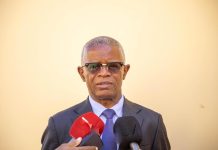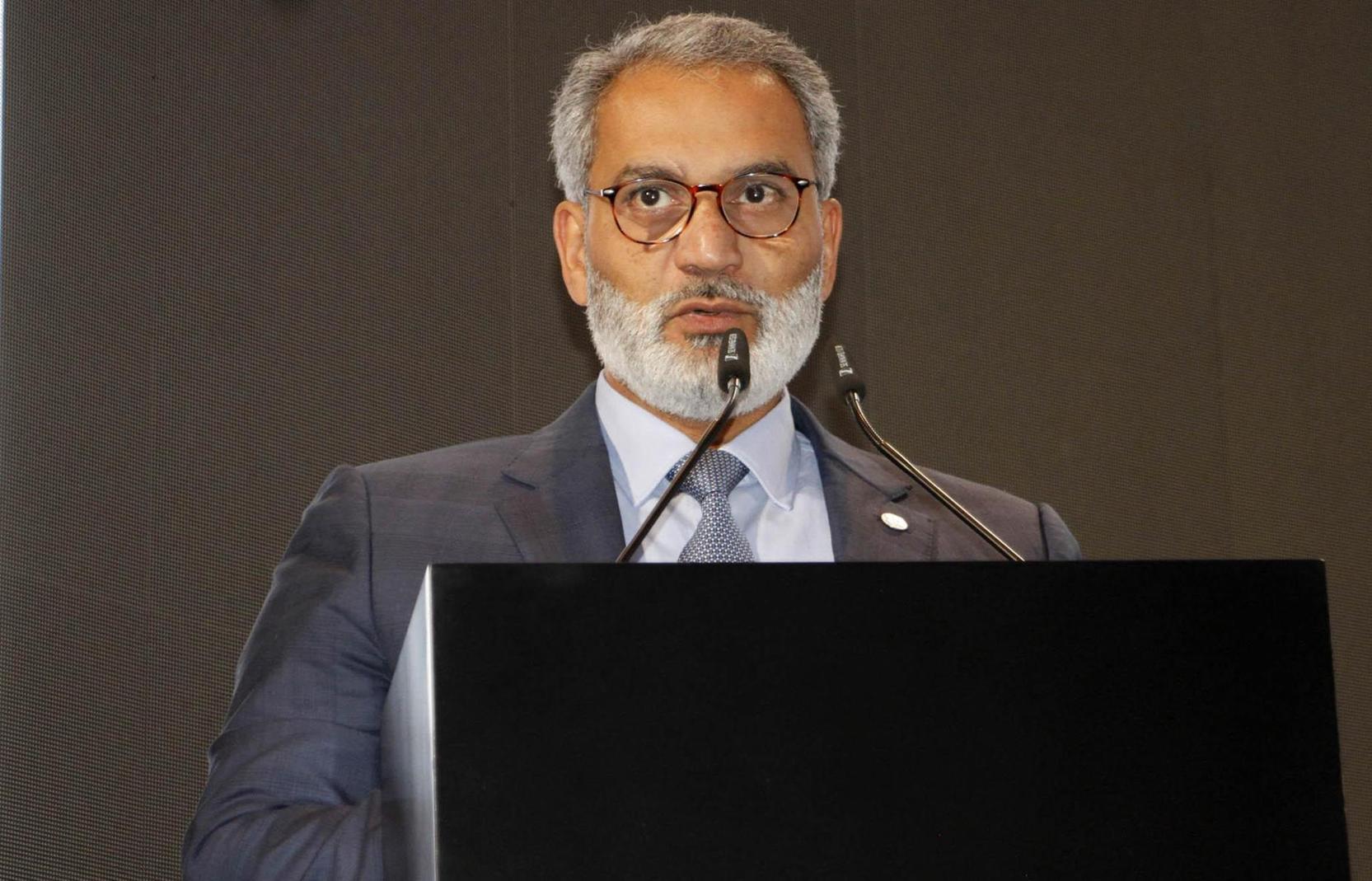
Africa-Press – Angola. The secretary general of the Organization of Petroleum Producing Countries (OPEC), Haitham Al-Ghais, praised, Wednesday, in Luanda, Angola’s role in this institution that establishes the policy for the production and sale of 13 crude oils .
Haitham Al-Ghais recalls the moments that he considered “remarkable” in the contributions of Angola, represented by the holder of the oil portfolio, Diamantino Azevedo, as head of the Angolan delegation in several sessions held by OPEC.
Angola’s most recent contribution, he added, was made two months ago, when the country participated in the organization’s eighth seminar that took place in Vienna, Austria, where its representatives enriched the event’s approaches.
Haitham was speaking at the opening of the International Conference and Exhibition on “Oil and Gas”, an event in which he is participating for the second time.
In the organization, Angola has a production quota of 1,455,000 barrels of oil, at a time when production is still below 1,200,000 barrels, which means that it is not yet reaching the figure that it expects to increase in 2024.
In April of this year, 2023, Angola was the largest oil producer in Africa, surpassing Nigeria.
According to OPEC’s monthly report published at that time, Angola produced 1.06 million barrels of oil per day, benefiting from the 23% drop in Nigeria’s oil production, which stood at 999,999 barrels per day, a drop of 1.3 million of production in March of this same year.
Market perspectives _
According to OPEC’s global oil projections shared at the event by the Secretary-General, the global population is projected to increase by 1.6 billion by 2045, and the global economy is estimated to grow twice as much in the same time frame.
With the results of this shift, global energy demand is predicted to increase by more than 23% by 2045, and clearly, all forms of energy will be needed, according to Haitham al Ghais.
Oil demand is projected to increase globally by around 110 million barrels per day in the year in question, and this number could be exceeded if policies that promote alternative forms of energy are not materialized.
To meet future demand needs, the global oil sector will need a cumulative investment of US$12.1 trillion by 2045.
He added that current annual investment estimates have been well below this level, due to the challenges and increasing focus on environmental and social governance (ESG).
“The stability of the oil market is one of the essential prerequisites for a favorable investment environment in the industry”, he highlighted.
For this reason, OPEC+ decided to take appropriate actions to allow balance between supply and demand in the market.
Based on observations made by the UN, worldwide, 675 million people still lacked electricity in 2021, and in Sub-Saharan Africa the numbers reached 50% of the population.
Globally, 2.3 billion people, representing almost 30% of the global population, continue to depend on deficient and polluting energy systems such as cooking fuels.
According to Haitham Al-Ghais, energy poverty constitutes an example that highlights the great importance of alternative climate policies that adhere to the principles of equity, responsibility for achieving the common goal.
For More News And Analysis About Angola Follow Africa-Press