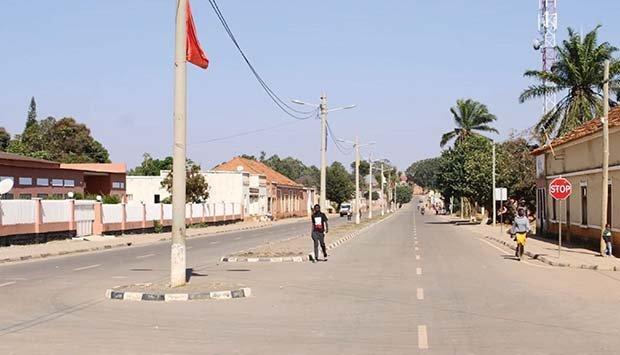
Africa-Press – Angola. The image of the municipal headquarters of Catabola, in the province of Bié, is improving every day, as a result of the work of the Integrated Plan for Intervention in Municipalities (PIIM).
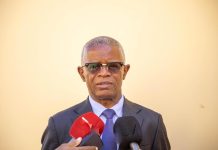
According to administrator Madalena Wanga da Silva, when all the works are finished, the village will have a dignified image. “The municipality’s headquarters is gaining a new image, as a result of the actions of PIIM and others included in the Local Development and Combating Poverty Program”, she highlighted.
Among the works, some ongoing and others already completed, Madalena Wanga da Silva highlighted the construction of five schools with 12 classrooms each and two with seven classrooms and the asphalting of 5.8 kilometers of the municipal headquarters.
At the moment, he added, construction work is underway on the Mother and Child Center, the municipal building, Jardim Dr.Walter Strangwei and the earthworks of 58 kilometers of secondary roads.
Madalena Wanga da Silva highlighted that, with this and other social impact projects being carried out in the locality, the inhabitants of the municipality of Catabola will see some of their concerns resolved.
“For those who knew Catabola, I believe you will now be impressed by the fact that you can travel along the town’s main arteries without worrying about inhaling dust”, he said.
The Catabola administrator recognized that, despite the progress made in carrying out the works, there are still many challenges in putting the municipality on the path of development.
“The current image of the municipality’s headquarters is notable, but we still have the challenge of requalifying the urban structure, which involves arranging sidewalks and curbs, expanding the energy and drinking water distribution network and other services essential to the population”, he said.
Madalena Wanga da Silva was concerned about the poor condition of the road that connects the city of Cuito to the municipality of Catabola and the secondary and tertiary roads. “The biggest Achilles heel lies, above all, in the main road that connects Catabola to Cuito, which is in poor condition”, she lamented.
Education and Health
The administrator of Catabola confirmed the Health and Education sectors are the authorities’ bets and that more schools and medical centers will soon be built in areas with more inhabitants
Even so, he highlighted the fact that, currently, children do not need to leave the municipality to continue their studies in other locations, as was the case recently. To this end, the administrator highlighted, the action of the Provincial Government has contributed greatly, which spares no effort to erase the marks of the war that completely destroyed the few infrastructures inherited from colonial times.
Although the situation has improved, the administrator promised that more schools will continue to be built “until there are no more children outside the education system”. The municipal administrator also announced, soon, the start of construction of a cultural center intended essentially to young people.
Catabola has a fully equipped municipal hospital, a missionary hospital, 13 medical posts and four health centers in the four communes.
The investment in this sector does not stop there. Local authorities intend to build more health units with the aim of bringing health services closer to communities.
Return of the children of the earth
The works execution plan, which includes the construction of health centers and posts, schools and houses for staff, has made many young people from other parts of the country look for work in the municipality, infected by the enthusiasm and commitment of those who had Catabola as their birthplace.
This is the case of Ferreira António, a primary school teacher, who the war forced to take refuge in Luanda, but returned “to help recover the time that the country was forced to spend defending national integrity”. “The war Fortunately, it is over and the children of the land, including those, like me, who were forced to abandon it, must help, each in their own sector, in the socioeconomic development of the municipality”, he urged.
Agricultural potential
With regard to agricultural production, Madalena Wanga da Silva reported that the Municipal Administration continues to raise awareness among peasants about the advantages of organizing themselves into associations, which allows them to obtain bank credits and increase production.
“We have potentially agricultural land, but we need to work it more and in a different way to have better harvests”, he appealed.
At the beginning of the year, peasants received work tools to increase production areas.
Madalena Wanga da Silva also said that more projects will be built in Catabola, despite the current economic situation. As priorities, she highlighted the strengthening of school and health networks, in addition to the supply of drinking water and electricity and the construction of housing.
“The municipality of Catabola has enormous agricultural potential, water resources and arable soils that, if exploited properly, can serve as support for the development of the region and guarantee better living conditions for its inhabitants. We enthusiastically await the completion of the rehabilitation and the asphalting of the road, for better movement of people and goods, as well as the mechanization of agricultural activity for large-scale production”, he said.
Traditional authorities
The municipal governor of Catabola, Artur José, said he was “very pleased with the development recorded in recent years”, highlighting that the rehabilitation of the Benguela Railway, which allows the train to reach the Luau border, brings further progress to the municipality .
The traditional authority highlighted the importance of agricultural credit and the need to rehabilitate the road that connects Catabola to Cuito and also to Camacupa and Cuemba, to facilitate the flow of agricultural products to large consumption centers.
The mayor also expressed satisfaction that all peripheral neighborhoods have electricity coming from a generator set installed at the municipality’s headquarters, but said he was concerned about the lack of drinking water in the suburban area, as well as bank branches.
Public employees, mainly nurses and teachers, have to pick up their salaries at the provincial headquarters, he lamented.
jornaldeangola
For More News And Analysis About Angola Follow Africa-Press