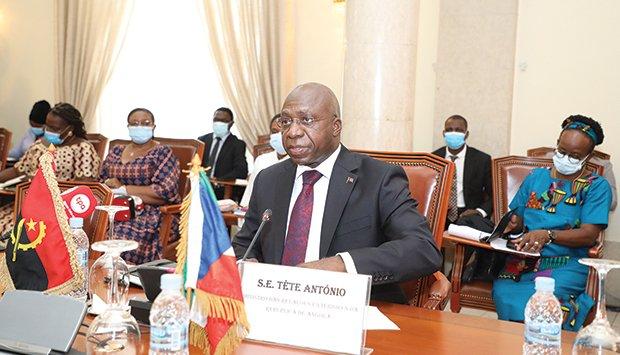
Africa-Press – Angola. The Minister of Foreign Affairs, Téte António, highlighted, Thursday (6), in Luanda, when opening the activities alluding to the Portuguese Language Week, “its importance as a factor of unity of the peoples”, a condition that allowed to be recognized by UNESCO as intangible heritage, in November 2019.
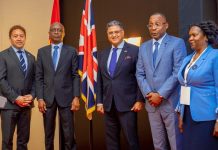
Téte António, who underlined the particularity of the “unity of peoples” through Portuguese, in a moment of great pride for its speakers, opened the celebration of the Portuguese Language, which also marks the festivities of the CPLP Culture, whose ties are solidified The minister presided over the ceremony, flanked by the Minister of Education, Luísa Grilo, the executive secretary of the CPLP, Zacarias da Costa, and the director of the UNESCO International Bureau, Ydo Yao.
The executive secretary of the CPLP, Zacarias da Costa, valued the commitment of the Member States, which have done a lot for “the valorization of the Portuguese language as an important platform to facilitate multilateral cooperation with countries of other linguistic expressions”.
For the Minister of Education, Luísa Grilo, when highlighting the intemporaneity of the Portuguese language in Angola, she mentioned that it was already spoken in the 15th century, in the capital of the Kingdom of Kongo, “which would have been the first region of the African continent to be concerned with the teaching and learning of a language from Europe.” For his part, the director of the UNESCO International Bureau, Ydo Yao, who spoke on behalf of the Organization’s Directorate General, emphasized the cultural multilateralism of the Portuguese language, which, in the in his opinion, “to penetrate the cultures and civilizations of countries whose official languages are not Portuguese”. The activity took place in the Afonso Van-Dúnem Mbinda auditorium, in the headquarters of the Ministry of Foreign Affairs, and was witnessed by the Minister of Foreign Affairs and Cooperation of Equatorial Guinea, Simeon Oyono Angue.
Newspapers highlight Portuguese language in Ethiopia
The Embassy of Angola in the Federal Democratic Republic of Ethiopia, Addis Ababa, reported yesterday that two Ethiopian newspapers with wide circulation, the Ethiopian Herald and the Addis Zemen, published texts on the importance of the Portuguese language in the universal context, with a generic approach. dedicating “Three cheers to a very lively language”, thus making speakers proud on the Portuguese Language Celebration Day.
The texts published in English and Portuguese, in the Ethiopian Herald newspaper, and in Amharic, the most widely spoken language in Ethiopia, and in Portuguese, in Addis Zemen, mark the beginning of the program to commemorate the World Portuguese Language Day, organized by the Community of Portuguese Speaking Countries (CPLP) in that East African country.
The CPLP group in Ethiopia is made up of the embassies of Angola (which holds the current presidency), Brazil, Guinea-Bissau, Equatorial Guinea, Mozambique and Portugal. The articles, generically entitled “Three cheers to a very lively language”, which highlights the proclamation of the ephemeris by UNESCO, in 2019, with a global recognition of the Portuguese language, indicates the note that Jornal de Angola had access to.
The program also foresees the holding, in Addis Ababa, of a round table on the importance of the Portuguese language in international organizations, especially in the African Union (AU), and the constitution of the dynamic nucleus of the Association of Portuguese-speakers in Ethiopia.
The commemorations also involve the organization of a scientific-practical seminar on conflict resolution and processes of pacification and national reconciliation, according to the message of the CPLP group in Ethiopia, from the celebrations of the World Portuguese Language Day,,”Three cheers to one very lively language”.
The Portuguese language is an identity marker, linking hundreds of millions of individuals, on all continents, uniting people through the waves and tides of the oceans. The note adds that it is a rich and dynamic language, maternally adopting the lexical contributions of many other languages, such as those spoken by the first Amerindian nations, the Arab Bantu peoples, Cantonese, Hindi and several European languages, thus forming the Portuguese language. .
Commercial purposes triggered the spread of Portuguese, more than 500 years ago, by coastal trading posts. Recalling, at that remote time, unknown seas and exchanges of information, knowledge of new plants and fruits, the name of sweet orange, which means “bertukan”, in Amharic, and “burtukaana”, in the Oromo language, metonymic extensions of the name Portugal.
The message explains that the Portuguese language is open to various accents, sounds, rhythms, flavors, voices, stories, landscapes, lifestyles, and is present in innovation, tourism, economy, scientific research and advanced technology.
For More News And Analysis About Angola Follow Africa-Press