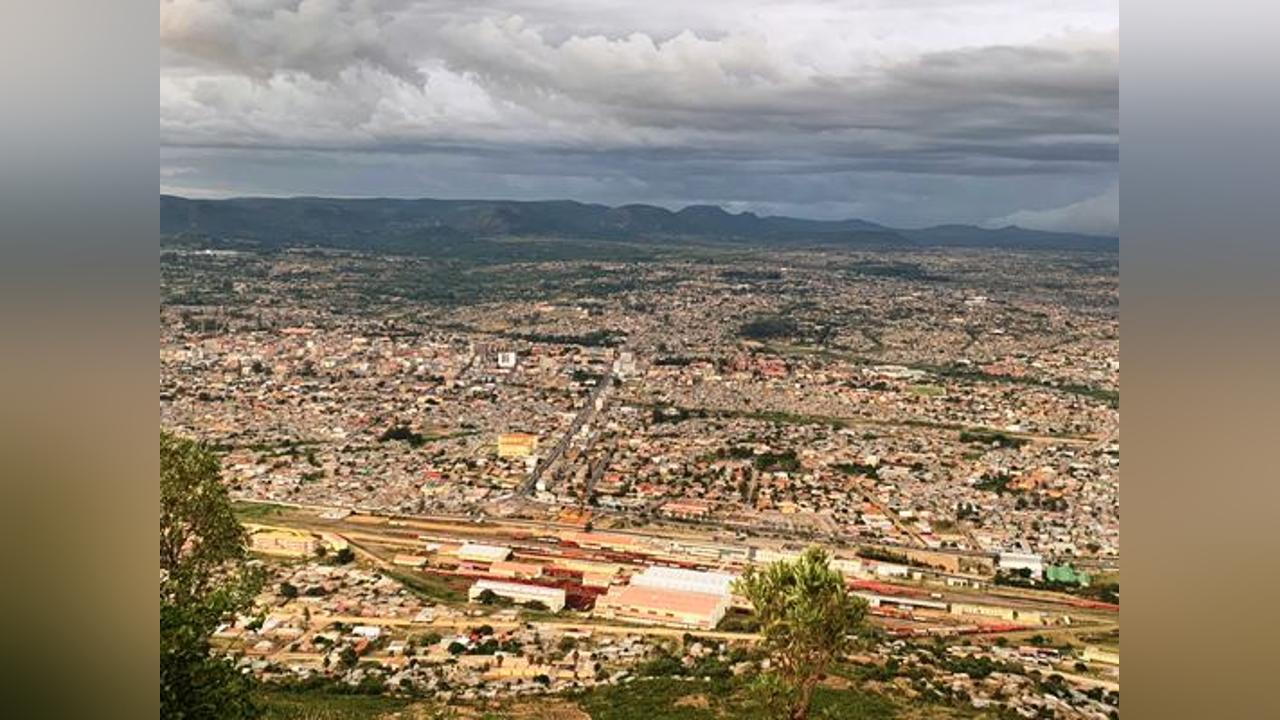
Africa-Press – Angola. More than 90 kilometers of peripheral and urban roads in the neighborhoods of the city of Lubango, Huíla province, in an advanced state of degradation, are going to be reclassified, as part of the integrated infrastructure construction program being implemented across the country.
In addition to the construction and rehabilitation of peripheral and urban roads, extending for close to 90.44 kilometres, the requalification includes the execution of complementary services such as the collection and treatment of solid waste, water collection and distribution, rehabilitation of public buildings and lighting. .
Pursuant to Presidential Order No. 181/23 of 24 July published on the Government Portal, the President of the Republic, João Lourenço, authorizes the expense for opening the Simplified Contracting Procedure, based on material criteria, with a view to awarding the contract in value 287.3 million.
The Head of State also determines the supervision of public urban requalification works in the city of Lubango with an expenditure of USD 2 million 895 thousand.
For this purpose, it delegates to the Minister of Public Works, Urbanism and Housing the competence, with the power to sub-delegate, the practice of all decision-making acts and supervisory approval, including the preparation of procedural documents, adjudication, celebration and signature of the contracts.
The Ministry of Finance, according to the report, is responsible for ensuring the financial resources necessary for the proper execution of contracts, as well as the registration of projects in the Public Investment Program (PIP).
In June 2017, Lubango received the assignment of the city’s integrated infrastructure works, in government funding of USD 212 million 682 thousand 926.83, awarded to the consortium Omatapalo and Imosul.
The works covered a radius of one hundred kilometers of infrastructure, including roads and social facilities. They also covered another 17 kilometers of drinking water supply network to the centrality of Quilemba, as well as arrangements in leisure units.
In all, these works, which lasted five years, involved 31 streets, most of them in the urban core, and others were born in the periphery, enhancing neighborhoods such as Machiqueira, Ferrovia, Mitcha, Mapunda and Tchioco.
In addition to the streets and kilometers of technical networks, it also involved repairing gardens and restoring green spaces.
For More News And Analysis About Angola Follow Africa-Press