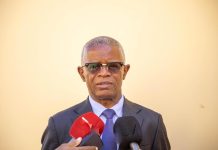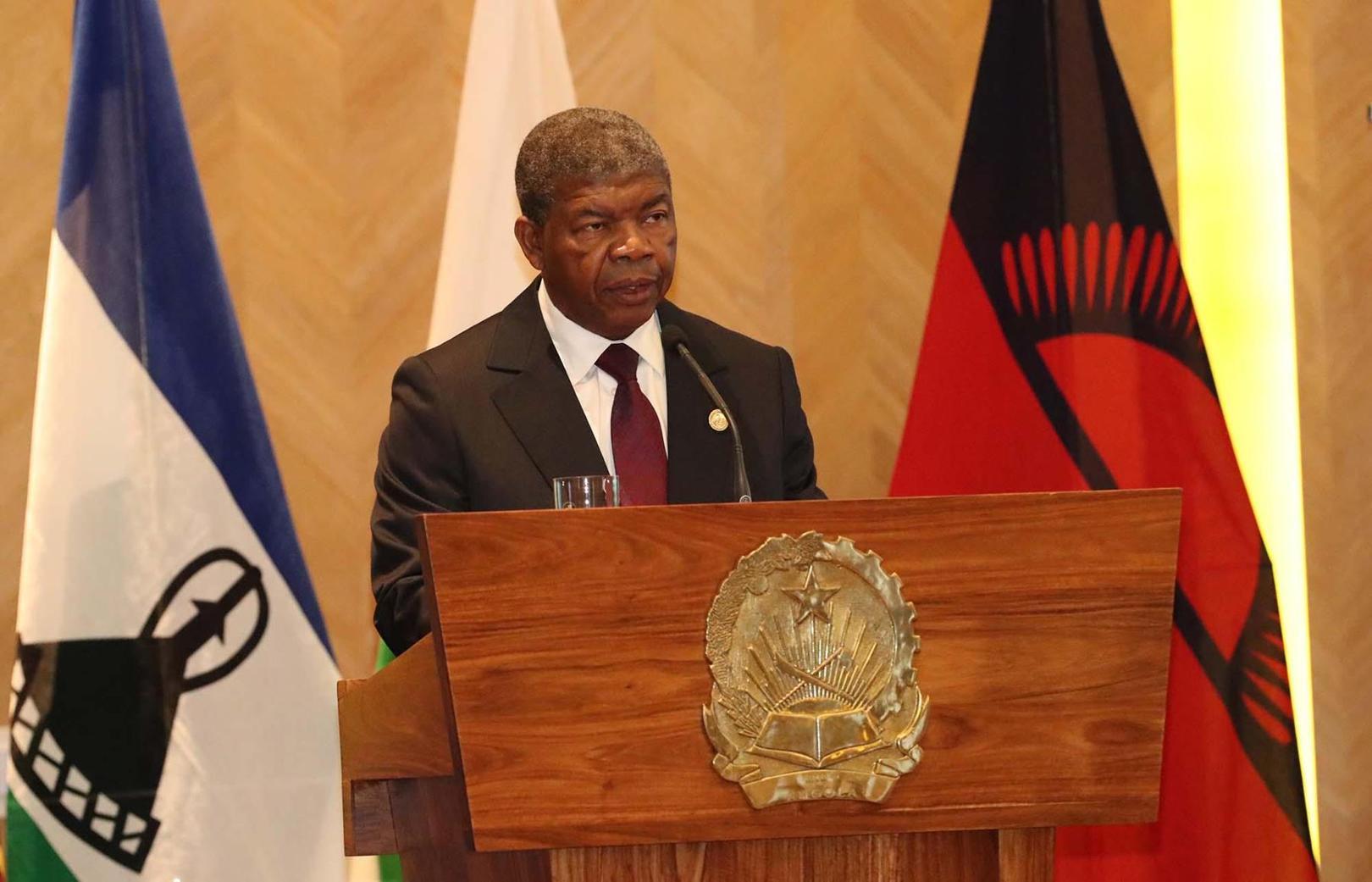
Africa-Press – Angola. The President of the Republic, João Lourenço, pointed out, this Thursday, the commitment to human capital as one of the main pillars of economic and social development in SADC.
In his acceptance speech for the Rotating Presidency of SADC, João Lourenço said that the main challenge will be centered on training and technical-professional training of youth, with a view to obtaining skills that facilitate access to employment, with the aim of tackling the challenges of the 4th Industrial Revolution and the digitization of the region’s economies.
According to João Lourenço, there is a need to invest in the diversification of funding sources for carrying out projects and programs at Member State and regional level, with a view to reducing the level of dependence on the always helpful and remarkable solidarity of partners of international cooperation.
“We will pay particular attention to the need to operationalize the Regional Development Fund (FDR) and other mechanisms for attracting existing investments”, he said.
João Lourenço appealed to Member States to speed up the approval and ratification of the Agreement on the Operationalization of the SADC Regional Development Fund, a key tool for raising essential financial resources to pursue the ambitious program of Regional Industrialization and, consequently, to the fulfillment of the SADC Regional Integration Agenda.
In addition to investing in human capital, he said, for the industrialization of our countries and, consequently, the Southern African region, it is necessary to invest in electrification, increasing energy production and sharing through the interconnection of transmission grid systems.
“But we also need to expand and interconnect our road and rail networks, to guarantee greater maritime and air connections between our countries, to have a greater flow of commercial exchanges and movement of people and goods, to have a real regional integration”, stressed the Angolan statesman.
Angola, he added, is making a great effort in the recovery and construction of infrastructures such as the Lobito Corridor, which will facilitate the interconnection and movement of people and goods between the Atlantic Ocean and the Indian Ocean, as well as the placement of products for export in international markets under more advantageous conditions.
João Lourenço highlighted that serious investment is being made in increasing energy production from non-polluting sources and in transmission networks.
“In the field of telecommunications, Angola invested in a fiber optic cable that already connects us to the Democratic Republic of Congo and Zambia, with the prospect of expansion to the entire SADC region and East African states”, he said.
The Angolan communications satellite (ANGOSAT II), he stressed, is capable of providing services to countries in our region.
The Angolan Head of State also pointed to the construction of the Lobito oil refinery, which opens the prospect of a greater supply of refined products to the region, through a pipeline that will connect it to the neighboring Republic of Zambia.
“It is also important to highlight here some of the main challenges to security in the region, such as the situation prevailing in the East of the Democratic Republic of Congo, where, as you know, we have been developing joint efforts between the CIRGL, the ECCAS, the SADC and the African Union, for the resolution of the intricate conflict in this region of the sister country”, asserted João Lourenço.
At SADC level, he highlighted the approval of the deployment of a regional force within the framework of the SADC Standby Force, as a regional response to efforts aimed at restoring peace and security in the territory of the Democratic Republic of Congo.
“Despite the progress made, the challenge of combating terrorism and violent extremism in the Mozambican province of Cabo Delgado still prevails, where, for its resolution, SADC has developed actions worthy of emphasis and with encouraging results”, he said.
João Lourenço the extension of the SADC Mission in Mozambique for another 12 months, aiming at the continuation of actions to combat violent extremism and terrorism in that country, thus allowing the consolidation of stability and the creation of conditions for the resettlement of populations.
“In addition to the aforementioned issues and taking into account the process of consolidation of democracies in the region, SADC will register, during our mandate, elections in the Democratic Republic of Congo, ESwatini, Madagascar and Zimbabwe”, he said.
SADC, said João Lourenço, will monitor the electoral processes in these countries, so as to guarantee the holding of peaceful, free and fair elections, in harmony with the principles and guidelines that govern the holding of elections in the region.
“The region must remain united in the firm will to guarantee an environment of peace, security and stability as fundamental factors to provide important levels of economic and social development in the Community and to deepen the process of Regional Integration. We consider it essential that governance in our region is increasingly participatory and inclusive and that it contributes to the promotion of a culture of peace and respect for democratic principles”, he defended.
The Angolan statesman advanced that, despite the extremely challenging international environment in the face of the consequences of the Covid-19 pandemic and the harmful effects of the conflict in Eastern Europe, the region has shown signs of resilience and concrete responses aimed at mitigating the adverse effects, especially with regard to the increase in food prices, especially cereals, which have had a negative impact on food security.
“More than the challenges, our region must explore the opportunities arising from this extremely unfavorable environment for economic and social growth, investing in initiatives and policies aimed at strengthening agricultural production, in order to achieve food self-sufficiency”, he declared.
He expressed the conviction that, with commitment, solidarity and help, Angola will have a presidency with satisfactory results in terms of the objectives and goals defined, leaving a portfolio of achievements necessary for the acceleration of the industrialization process in the region, always assuming the human capital and as starting points for the operationalization of the summit motto.
Headquartered in Gaborone (Botswana), one of SADC’s major objectives is to make the region industrialized by 2063, as set out in the organization’s Strategy and Roadmap, approved by the Heads of State and Government, in April 2015, for the period 2015-2063.
Created in August 1992, SADC is made up of Angola, South Africa Botswana, Comoros, Democratic Republic of Congo (DRC), Eswatini, Lesotho, Madagascar, Malawi, Mauritius, Mozambique, Namibia, Seychelles, Tanzania, Zambia and Zimbabwe.
angop
For More News And Analysis About Angola Follow Africa-Press