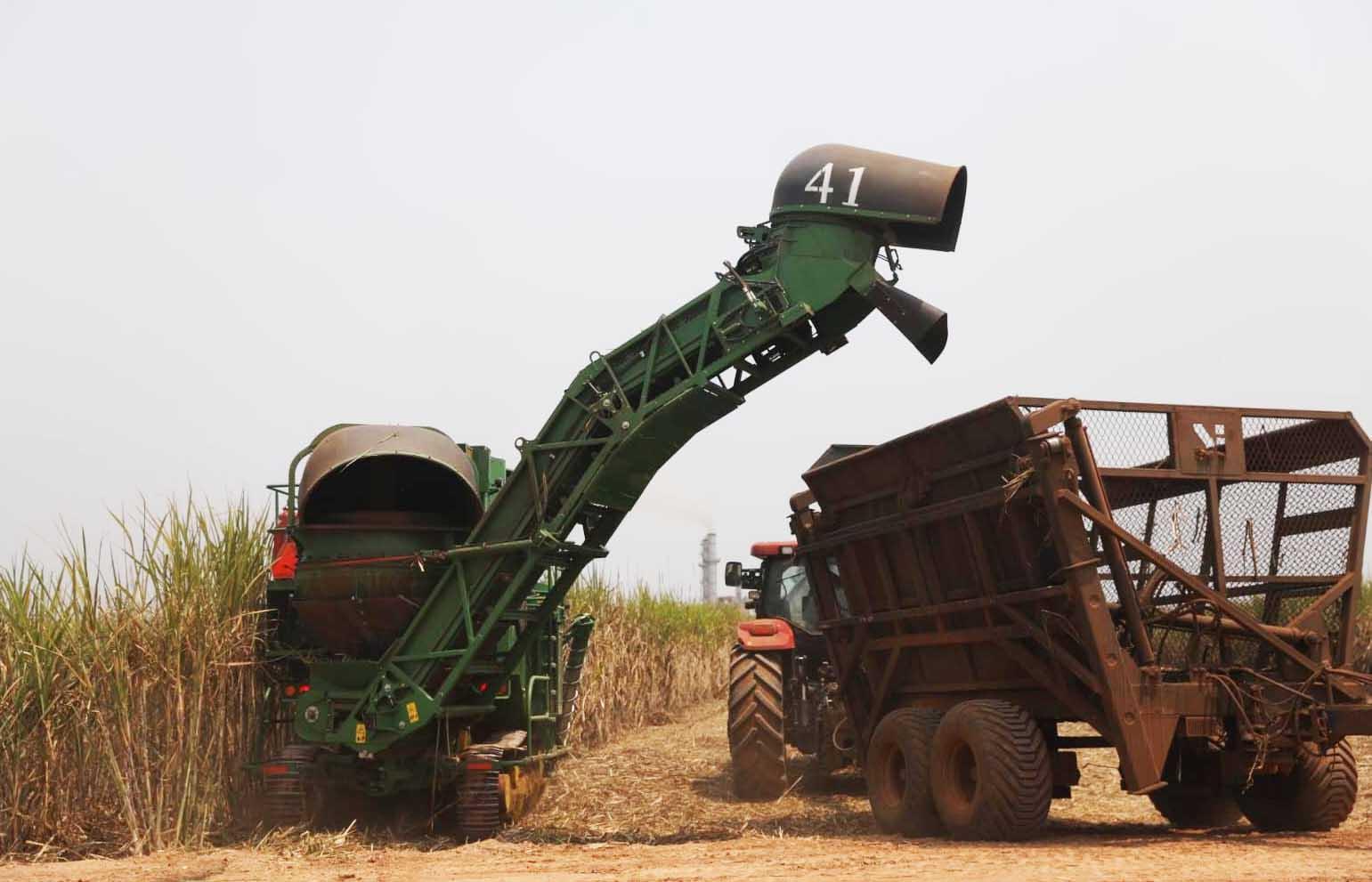
Africa-Press – Angola. The President of the Republic, João Lourenço, witnessed, this Wednesday, the cutting, conservation and collection of sugar cane at Biocom, as part of his visit to the province of Malanje.
Biocom is the first Angolan company to produce and sell sugar, ethanol and electricity from biomass. It contributes to the creation and maintenance of more than three thousand direct jobs. Ninety-eight percent of its staff are national.
The Head of State, who was accompanied by state ministers, ministers and the provincial governor, observed the collection of sugar cane, the packaging of sugar and assessed the functionality of the factory’s laboratory.
The Holder of the Executive Power watched, beforehand, a video that depicts the different stages of production at Biocom.
Uirá Ribeiro, general director, thanked the Head of State “for the support and commitment he has put into increasing the importance of the company and reinforcing the contribution to the increase in national production and the economic diversification of the country”.
The person in charge said that Biocom’s efforts to contribute to the increase in national production and the diversification of the economy were visible.
He informed that, within the scope of increasing production and food security, the company is developing studies to start the production of grains (corn, beans or soy), through the crop rotation system with sugar cane in sugarcane renewal areas.
He added that with this new procedure they estimate to reach, at the maturity of the project, up to six thousand hectares per year of area for the planting of grains.
Regarding the energy transition, in addition to the availability to produce fuel ethanol, he indicated that they are working on the technical-commercial viability for the production of green hydrogen, with the use of surplus clean and renewable electricity produced by Biocom.
He reaffirmed his total commitment to increasing national production for the social and economic development of the country, in a sustainable manner.
“We want to continue to do so by generating jobs and income for the population, empowering small sugarcane farmers and treading the possible and necessary path towards food self-sufficiency”, he stressed.
He emphasized that Biocom is a capital-intensive company and its growth requires considerable investment in equipment and raw materials.
This year, 2023, the company celebrates its 10th harvest. Biocom’s general director considers the fact to be an important milestone for the country.
The Minister of Industry and Commerce, Rui Mingueis, hopes that the level of production at Biocom will increase more and more, with the commitment to incorporate more agents into the production system, in particular the communities that live in the surroundings of the project.
Memorandum with Credit Guarantee Fund
Biocom signed a Memorandum of Understanding with the Credit Guarantee Fund, to allow the promotion of sugarcane production among peasant cooperatives.
The credit guarantee issuance provides for financing up to 50 percent of the capitalization of the Credit Guarantee Fund, valued at 50 billion kwanzas.
The parties believe that, with this agreement, the conditions have been created to promote national production.
Biocom has an installed capacity to produce 2.2 million tons of sugar cane in an area of 40 thousand hectares, 250 thousand tons of white crystal sugar, 37 thousand cubic meters of neutral alcohol and to supply the country with an additional 136 megawatts of clean renewable electrical energy.
Located in the Agro-industrial Complex of Capanda, Biocom began production in June 2014.
Biocom’s sugar production is destined for the domestic market. Electricity production has as its client the National Electricity Transmission Network (RNT) and ethanol is supplied to the beverage and cleaning products industries.
Currently, the company employs more than three thousand and 400 workers, mostly from the province of Malanje.
For More News And Analysis About Angola Follow Africa-Press