Africa-Press – Angola. The Program to Combat the Effects of Drought in Southern Angola, abbreviated PCESSA, created by the Executive to face the constraints caused by this natural phenomenon in the lives of the populations of these areas, is focused, for the time being, on the provinces of Cunene, Namibe and Huíla, informed the minister of Energy and Water, João Baptista Borges.
This program, designed by the Angolan Executive, initiated a set of structuring solutions that aim to change, forever, the lives of the populations residing in these provinces, which have long been ravaged by the effects of the drought.
One of the main objectives of PCESSA, which is being closely followed by the President of the Republic, João Lourenço, is to create, in those provinces in the south of the country, the conditions for regional development, so that all the Angolan people can reap the fruits of this enormous collective effort.
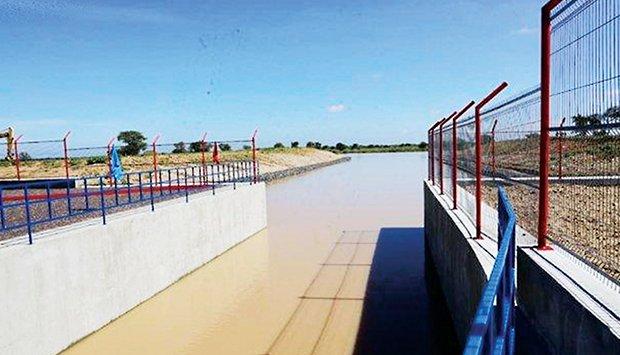
Cunene is the first province to experience the results of the program, with the start-up, in April of this year, of the water transfer system from the Cunene River, in the village of Cafu, to the areas of Ombala Yo Mungu, Namacunde and Ndombondola.
Inaugurated by President João Lourenço, this infrastructure, budgeted at around US$136 million, has significantly improved the lives of the local population, who were suffering the effects of drought on their skin, as the director of -General of the National Institute of Water Resources, Manuel Quintino.
“Before, when there was a drought, there was a great suffering of the populations, who were prevented from developing agricultural activities and watering the cattle”, said the official.
Manuel Quintino recalled that the lack of water in those regions led cattle raisers not only to travel long distances, during transhumance, in search of liquid to water the cattle.
“Today, the satisfaction on the faces of the populations is notorious, as they already have water close to their homes”, he stressed.
The project is benefiting 235,000 people, 250,000 head of cattle, an area of approximately 5,000 hectares for the practice of irrigated agriculture and has generated 3,275 direct jobs.
The minister of Energy and Water said that, in addition to this project, Cunene province also benefited from other large projects, also aimed at combating the effects of the drought, which are currently underway.
João Baptista Borges, assured that, with these projects completed, including the Canal do Cafu, Cunene will be left with a situation from the point of view of guaranteeing water, in the dry season, which will allow the population to have water to drink, water the cattle and practice agriculture.
“In other words, we do not foresee the possibility of situations such as that which, for decades, have been cyclically occurring in Cunene”, he stressed. Effects of the drought in southern Angola, three large dams, namely Arimba, in the Lubango area, Onampulo and another one of Embala do Rei, in the Gambos area.
The official said that these dams will be located in the Caculuvale river basin, allowing water to be stored during the rainy season, as well as making it available to the Lubango area. This city cyclically experiences the supply problem, given the fact that the water that flows there is underground.
“When it stops raining, there is no more water in the aquifers and the population is affected by it”, said the minister, adding that these dams will help to have water permanently.
For Namibe province, the Minister of Energy and Water said that the solution to the problem of drought will involve the construction of six large dams and the rehabilitation of about 41 dams that existed in colonial times, but which have ceased to function. its role, due to lack of maintenance.
“We are going to rehabilitate these 41 dams and build another six large dams, which will naturally have, in addition to water storage, water purification systems, so that people can consume it”, he said. João Baptista Borges concluded by saying that the initiative will also have the water channeling system for those areas where there are, in fact, larger population agglomerations.
For More News And Analysis About Angola Follow Africa-Press