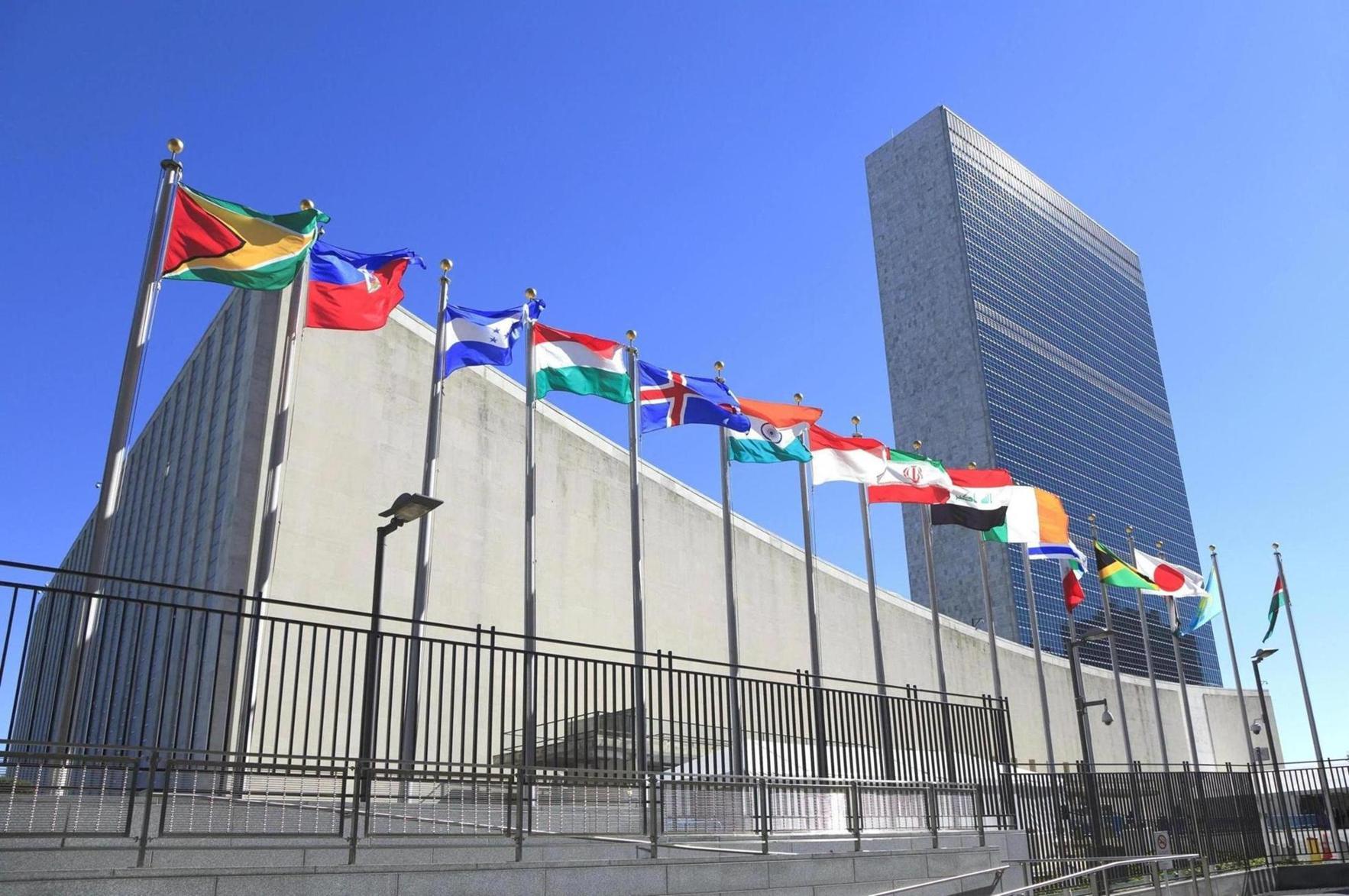
Africa-Press – Angola. The usual annual debate session began on Monday at the United Nations headquarters in New York City, within the scope of the 78th General Assembly of the 193 UN member states, where the Heads of State and Government meet, at different summits, to discuss global challenges, regional problems and localized situations that, obviously, have a great impact.
Angola is represented by President João Lourenço, who joined his counterparts and spoke yesterday on the podium of the world’s largest political and diplomatic platform.
The UN General Assembly is one of the main and most representative bodies of the United Nations System, as all Member States are on an equal footing, with the same voting rights. The General Assembly plays a fundamental role, regardless of the non-binding nature of its deliberations, in formulating policies and making decisions on a wide range of issues of global importance, including international peace and security, sustainable development, human rights, trade international, among others.
The central theme of the meetings of this 78th General Assembly is “Rebuilding trust and rekindling global solidarity: accelerating action on the 2030 Agenda and the Sustainable Development Goals (SDGs) towards peace, progress and sustainability for all people”.
What will be debated at the UN?
Although the current geopolitical context continues to be “overshadowed” by the war in Ukraine, there is no doubt that other topics, no less important and as urgent as international peace and security, could also predominate in the various discussion summits during the approximately five days of debates at UN headquarters.
Some of these topics, which have to do with climate change (tragedy in Libya, Morocco, India and Greece), predominate during debates at the UN regarding urgent actions to combat the climate crisis, including the reduction of greenhouse gas emissions. greenhouse and the transition to renewable energy sources.
The debates, during the 78th UN General Assembly, also involve discussions and recommendations around the issues set out in the UN Charter related to the peaceful resolution of conflicts, the promotion of friendly relations between States, which may, significantly or not , affect the actions of the UN.
International security, with the war in Ukraine, focuses the attention of those involved, alongside the escalation of tension between Azerbaijan and Armenia, as well as coups d’état in Africa.
Refugees and migration will also be part of the discussions, at a time when the refugee and migrant crisis is increasing, including human rights, the promotion of integration and inclusion, especially in the wake of tragedies.
As for Covid-19, although the global health risk involving the aforementioned disease and other pandemics has reduced, Covid continues to raise questions and answers regarding the modality for vaccination coverage.
Overall, global climate action will dominate, with particular focus, all discussions at the 78th United Nations General Assembly.
In addition to debates on today’s most pressing issues, the General Assembly will also serve to define the mandates of UN members and permanent members, members of the Economic and Social Council, the Guardianship Council and the Secretary-General of the UN, as well as the International Court of Justice and the actions of the Security Council.
Finally, the General Assembly debates and seeks to promote a framework in which it is possible to rebuild trust and rekindle global solidarity to accelerate actions on the 2030 Agenda and the Sustainable Development Goals (SDGs).
According to the program, the so-called SDG Summit took place yesterday, which consists of evaluating the implementation process of the 2030 Agenda and the 17 SDGs, which culminated in the adoption of a political declaration.
Today there will be a dialogue on financing for the development and implementation of the Addis Ababa Action Agenda, a UN initiative to mobilize resources to achieve the SDGs.
Later today, the General Assembly will convene the so-called Climate Ambition Summit – a segment in which political and civic leaders and representatives of civil society organizations are called – to respond to climate urgency. The meeting for the preservation, preparation and responses to pandemics also takes place today, in an act in which the president of the General Assembly joins the WHO representative, to call on the Heads of State and Government for national, regional and international mobilization , in order to prevent future diseases of global incidence.
Voting in the General Assembly
Each Member State has one vote, a reality that places all countries on an equal footing, regardless of their economic and financial condition.
The definition of the UN budget also passes through the General Assembly, certainly the second most important body in the United Nations System, after the Security Council.
Operation of the General Assembly
The functioning of the General Assembly is structured in the UN Charter, signed in June 1945, in the city of San Francisco, in the state of California. The objectives include approving the UN budget, establishing financial assessments for Member States, electing members of the Security Council and other bodies, as well as electing the UN Secretary-General, who is appointed on the recommendation of the Council of Security.
Criticism of the General Assembly
Like any entity whose attribution and responsibility covers the entire world and impacts the lives of billions of human beings, the UN’s actions are not exempt from considerations that focus on the need to adapt it to the current context and shape it to future challenges. After all, and to a large extent, the United Nations System, in terms of its responsibilities and decision-making processes, continues to reflect a reality that existed more than 70 years ago.
One of the criticisms of the General Assembly has been the lack of effectiveness of deliberations related to the promotion of friendly relations, peace between nations and some inability to impose itself in the face of disputes or controversies involving, for example, anti-Semitism, women’s rights minorities, even more worrying situations such as military conflicts themselves .
What Angola brought to the world stage
President João Lourenço, who also spoke as acting president of the Southern African Development Community (SADC), began by referring to the need to evaluate the “set of progress achieved in implementation of the Sustainable Development Goals (SDGs) at the level of the different regions represented at this Summit”. He recalled that “the Southern African region has been subject to the consequences of climate change with all the harmful effects that this has on the economies of region”.
For the leader of the regional organization, there is an urgent need to find solutions to guarantee food security, sustainable development, climate change and adherence to renewable energy, as well as the need to access financial resources under less draconian conditions.
The intervention by the leader of the regional organization had an eminently futuristic nature, as he alluded to “objectives that are specific to the region and also shared by international partners” and which, in João Lourenço’s view, “will be achievable with a combined effort among all, but with much fewer constraints and obstacles if the relationship between the region and the international community develops without punitive unilateral measures against SADC member states, as in the case of Zimbabwe”.
The Highest Magistrate of the Angolan Nation ended his intervention by reaffirming “the importance of global cooperation, solidarity and joint action to face the multiple and complex challenges that the world currently faces”, appealing to the United Nations General Assembly to to place these purposes in the priority chapter of your agenda for the coming times.
History of the most controversial speeches
The Heads of State and Government, as a rule, must make a speech, in order of precedence of the countries, which must not last more than 15 minutes. Despite being “kindly reminded” of this on the UN website, speeches notoriously tend to last longer. The longest speech given to the General Assembly lasted 269 minutes – almost 18 times the recommendation and had been given by the late Cuban leader Fidel Castro Ruz, in 1960.
Alongside the long speeches, the history of the more than 70 sessions of the General Assembly also includes numerous controversial interventions, which is why some of the most memorable speeches and their impact are listed here.
Yasser Arafat, historic leader of the PLO
In 1974, before the UN General Assembly, Yasser Arafat had delivered a historic speech in the following terms: “I appeal to you to allow our people to establish independent national sovereignty over their own land. Today, I have come to bring an olive branch and a freedom fighter’s weapon. Don’t let the olive branch fall from my hand. Don’t let the olive branch fall from my hand”, in reference to the prospects of peace and war that were allegedly at stake. Nikita Khrushchev
, former President of the former Soviet Union
The former President of the then Soviet Union entered the history of speeches at the UN General Assembly, through his actions and not through words. In 1960, Nikita Khrushchev was furious when the head of the Philippine delegation, Lorenzo Sumulong, referred to “the peoples of Eastern Europe and elsewhere” who were allegedly deprived of the free exercise of their civil and political rights and who were swallowed up by so to speak, by the then Soviet Union. This statement angered the Soviet leader, who then labeled Sumulong as “an idiot, a puppet and a lackey”. The debate heated up and the room erupted in murmurs. Khruschev continued to defend his point of view and began banging his fist on the podium to calm the room, but when all failed, at one point, according to several reports, the Soviet leader took off his shoe and slammed it on the podium. In his memoirs, Khrushchev even mentioned the incident, although to this day there are doubts whether the entire incident The narrative corresponds exactly to the events. However, Khruschev’s angry gesture went down in history and became a famous gesture of heated conversations.
Daniel Ortega, President of Nicaragua
Nicaraguan President Daniel Ortega used the UN platform to attack US policy in Central America, particularly the funding of the Contra rebels and support for the Somoza dictatorship, which Ortega said “dried up the people of Nicaragua.”
Ortega said in 1987, before the UN General Assembly, addressing President Reagan of the United States, the following: “Before you consult the hotheads who present various military options, such as a military invasion, remember, President Reagan , that Rambo only exists in films.”
Donald Trump, former President of the United States
Former President of the United States Donald Trump managed to stay in the headlines for his incendiary speeches of a nationalist nature. However, in his 2017 speech, he attracted attention when he threatened to “totally destroy” North Korea, treating its Head of State as a “rocket man”. Trump began his speech by directly targeting North Korea. He emphasized the country’s tainted history, which is famous for dictatorships, kidnappings, missile and nuclear tests, limited rights and oppression of citizens.
Hugo Chavez, former President of Venezuela
The former President of Venezuela, Hugo Chávez, drew attention when he compared the then President of the USA, George W. Bush (2001-2009), to Satan. “The devil came here yesterday and this room is still it smells like sulfur,” Chavez said. “And even today it smells like sulfur. Yesterday, ladies and gentlemen, from this platform, the President of the United States, the knight I refer to as the devil, came here, speaking as if he owned the world,” said Chávez. The late Venezuelan President was openly against the United States from the beginning of his days in office and made a point of reiterating this before the world at the General Assembly in New York, USA. The incident occurred in 2006 and Chávez referred to his comment in 2009, when Barack Obama came to power. Putting himself back in the spotlight, Chávez said that “it no longer smells like sulfur”, when Obama became the new POTUS (in English, President of the United States).
Former President of Iran Mahmoud Ahmadinejad
Former Iranian President Mahmoud Ahmadinejad regularly used the UN as a platform to attack Western powers, especially his country’s arch-enemy, the State of Israel. In 2008, during a session of the UN General Assembly, he said, referring to the Jews, that “the dignity, integrity and rights of the American and European people are being manipulated by a small but deceitful number of people called Zionists. Although they are a tiny minority, they have dominated an important part of the financial and monetary centers, as well as the political decision-making centers of some European countries and the USA, in a deceptive, complex and stealthy way”.
Muammar Gaddafi former President of Libya
Popularly known as Colonel Gaddafi, the murdered Libyan leader made his debut at the UN General Assembly in 2009. Gaddafi was in power from 1969 until 2011, but he did not even once address the Assembly. However, in 2009, the then Libyan strongman decided to make up for all the lost time and gave a 100-minute speech, where everyone was shocked and surprised, among other emotions. In his famous 100-minute speech, Gaddafi raised questions on various issues such as poverty, injustice, racism and much more. He reached breaking point when he attacked the UN, comparing it to the terrorist organization Al Qaeda. “It shouldn’t be called the Security Council, it should be called the terror council,” said the Libyan leader, referring to the most important body in the United Nations System.
Benjamin Netanyahu Prime Minister of Israel
The name of the current Israeli Prime Minister went down in the history of the UN General Assembly as the leader who used the most controversial posters and virtual devices in the Assembly. In 2012, Netanyahu took to the podium to convince world leaders that Iran was very close to developing a nuclear weapon. The current Israeli leader picked up a whiteboard that had a cartoon-style illustration of an effervescent bomb. This bomb was divided into three parts: 70%, 90% and the “final phase”. Netanyahu, with a red mark on the drawing, stated that Iran was 90% ready for the nuclear weapon. However, Tehran has always rejected the claims of Netanyahu and has repeatedly reiterated that he never developed a nuclear weapon.
For More News And Analysis About Angola Follow Africa-Press