By Domingos Cambiete
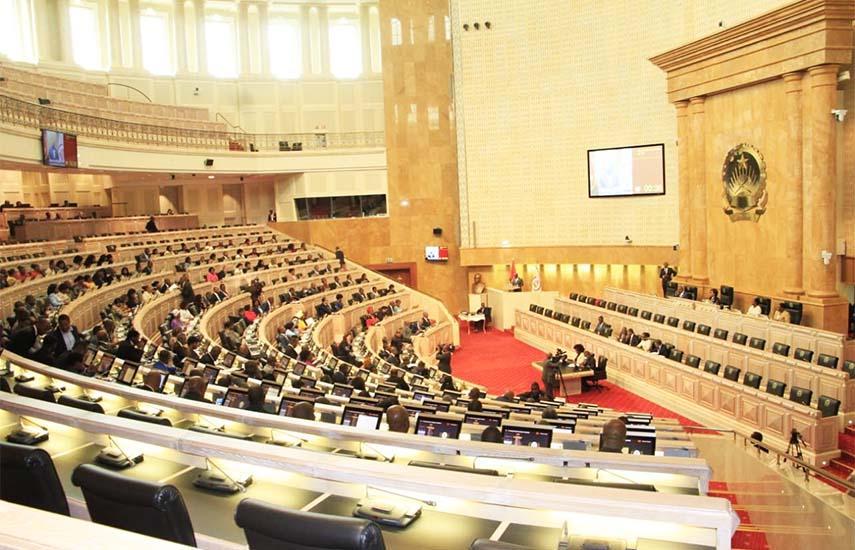
Africa-Press – Angola. The approval of the Proposed Law that changes the Value Added Tax (VAT) Code, from 14 to 5% for widely consumed food products, marked parliamentary activity during the year 2023.
The legislative initiative of the President of the Republic aims to adapt it to the current reality of the country, in the economic and social aspects, to make life easier for families and companies.
Among the products proposed in the 5% VAT package are beef, pork, sheep and goat meat and offal, poultry (except turkey and goose), fish (except shark, salmon and cod), milk, yogurt, butter or daisy.
The package also includes eggs, edible vegetables, fruits, tea, cereals, corn and wheat flour, cooking oil, sugar, pasta, bread and other pastries, water and salt.
The measure extends to agricultural inputs (5% VAT), with a view to macroeconomic stabilization, increasing the supply of essential goods for widespread consumption and respective production factors.
The parliamentary opposition defended, throughout the specialty debate, the total elimination of VAT for these food products widely consumed by the population.
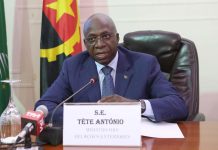
The Minister of Finance, Vera Daves, clarified that a VAT below 0% is unfeasible, because the final effect is to increase product prices and not reduce them.
In the proposal, the province of Cabinda will now have a single VAT incidence rate, in the order of 1%, taking into account the Special Regime in force in that region, due to geographic discontinuity.
Meanwhile, among the laws definitively approved in the 2023-2024 parliamentary year, the Proposed Law that approves the General State Budget (OGE) for the 2024 economic year stands out, which provides, among others, a salary increase in the Function Public in the order of 5%.
The OGE proposed by the Executive comprises revenues and expenses valued at 24 billion kwanzas, which represents an increase of 22.94% in relation to the 2023 OGE.
The Proposal takes as a reference the average price of a barrel of oil of 65 dollars, thus considering the uncertainties and risks associated with the volatility of the price of a barrel on the international market.
Concrete actions to boost the economy and improve the business environment are also being considered, with emphasis on the provision of a financing line valued at 153 million kwanzas, with competitive interest rates, to finance projects in the agricultural, industrial and commercial sectors.
The National Assembly unanimously approved UNITA’s request to the Executive for the Country’s General Debt Strategy in the Medium and Long Term.
The Angolan Parliament also gave the “green light” to the President of the Republic, as Holder of Executive Power, to legislate on updating the Customs Tariff of Import and Export Duties.
The legislative authorization aims to update the Customs Tariff in force in the country, approved by Presidential Legislative Decree no 10/19, of 29 November, in order to adapt it to the 2022 version of the Nomenclature of the Harmonized System (HS) of Designation and Coding of Goods.
The scope of this legislative procedure is the adjustment of import duty rates applicable to imported goods and similar or identical products produced in the country, in order to encourage the increase and diversification of national production, particularly agricultural production and industrial protection.
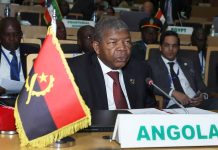
The parliamentary year was also marked by the “failure” of the process of indicting and dismissing the President of the Republic, João Lourenço, formalized by the UNITA Parliamentary Group.
The Plenary of the National Assembly voted not to create an Eventual Commission on the Process of Accusation and Dismissal of the President of the Republic”, signed by 90 deputies from the UNITA Parliamentary Group, which should prepare an opinion report to continue the process.
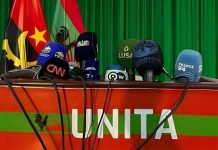
UNITA’s initiative was rejected with 123 votes against (MPLA and PHA) and one abstention from the PRS. UNITA, the proponent of the initiative, did not participate in the voting process, due to alleged procedural irregularities.
Deputy Jú Martins, from the MPLA, said that what was at stake were “UNITA’s tricks” which, after announcing that it would propose the dismissal of the President of the Republic in July, was “simulating the involvement of civil society” and “managing this element ” to present the initiative on the eve of the opening of the new parliament.
The MPLA parliamentary group reiterated its unconditional support for the President of the Republic and the MPLA, João Lourenço, “in the arduous but noble task of directing the country’s destinies, continuing with his brand of governance and leadership in resolving the problems that affect the population”.
In light of article 129 of the Constitution, the President of the Republic can only be removed from office for crimes of treason and espionage, for crimes of bribery, embezzlement and for definitive incapacity to continue holding office.
João Lourenço is serving his second term, legitimized by the victory of his party (MPLA) in the 2022 general elections, by an absolute majority.
IPU meeting
In another area, Angola made headlines with the holding, for the first time, last October, of the 147th General Assembly of the Inter-Parliamentary Union (UIP), which was attended by more than a thousand delegates from all over the world.
The event, opened by the Angolan Head of State, João Lourenço, was marked by the election of the new president of the UIP, Tanzanian Tulia Ackson, who replaced the Portuguese Duarte Pacheco in the position.
Tulia Ackson, recognized as one of SADC’s most active MPs, is the first woman from the IPU on the African continent and in the history of East Africa to hold the presidency of this organization.
At the Luanda meeting, the IPU presented the Cremer-Passy 2023 Prize, which was awarded to the President of the Parliament of Tuvalu, Samuelu Teo, who has made a notable contribution to climate action.
The representative of Tuvalu, a country located in southern Oceania and made up of a group of nine islands and atolls, did a commendable job in promoting awareness of the effects of climate change, especially in small island states like his.
The President of the Angolan Parliament, Carolina Cerqueira, highlighted, with satisfaction, the fact that the Luanda meeting brought together more than 1,500 participants from 131 countries around the world, representing a record number of States’ participation in the last UIP meetings.
In the Luanda Assembly, peace and the commitment of the deputies to include these values in the great causes of humanity predominated.
The general debate focused on parliamentary action for peace, justice and strong institutions.
In their interventions, the deputies expressed themselves in favor of the silence of weapons wherever war is currently raging, as well as in favor of a negotiated solution to the conflicts.
ANGOP
For More News And Analysis About Angola Follow Africa-Press