Africa-Press – Angola. The Standing Committee of Senior Officials of the Community for the Development of Southern Africa (SADC) recommended to Member States, this Tuesday, in Luanda, greater investments in the agricultural and livestock sector with a view to food security.
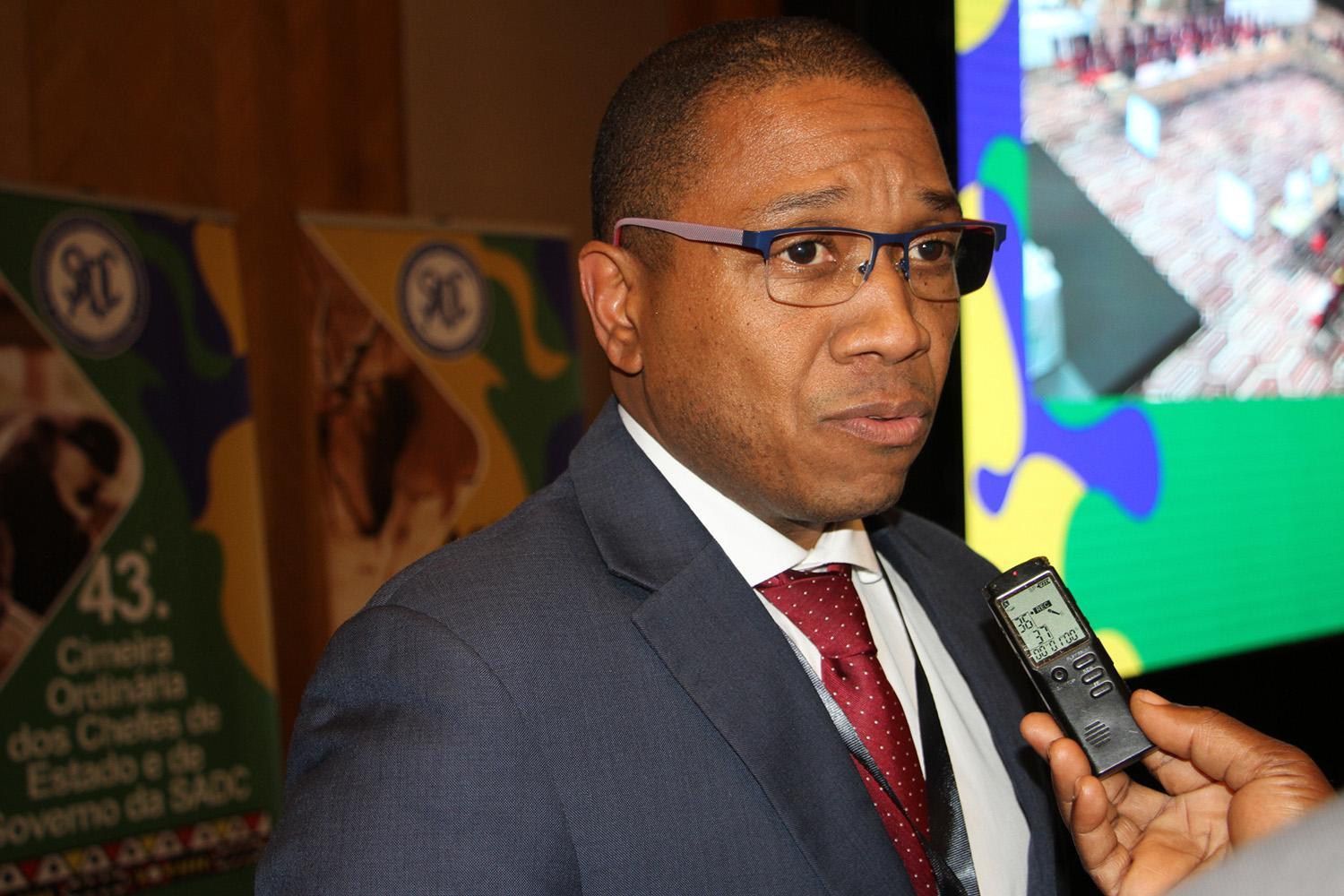
The fact was made known by the spokesman for the 43rd Summit of Heads of State and Government of SADC, to be held on the 17th, at the end of a preparatory expert meeting for the session of the Council of Ministers, scheduled for the 13th and 14th of this month.
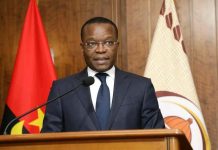
According to Ambassador Jorge Cardoso, the Standing Committee of Senior Officials encouraged Member States to invest in the value chain, focusing on industrialization, in order to better face the challenges of food security.
It adds that these recommendations are particularly important in the wake of the cereal crisis due to the Russian-Ukrainian conflict.
The Committee recommended that SADC States face conflicts as an opportunity, taking advantage of their water potential and arable land, with a view to maximizing the production of the food they need.
In this context, he praised the work carried out by the Angolan government, for having adopted, to face the setbacks resulting from the cereal crisis, strategic programs such as “Planagrão” and “Planapescas”.
He stressed that these aim at food security and self-sufficiency through economic diversification.
The also director of Africa, Middle East and Regional Affairs, of the Ministry of Foreign Affairs informed that the Committee also defended the suppression and exemption of entry visas to facilitate the circulation of citizens in the region.
He referred that although the Mobility Protocol has not yet entered into force, since it has not been ratified by most of the Member States, there is an agreement on free movement, for a period of 90 days without visa requirements.
He pointed as good examples to Angola, which has several agreements with countries such as Namibia, Botswana, Zimbabwe and South Africa to facilitate the mobility of people and goods.
Jorge Cardoso informed that the meeting also discussed gender parity in the region’s sovereign bodies, having chosen the advances achieved by countries such as Namibia and South Africa.
The Africa director of MIREX added that the meeting of experts expressed solidarity with countries affected by terrorism, such as the DRC, as a result of the reemergence of the M23, and with Mozambique, which is experiencing some stability.
SADC needs US$1 billion for projects
SADC needs more than US$1 billion to implement its strategic plan for regional development, which includes financing 96 priority projects, informed the spokesperson for the 43rd Summit of Heads of State and Government of the regional organisation.
He referred that the organization’s financial situation inspires care, given the ability of States to honor their commitments, noting that 70% of funding is guaranteed by members and 30% by international cooperation partners.
According to Jorge Cardoso, the regional integration process has been difficult due to the scarcity of resources, but it is expected that the Member States will be able to capitalize on the regional development fund to finance the construction of necessary infrastructures.
In relation to this aspect, he recognized the efforts of some countries, such as Angola, for its commitment to building infrastructure in the Lobito Corridor.
These infrastructures will allow for an interconnection between Angola, the DRC and Zambia, which is expected to have a positive impact on the economies of downstream countries.
He said that the Lobito Corridor will be able to interconnect the Atlantic oceans, via the Port of Lobito (Angola), and the Indian Ocean, in Dar El Salan (Tanzania), with the Angolan State’s own resources and international partners.
The regional organization comprises Angola, Botswana, Comoros, Democratic Republic of Congo, Eswatini, Lesotho, Madagascar, Malawi, Mauritius, Mozambique, Namibia, Seychelles, South Africa, Tanzania, Zambia and Zimbabwe.
Angola assumes this month the rotating presidency of SADC, for a period of one year, after having already done so in 2012.
SADC is an inter-governmental organization created in 1992 and dedicated to socio-economic cooperation and integration, as well as and cooperation in matters of politics and security.
For More News And Analysis About Angola Follow Africa-Press