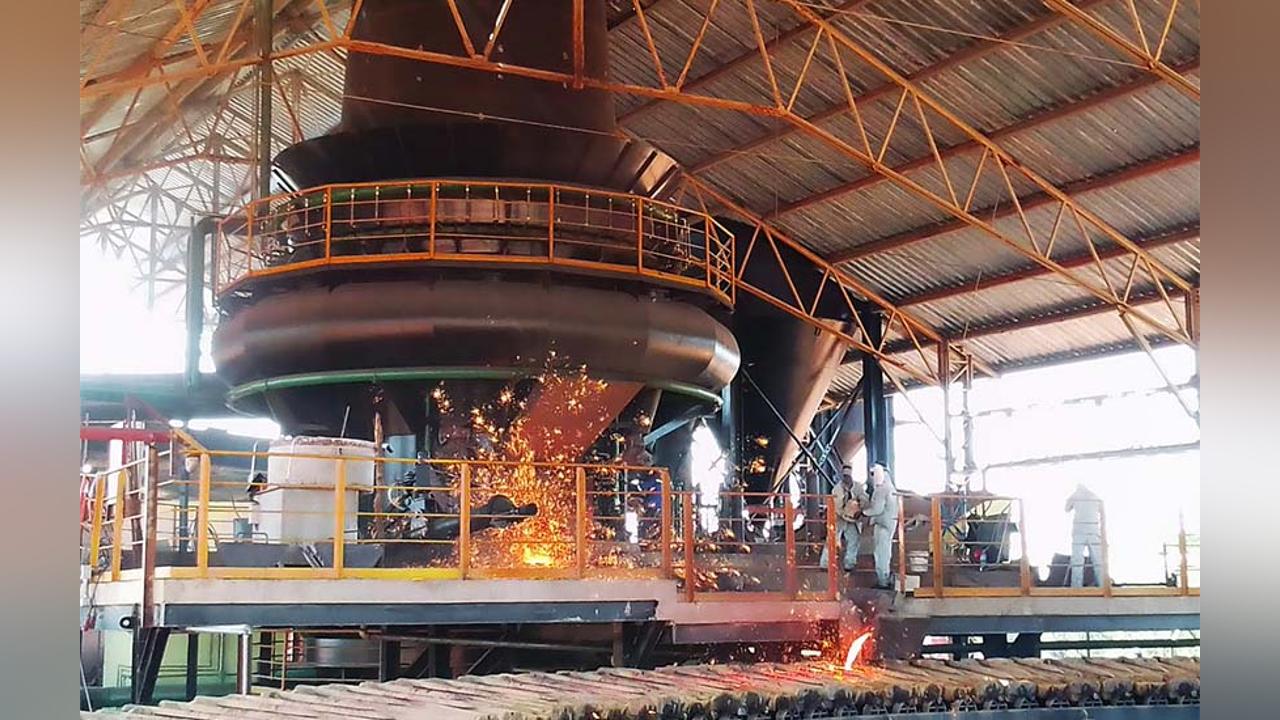
Africa-Press – Angola. Companhia Siderúrgica do Cuchi, in the province of Cuando Cubango, started at dawn Monday, to produce, on an experimental basis, an average of 150 to 200 tons/day of pig iron, against the 300 tons initially projected .
So far, 960 furnaces have been built to support the manufacture of iron, each with a production capacity of more than five thousand and five hundred cubic meters of coal per week.
Speaking to the press, the executive director of Companhia Siderúrgica do Cuchi (CSC), Geraldo Basques, said that the industry, from now on, will boost the country’s sustainable development in this regard.

He referred that this initial process oscillates between 150 and 200 tons/day, until reaching the maximum set at 300 tons/day, to reach a total of 1,500 tons annually in the near future.
So far, more than 50 million US dollars have been invested in the construction of the factory, exploitation of the raw iron mine, movement of the railway line, among other investments.
Deployed in an area of more than two thousand hectares, the company created, in a first phase, 1,200 direct and indirect jobs, of the more than five thousand direct ones foreseen until the terminal phase.
It is the second largest industry of its kind in the world, after Brazil, as well as being the second country in the manufacture of pig iron using renewable energy. Russia and Ukraine are other countries that manufacture, but using fossil fuel.

Currently, a ton of this ore is quoted on the international market between 300 and 400 dollars.
Geraldo Basques said that pig iron could be exported from the Port of Namibe, using the Moçâmedes Railway, to the main international markets, with emphasis on the United States of America, countries in Europe and Asia.
With pig iron in liquid form, he detailed, Angola will carry out the smelting, the transformation into steel and with by-products contribute to the sowing industry, soil correction and fertilizer, for agricultural activity, as nothing from the industry will be wasted.

He assured that the increase in employability, especially youth, will take place with the construction of two blast furnaces and the increase in production itself, which is based on the sufficient mineral reserve of more than 50 years, at a time when the reforestation process has already had start within the CSC.
He pointed out as challenges the construction of a fertilizer manufacturing school, three new blast furnaces, a market for the sale of products, construction of social centers, among others.
For More News And Analysis About Angola Follow Africa-Press