Africa-Press – Angola. The inflation rate in Angola has now entered a marked deceleration rate, and may, by the end of the year, in a more optimistic scenario, settle in a range between 10 and 15 percent.
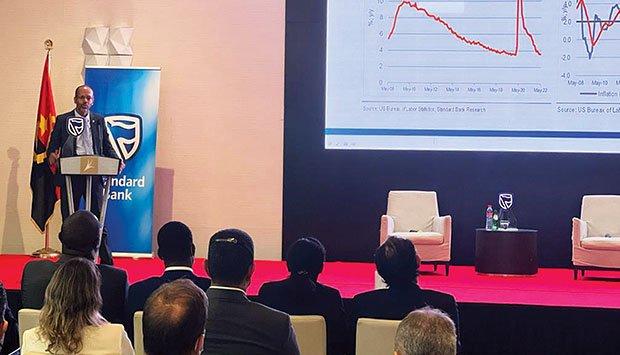
This scenario, more optimistic in relation to the 18 percent that advance the official indications, was presented yesterday, in Luanda, during an “Economic Briefing”, by the chief economist of Standard Bank Angola.
Fáusio Mussá said that the forecasts of his institution are supported by the fact that the reforms implemented by the National Bank of Angola are being successful, there is a significant rise in the price of a barrel of oil and the also favorable results of the macroeconomic reforms implemented by the Government, since 2018.
According to the economist, for the first time since 2015, the oil sector is expected to see an annual increase in oil production from 2.7 percent to 1,155 million barrels per day (mbpd). And, despite the pandemic and the impact of global measures to reduce carbon emissions, Angola managed to mobilize investments in the oil sector to stabilize production, which has been decreasing since 2016.
“The maintenance of the fuel subsidy, a measure that should be temporary, since it distorts relative prices in the economy, and very likely ends up benefiting those who do not need it, as it does not efficiently and effectively benefit low-income and disadvantaged groups , having contributed to the reduction of inflation”, he explains.
Fáusio Mussá assumes that “annual inflation is expected to fall to levels around 16.1 percent at the end of the year, after a peak of 27.7 percent in January, and a level of 24.4 percent percent in May”.
According to Standard Bank’s chief economist for Angola and Mozambique, the strengthening of the Kwanza, which has appreciated by 28.2 percent against the US dollar since the beginning of the year, and 49.2 percent has contributed to the decline in inflation. percent in the last 12 months. The reduction of taxes on essential products and the implementation of a strategic food reserve since the beginning of the year have also contributed to the reduction of inflation.
The objective of the “Economic Briefing” and the initiative to share specialized knowledge, produced by the Research team at Standard Bank, is to add value with regard to issues related to the Angolan economy and the African continent in general.
In turn, the chairman of the Executive Committee of Standard Bank Angola, Luís Teles, said that the signs increase confidence in the Angolan economy.
“We are interested in closely monitoring the evolution and behavior of the Angolan economy. And we have good signs that give us confidence that Angola is on the right path. We have interest rates and inflation on a downward path, a more valued currency, a fiscal tax resulting from greater rigor in the management of public accounts, a growing GDP and high oil prices. However, some structural challenges remain in the composition of the Angolan GDP, which require persistence in the search for greater sectoral diversification of the productive fabric ”, he stated.
For More News And Analysis About Angola Follow Africa-Press