Africa-Press – Angola. The MPLA parliamentary group considered that the Angolan General State Budget (OGE) for the 2026 fiscal year, which was definitively approved on Monday (15) by the National Assembly, translates into a clear political choice that reinforces the State’s social action, consolidates structural reforms and ensures the country’s development.
In justifying his vote, the deputy Jorge Ribeiro Uefu stressed that the MPLA voted in favor because the document guarantees stable, sustainable development focused on the well-being of Angolan families.
He said that the Angolan Executive conceived a document based on four guiding axes: social reinforcement, inclusive economic growth, macroeconomic stability and improved public governance, points that clearly reflect the State’s strategic vision for sustainable and socially balanced development.
For the MPLA parliamentary group, the 2026 State Budget presents a coherent financial architecture, with realistic revenue forecasts and an efficient distribution of expenditure adjusted to national priorities.
It highlighted that more than 25% of total expenditure is allocated to social sectors, reaffirming the focus on the citizen in public policies.
In addition to this budget, there are measures of great impact, such as promotions and career progressions in the civil service, salary increases and raising the income tax exemption threshold to 150,000 kwanzas, measures that strengthen family income, stimulate the economy and help mitigate the impact of inflation.
PRS
The Social Renewal Party (PRS) also voted in favor, reaffirming its commitment to the national interest and the stability of the country, hoping that the execution of the State Budget will be guided by transparency, equity and efficiency for the benefit of all citizens.
PHA
The Humanist Party of Angola (PHA) points to its favorable vote on the 2026 State Budget (OGE/2026) because it reflects and recognizes that the specialized review process allowed for technical adjustments and clarifications that reinforce the formal coherence and feasibility of this legislation.
According to Bela Malaquias, the party Head, the favorable vote “does not cross out a critical reading,” since the 2026 State Budget maintains a fragmented architecture of the social sector.
She also said that the way the State conceives public policies persists, viewing citizens as recipients of support, classified as administrative segments by age, gender, or social condition, and not as members of families capable of producing and sustaining social cohesion.
“This model, although well-intentioned, produces a dispersion of resources, overlapping programs, and high administrative costs, because the contradiction is not only conceptual, it is operational,” she considered.
UNITA
On the other hand, Angola largest opposition party, the only party that voted against, argues that the State Budget should promote economic prosperity and citizens’ happiness.
“This is not about the cult of opposition. There are fundamental reasons that led UNITA to vote against the budget that has just been approved, that is, the reasons for our vote against are profound, multiple and refutable, because the 2026 State Budget prioritizes luxury, protocol, and the security of an elite over the basic needs of the nation and operates in opacity,” he justified.
According to Faustino Mumbica, from the UNITA Parliamentary Group, this legislation ignores families, who, according to the INE (National Institute of Statistics), account for 80% of the country’s agricultural production and who, incidentally, should be the structuring axis for the true and sustainable diversification of the national economy.
“The Executive Branch has not presented a clear budget allocation for the implementation of local authorities, which represents a refusal to fulfill this constitutional objective long promised to the citizens of the more than 300 municipalities,” he stated.
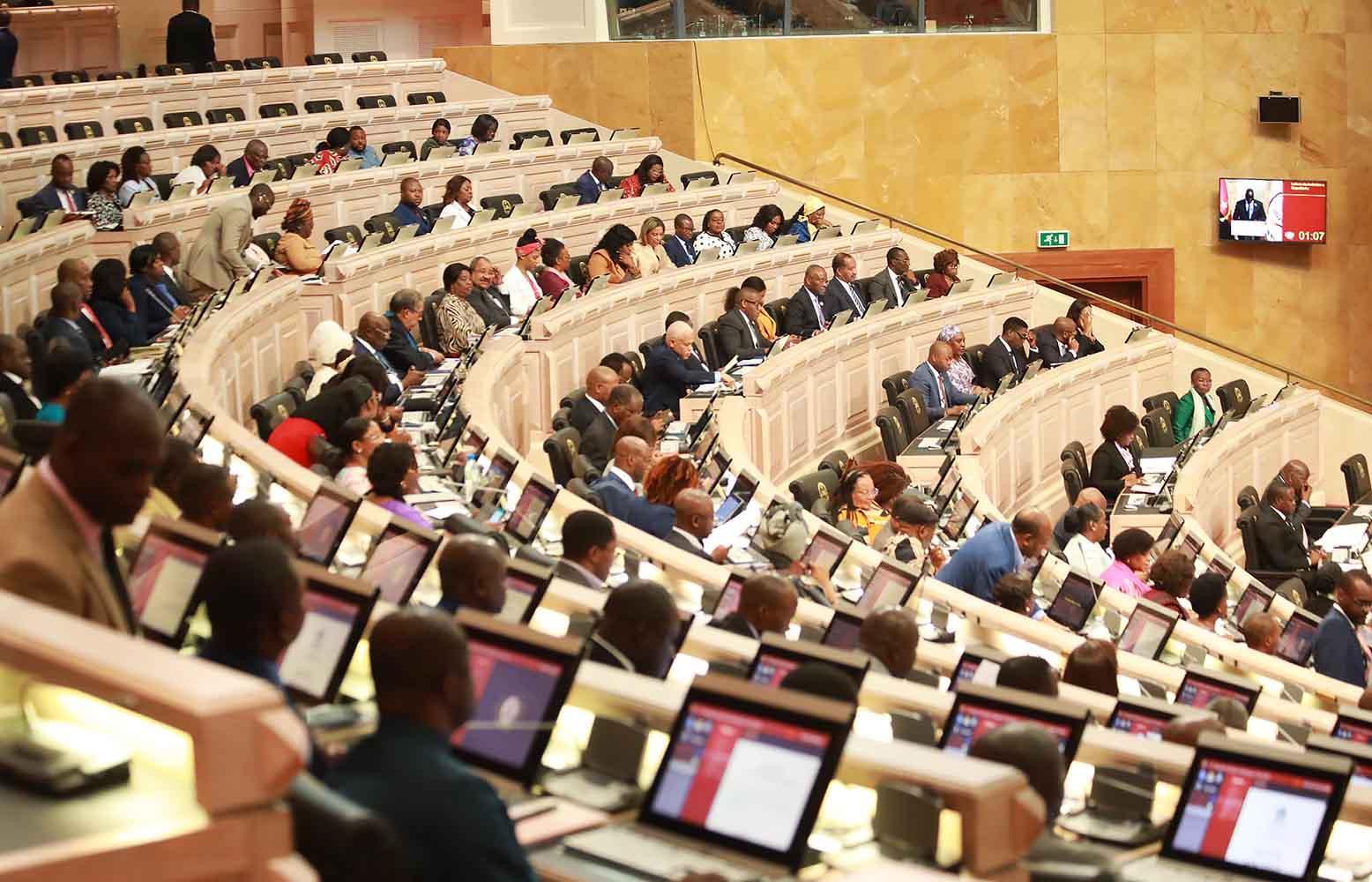
The Angolan State General Budget Law (OGE) for the 2026 fiscal year was definitively approved on Monday (14) by the National Assembly, with 120 votes in favor, 79 against (UNITA), and no abstentions.
The document, which received the final “green light” from the deputies during the 4th Plenary Meeting of the 5th Legislature, foresees revenues and expenditures of 33 trillion and 240 billion kwanzas, representing a 4.1% decrease compared to the previous year.
The country’s main economic and financial management instrument was prepared based on an oil price of $61 and oil production of 1.05 million barrels daily.
For 2026, the State Budget (OGE) forecasts an inflation rate of 13.7%, lower than the 17.5% inflation rate projected for 2025. Stronger real Gross Domestic Product (GDP) growth is also expected, at around 4.17%, driven by the non-oil sector, which is expected to grow at a rate of 4.73%, and the oil sector, including gas production, with a growth rate of 1.07%.
Source: ANGOP
For More News And Analysis About Angola Follow Africa-Press