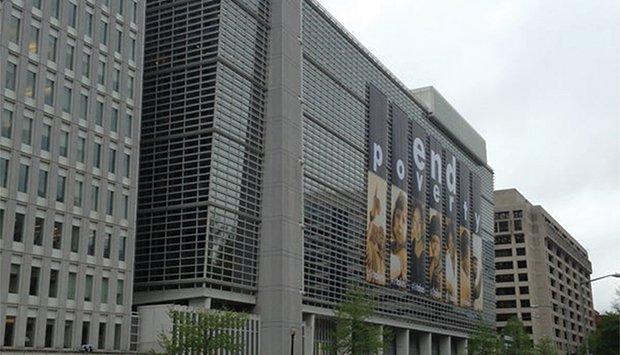
Africa-Press – Angola. The World Bank (WB) announced yesterday that it had appointed Albert Zeufack from Cameroon to the post of director for Angola, as of July 1, which follows the appointment, announced on Wednesday, of Costa Rican Juan Carlos Alvarez as a resident representative in our country.
In addition to Angola, Albert Zeufack is director of the WB for Burundi, the Democratic Republic of Congo, where he is a resident representative, and São Tomé and Príncipe, a country in which Juan Carlos Alvarez also exercises this last function, in terms that, in both cases , extend for about four years.
In the note revealing the appointment, the WB stated that Albert Zeufach will lead, through the financial institution, in the four countries, the implementation of programs that include an active portfolio of 84 national projects, totaling US$8 billion.
This includes funding from the International Development Association (IDA) and the International Bank for Reconstruction and Development (IBRD), as well as regional trust-funded initiatives.
In Angola alone, according to data available , the BM has a loan portfolio of US$2.5 billion, comprising 10 projects.
There is one social protection project, two linked to agriculture, namely the Project for the Development of Commercial Agriculture (PDAC), Family Agriculture and Marketing (MOSAP), as well as the Institutional Development of the Water Sector (PDISA).
The statement issued yesterday by the WB guarantees that the director for Angola will work closely with the four countries to expand investments in human capital, as well as in the empowerment of women and infrastructure to boost job creation and stimulate economic transformation. .
After joining the bank in 1997, Albert Zeufack held the position of Chief Economist for the WB’s Africa region, having also held positions in the Africa, Southeast Asia and Pacific, Europe and Central Asia regions.
Between 2008 and 2012, he worked as Director of Research and Investment Strategy and Chief Economist for Khazanah Nasional Berhad, a Malaysian sovereign wealth fund. He holds a PhD in economics from the University of Clermont-Ferrand (France), where he also taught before joining the World Bank.
Positive Projections
Juan Carlos Alvarez, who replaces the French Olivier Lambert in the post of resident representative in Angola and São Tomé and Príncipe, joined the WB in 2000, having held positions in the legal vice-presidency for Latin America and the Caribbean, where he collaborated with Bolivia, Ecuador, Peru, Guatemala, Mexico and Colombia.
Starting in 2005, Juan Carlos Alvarez worked in the regional offices in Mexico, India and Dubai, advising the units in each country on legal and political issues at the World Bank.
Prior to his appointment to Angola and São Tomé and Príncipe, he served as a resident representative in Ecuador, in the Latin America and Caribbean region. He is a lawyer, graduated from the Universidad Autónoma de Centro América and has a postgraduate degree in International Law from the American University in Washington, DC.
Cited in the statement, the resident representative added that the BM makes positive forecasts for the evolution of the Angolan economy in 2022, especially due to the continuous rise in oil prices and a temporary increase in production levels.
Tertiary Roads
This year, the BM and the PDAC are investing US$576,000 in the earthworks of 22.5 kilometers of tertiary roads, in the province of Cuanza-Norte, which includes those of Cacala and Corei 1, in the municipality of Lucala, with nine and six kilometers each, as well as the access road to the community of Mucoso, in the municipality of Cambambe, in a route of five kilometers.
The infrastructure director of the company BDM-engineering and technology, Noélia Costa, was quoted by Angop yesterday as saying that, at the moment, the company is committed to public consultation with the communities benefiting from the project, scheduled to start in the month of October.
The public consultation held Thursday, in Dondo, Cambambe, is one of the essential components of the process, followed by the elaboration of the project to be implemented in a period of ten to twelve months, said Noélia Costa.
He stressed that the involvement of producers in the intervention areas has to do with the environmental impact, to prevent foreseeable direct damage along the route, the destruction of crops located up to eight meters from the perimeter of the works, on each berm, and two kilometers in the areas adjacent.
The process of rehabilitation of rural roads aims to improve access to areas for cultivation and transport of products.
For More News And Analysis About Angola Follow Africa-Press