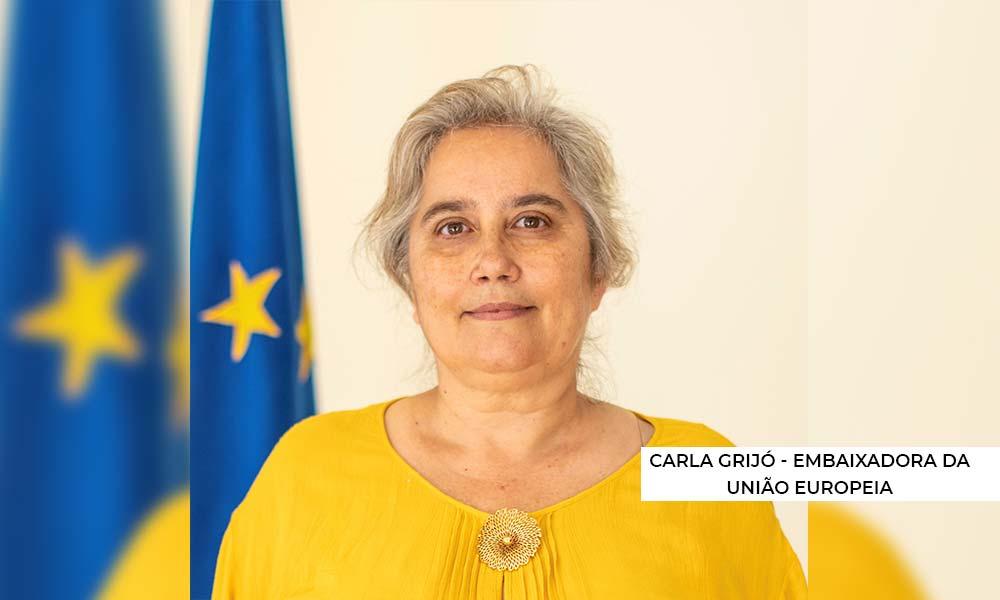
Carla Grijó*
Africa-Press – Cape verde. On May 9, 1950, Robert Schuman, then Minister of Foreign Affairs of France, issued a historic declaration proposing that France and Germany – two countries with a past of strong rivalry – join the production of materials that were, at the time, central to the arms industry, coal and steel. This measure would make war on European soil “ not only unthinkable, but materially impossible ”. A year later, the European Coal and Steel Community emerged, open to other countries and the forerunner of what would become the European Union. Schuman also revealed the method he proposed for European construction, which would not be carried out all at once, nor according to a single plan. “It will be built through concrete achievements that will create, above all, a de facto solidarity.”
As predicted, the European project has advanced with variable speed and geometries – for example, not all Member States adhered to the single currency and not all belong to the Schengen area, which eliminated border controls within it. From the Treaty of Rome (1957) to the Treaty of Lisbon (2009), European integration evolved, deepening and expanding successively to new members. At its base has always been the promotion of peace and prosperity, based on the values of human dignity, freedom and democracy. This Union is not, and has never been, just an experiment in economic integration, however advanced it may be. It is also notable for a bold and voluntary sharing of sovereignty, because it was understood that this would be the best way to combat the nationalisms and populisms that were at the origin of the two world wars,
After the fall of the Berlin Wall in 1989, the EU supported the reunification of Germany and then welcomed the countries of Central and Eastern Europe which, having regained their independence, also decided to embrace the European project. It is important to underline that, in accordance with the Treaty on European Union, any European State may apply for membership as long as it respects the values enshrined therein. The process, subject to strict requirements, has been a successful way of promoting political, economic and social reforms in candidate countries, and of consolidating democracy and the rule of law on the European continent – despite adjustments, not always easy, to that new and old members have to adapt. Almost 80 years later, the premise remains that working together, even when debates are robust, and the best way to respond to challenges that cross national borders is to prevent disagreements from turning into conflicts. EU enlargement continues, with nine countries in different stages of negotiating their future membership. As of June 2022, this group includes Ukraine and Moldova.
In 2020, the UK became the first country to leave the European Union. It was a British choice that the EU regrets but respects. Contrary to the most pessimistic predictions, Brexit did not represent the beginning of European disintegration. With the shock absorbed, the EU is adapting to the new reality, as has also happened with each new enlargement. With the divorce resolved, we are now committed to building a new partnership, as broad as possible, with the United Kingdom, but which, comprehensive as it may be, will not be equivalent to the status and benefits of a Member State.
The Union’s strong response to the Covid 19 pandemic, in the joint purchase of vaccines, as well as in the mobilization of resources to support Member States in mitigating the social and economic effects of the crisis, and their economic recovery plans, is a recent example of its resilience. Solidarity was not only internal. During the health crisis, the EU overcame its external dependence on a critical asset such as vaccines, becoming one of the largest exporters and donors in the world and is now committed to supporting other partners, namely in Africa, in the production of vaccines and preparing for future public health crises.
The unity shown in the response to unwarranted military aggression against Ukraine is further evidence of cohesion. This war has awakened traumatic memories among Europeans who will not hesitate to support Ukraine and its sovereign right to choose its own destiny. Multilateralist by nature, the European Union could never accept the violation of international law and the most elementary rules of coexistence between nations represented by Russian aggression, which has deserved widespread international condemnation. It is important to underline that EU sanctions apply to bilateral EU-Russia trade – they have no impact on Russian exports to other countries – and explicitly exclude food and fertilizer products. Aware of the impact of war on global food security,
Whether through political dialogue, trade agreements or development support, we remain committed to building a common agenda with the African continent that responds to the major challenges of our time, namely those of climate transition and digital transformation. It is necessary to ensure an economic recovery that is environmentally and socially sustainable, that creates opportunities for young people, reduces social inequalities and fights poverty. This common agenda was at the heart of discussions at the last EU-Africa Summit and moving it forward is a priority. To support the African continent in carrying out structural investments, the Global Gateway initiative was designedthat combines public and private resources, from the EU and its Member States, as well as from European financial institutions. This is the EU’s offer to support a green and fair economic recovery for our African partners, an offer based on common values and concrete achievements. Cape Verde, a Special Partner with whom we share values and interests, is well positioned to benefit from this agenda.
For More News And Analysis About Cape verde Follow Africa-Press