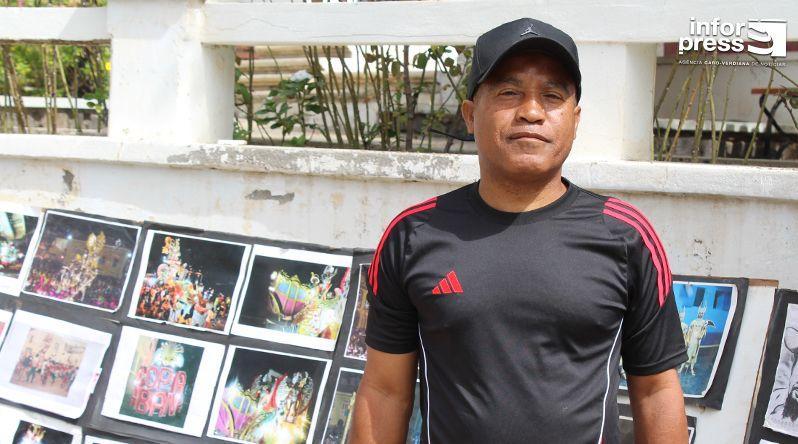
Africa-Press – Cape verde. Researcher and cultural enthusiast José Firmino is currently exhibiting an exhibition in Terreiro, Ribeira Brava, showcasing old photographs and Carnival artifacts, aiming to preserve historical memory and illustrate the evolutionary trajectory of the event.
In an interview with Inforpress, José Firmino explained that the initiative intends to be “a journey to the past,” allowing new generations and emigrants to remember how Carnival was experienced in other eras and understand the evolution of the festival on the island.
According to the promoter, the exhibition includes old images of groups such as Copa Cabana and Estrela Azul, photographs of Carnival celebrations from the 1950s onwards, lyrics of mornas (traditional songs), and records of prominent composers of the São Nicolau Carnival, such as Luiz Gonzaga and Mané Pxei.
“The objective is to share and show what our Carnival carries in terms of history, from the time when morna was sung in the parade, through samba and marches, to the fusion of rhythms that characterizes the groups today,” he emphasized.
José Firmino highlighted that morna (a type of musical genre) played a central role in the São Nicolau Carnival for many years, especially during the queens’ parades and the farewell moments of Carnival on Tuesday.
He also recalled traditions such as the “assault” on Carnival Monday and the spirit of camaraderie between rival groups, who exchanged gifts.
The exhibition also showcases the transformation of materials and techniques used in the construction of floats and costumes.
“In the past it was wood, then it switched to iron, and today we use plaster, gypsum, foam, and other materials that allow for a more artistic finish,” he explained.
He argued, however, that modernization should not mean the loss of the originality and creativity that have always marked the São Nicolau Carnival.
The researcher stated that the work is the result of years of collecting and researching personal archives, using photographs, videos, and oral testimonies. He highlighted that the process is lengthy, especially in confirming dates and the founding of groups, due to conflicting information and the loss of records over time.
“Today, everyone has a cell phone and can film, but it’s important to recover the old history so that the new generation knows what Carnival was like when there was no electricity, when Petromax lamps were used, and when rehearsals were done almost in secret,” he emphasized.
José Firmino also stressed that the São Nicolau Carnival has registered “significant evolution,” both technically and organizationally, with a greater number of participants, better resources, and more elaborate costumes.
However, he warned of the need to preserve discipline, punctuality, and the festival’s own identity, and therefore defended the “professionalization and appreciation” of the artists.
The exhibition, which takes place outdoors in the main square in the city center, has been visited by students, tourists, and residents, and is part of the parallel activities of the São Nicolau Carnival, considered one of the largest cultural events on the island and an important economic driver for Ribeira Brava.
For More News And Analysis About Cape verde Follow Africa-Press