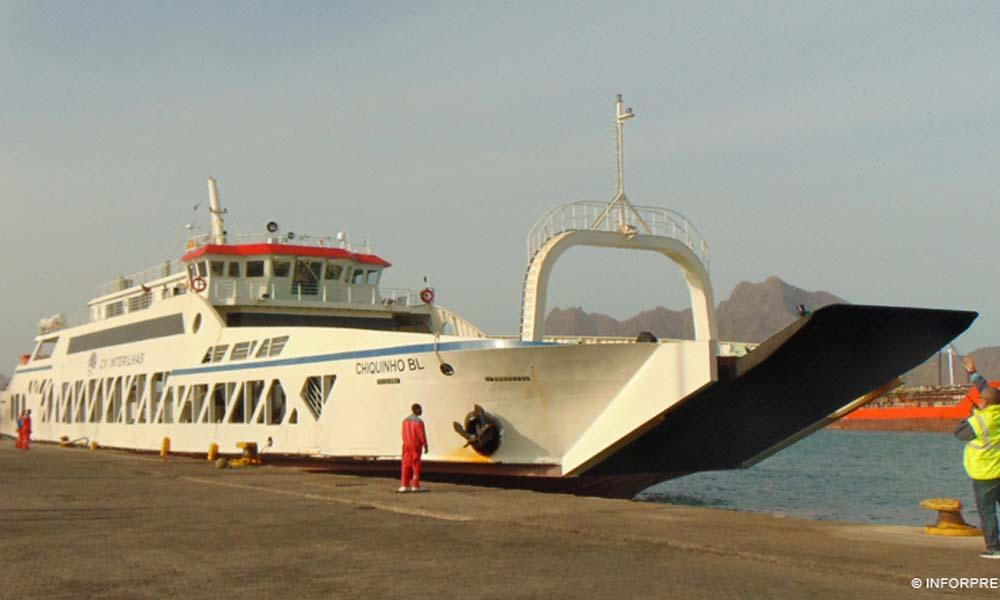
Africa-Press – Cape verde. The amendment to the public service concession contract for inter-island passenger and cargo maritime transport may have violated the public procurement code and, therefore, its legality is more than doubtful. In view of this, there are those who defend the intervention of the Public Prosecutor’s Office to verify the transparency and legality of this act.
A simple excerpt from the previous issue of A NAÇÃO, dedicated to the Maritime Transport dossier, a subject that deserved numerous comments, including at the African Debate of the RDP Africa, in Lisbon, “would be the subject for the opening of an instruction by the Public Prosecution Service”, he argues. a jurist.
For our interlocutor, this would even be “a way for the Government to be safeguarded, with the investigation to prove the transparency and legality of the operation”, given that “there was no evaluation of the concession process” and “who should do this is the General Inspectorate of Finance, as it happens in Portugal”.
“If this deal is not annulled by the Public Prosecutor’s Office, as holder of the criminal action and holder of legality, in Cape Verde, future generations will be committed to this concession, which has a period of validity of twenty years”, warns the same source.
filer
However, another jurist contacted by A NAÇÃO says he does not believe in an intervention by the Public Prosecutor’s Office, considering that the Attorney General’s Office has long been transformed into an “Arquivadora Geral da República”. “Unfortunately, whatever the accusations, from ‘Spilled milk’ to the most recent cases, the Public Prosecutor’s Office is never able to find illegality in situations where the illegality is obvious, public and notorious”, he laments. “And this is not new”.
For the same source, “we were supposed to have a Public Prosecution Service that defended legality and the public interest, but, considering the original sin of the PGR being proposed by the Government, and almost always the holder having the prospect of renewing his mandate, “ this, of course, takes away its independence”.
New situation in cabotage
Regardless of this discussion, on the role of the Public Ministry, there are those who understand that at this moment, in view of the facts, especially those reported by A NAÇÃO in its previous issue, we no longer have a concession for the public service of maritime transport of passengers and cargo – -Islands.
“What we have now, with the signature of the amendment, between the Government and CV Interilhas, is a management contract, since, in any concession, anywhere in the world, the investment obligation is not the State’s, it’s the private sector’” , defends an economist.
And, for this reason, “and because there are strong indications of violation of the public procurement code, the addendum to the concession contract recently signed between the Government and CV Interilhas must be denounced”.
For our interlocutor, who knows this dossier very well, this is a situation of illegality, since the concession contract was transformed into a management contract, being “the big difference” between the two situations “is who is responsible for of investment”.
“When the State comes to say that it will buy all the boats to deliver to CV Interilhas, we are facing a management contract”, explains our source, stressing that, in the concession contract, “financing by the private entity is mandatory”. and licensed.
That is why, according to that same specialist, the signing of the addendum to the management contract must be considered an “invalid” act, since of “very dubious legality”. “With this solution, it was not necessary to establish a concession contract, it was only necessary to buy the boats and deliver them to national shipowners to operate them”, he adds.
Our source recalls that the national shipowners were, throughout the negotiation process that ended up favoring the Portuguese group ETE, “neutralized and eliminated” for, allegedly, not meeting the financial qualification criteria required by the State. This requirement, after all, also, CV Interilhas has not been fulfilling, now transferring to the coasts of the State and the taxpayer the burden of the ships to be placed in national cabotage.
“The whole idea of transferring this responsibility to the private sector was so as not to overburden the Cape Verdean taxpayer and the public debt”, he emphasizes. “And now what you see is that we were all deceived. The ETE group entered Cape Verde and gradually imposed its conditions, clearly gaining from it, unlike the State of Cape Verde and Cape Verdean taxpayers who lost out”, he concludes.
For More News And Analysis About Cape verde Follow Africa-Press