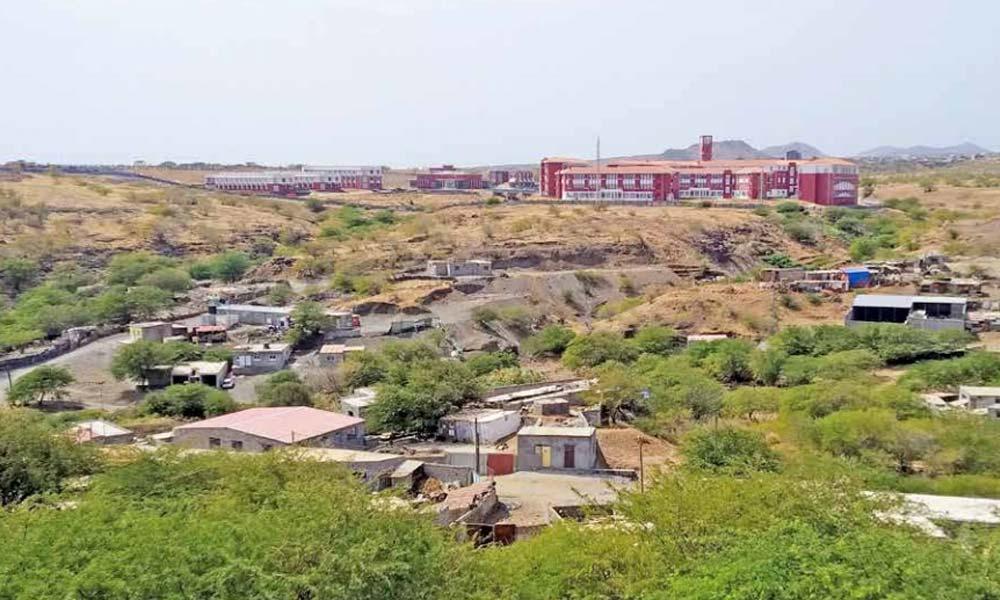
Africa-Press – Cape verde. Various difficulties are part of life for most residents of the Palmarejo Grande valley community, in the municipality of Praia. Lack of water, basic sanitation and accessibility have been some of the problems among many others. The City Council has an ongoing housing construction program to help those who live in this small part of Praia.
Located in the valley between Palmarejo Grande and the University of Cape Verde (UNI-CV), like all neighborhoods born spontaneously, the community there complains about almost everything: roads, basic sanitation, piped water, electricity, among others. other problems.
Heard by A NAÇÃO, some residents say they feel excluded and even forgotten, despite the fact that their area is located close to one of the noblest neighborhoods in the city, Palmarejo Grande, with the UNI-CV campus nearby.
On top of that, the consequences of the pandemic, drought and war in Ukraine further aggravated the vulnerable situation in which the residents of the Palmarejo Grande valley found themselves.
According to the elderly Justina, who has lived in this area of Praia for 23 years, the neighborhood still “has nothing” and says that since she settled there, she has only seen an increase in the “number of houses” and the “disregard of the authorities” in relation to to those who live there.
“We don’t have a road in good condition, we don’t have sanitation, nor water, electricity and our houses are still clandestine. We don’t have a school and our youth is forgotten. When it rains, it’s chaos. Only during election campaigns do politicians show up promising changes in the community, then they never show up again.”
Unemployment and the pandemic
As for Jussara, a 25-year-old girl, born in the same locality, one of the biggest problems for those who live there is youth employment, not forgetting the lack of piped water, roads and electricity, among other evils.
“Our community, unfortunately, continues to be a clandestine settlement. We have many unemployed young people, we don’t have a leisure space, a square, for example. There are young people here who cut firewood to make charcoal or make pastries and other types of snacks to sell. Some raise animals and others go to the dump looking for some sustenance. Here the income is precarious, we need training, or something that will help us to get a better job”, she says.
Jussara says that she and the other young people in the community feel abandoned by the authorities. “They know that the community exists, but they prefer not to listen to our problems and continue to refer to the area as being just a place for raising cattle”.
Palmarejo Grande Community Development Association
“A community that still faces many difficulties”
Ana Paula Carvalho, president of the Association for Community Development of Palmarejo Grande (ADCPG), admits that the area and its residents face several difficulties. This is because, as she alleges, there is still much to be done, mainly in terms of accessibility and legalization of the community.
In the midst of so many difficulties, and bearing in mind that the tendency is to point out what is missing, this social activist prefers to point out what good has already been done, especially since there are still projects that are in line, looking for or waiting for funding. . “The community has grown, especially in recent years, and it is difficult for the Association to be able to help everyone”, she says.
As he also says, with the effort of the ADCPG and the support of the various partners, basic food baskets, clothes and other types of help have been obtained.
“We have already carried out several cleaning campaigns in the community. With the help of our partners, we have already renovated houses, renovated the kindergarten, built bathrooms and the stairs that give access to the community, brought health fairs, during the pandemic we ran awareness campaigns and distributed masks and gel alcohol. Despite the many difficulties, we have managed to make the community more dynamic”, he points out, regretting that participation is not greater.
Regarding young people, Ana Paula says that the ADCPG seeks to create conditions for them to have professional training, but that young people themselves “have not always known how to take advantage of opportunities”.
“Through our partners we have already managed to obtain scholarships for various types of training, but the truth is that young people have not been able to seize opportunities. Some start and don’t finish, and others simply refuse to go to the training sessions”, she explains.
“Then”, he adds with regret, “it’s easy to complain that there isn’t this, not that, but when adherence appears and the results fall short of expectations. It can not be”.
The ADCPG was created in 2004 by Ana Paula Carvalho, its president since then, and other residents, eager to make a difference. In an environment dominated by poverty, survival, as it seems obvious, has not been easy. “Even so, we are doing what we can”, concludes the president of the Association for Community Development of Palmarejo Grande.
When questioned about how they have been living in the midst of this “triple crisis”, Jussara says that it has been an extremely difficult task, but that they have taken “one day at a time”, as is the norm among the most disadvantaged in our society. In other words, with rising prices and low income, Jussara says that if it weren’t for the basic baskets and other aid that come from various institutions, it would have been “even more complicated” to face the effects of the pandemic, for example.
“During the peak of the pandemic, many families here experienced serious difficulties, to the point of not having anything to take to the fire. It was sad, but thanks to the help, we managed and continue to survive. We are a vulnerable community and we need more support, we need the authorities to look at us”, he stresses.
Alcoholism in the youth
Alcoholism is another problem in the Palmarejo Grande valley. For Josimar, a 36-year-old young man who has lived in the neighborhood for 15 years, in addition to the problems mentioned above, alcoholism, especially among young people, is something that also stands out. In this case as a consequence of the lack of employment and disbelief in a better future.
“Here there is nothing to do, there is no work, there are no spaces for leisure and entertainment, life is increasingly difficult and young people end up finding a way of escape in drinking”, says our interviewee.
Chamber wants to combat illegal constructions in the Palmarejo valley
Last October, Praia City Council, chaired by Francisco Carvalho, made 19 plots of land available to vulnerable families in the Vale do Palmarejo neighborhood for housing construction, in order to combat illegal construction in the municipality. These plots cannot be sold and families have a period of two years to build their homes.
Francisco Carvalho considered, at the time, of great importance this initiative, which is part of the “Praia Para Todos” project, the motto of his administration.
The CMP, in addition to assigning the land, also provided technicians from the Architecture and Engineering area to monitor the execution of the works, in addition to approved projects and exemption from the payment of construction license fees.
On the other hand, future residents will have to pay rent over a period of ten years (between 3800 and 4800 escudos) which, according to Francisco Carvalho, is part of “a contract that is adapted to people’s economic conditions”.
For More News And Analysis About Cape verde Follow Africa-Press