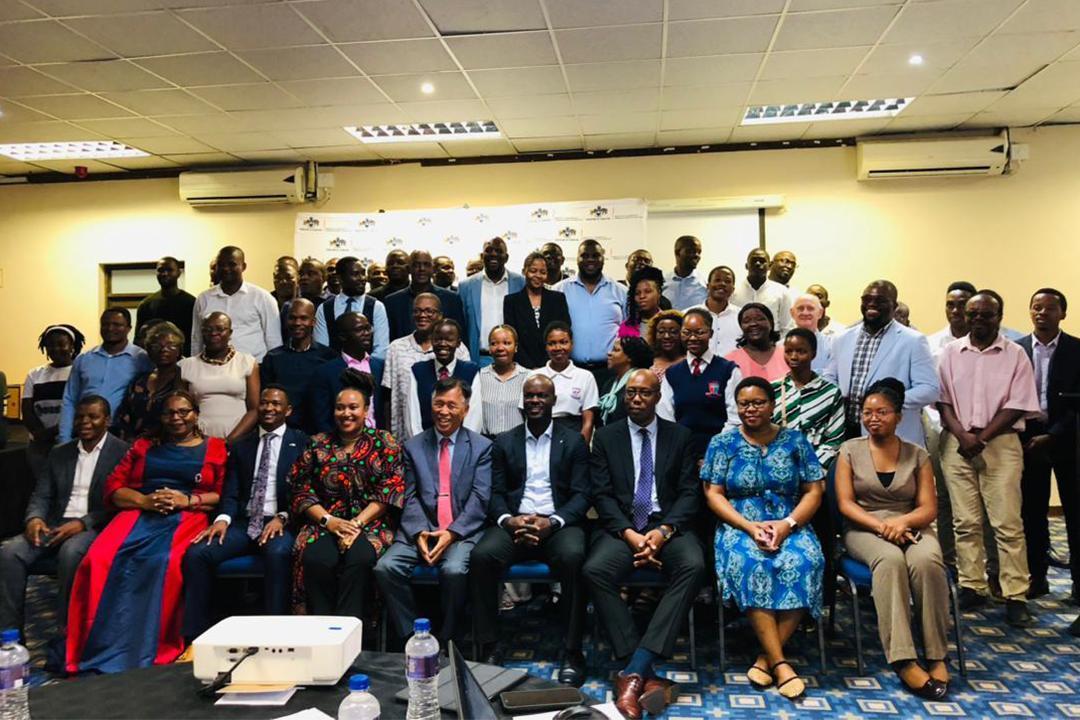
Africa-Press – Eswatini. The Kingdom of Eswatini marked a major milestone in its digital and technological advancement on February 4, 2026, by hosting the inaugural Eswatini Space Science Indaba 2026 at The George Hotel.
The event, organised by the Ministry of Information, Communications and Technology (ICT), focused on unlocking the economic and development potential of Eswatini’s orbital slot — a nationally allocated position in Earth’s orbit that grants the Kingdom the right to operate communication satellites.
In this context, “space” is the vast, nearly perfect vacuum existing beyond Earth’s atmosphere; it refers specifically to Eswatini’s orbital slot, a strategic national resource that enables telecommunications, internet connectivity, broadcasting, weather monitoring, navigation, and satellite-based data collection to support national development.
Held under the theme “Harnessing Space Science and Technology for Sustainable Development in Eswatini,” the Indaba explored practical ways to use satellite services to address real-world challenges and reduce reliance on foreign digital infrastructure.
In a key address by the Principal Secretary (PS) in the Ministry of ICT, Andreas Dlamini, delivered through EBIS Director Sabelo Dlamini, the PS outlined the Kingdom’s vision for space-enabled development. Quoting Russian space pioneer Konstantin Tsiolkovsky, he said:
“While the Earth is humanity’s cradle, mankind cannot stay in it forever. Eswatini’s ambition in space is clear — we aim to use space technology as a catalyst for socio-economic transformation. Our orbital slot is a strategic national asset that must be used to improve livelihoods, strengthen governance, and foster innovation for all citizens.”
He added, “We are committed to moving from merely consuming technology to owning and managing the systems that power our digital economy. This shift is essential for national independence, innovation, and sustainable development.”
The Indaba highlighted priority areas where satellite services could deliver immediate impact, including climate monitoring, food security, digital inclusion, public service delivery, and youth empowerment. Satellite data is being leveraged to monitor weather patterns, predict droughts, and assist farmers in improving crop planning and productivity. Satellite-enabled broadband is also expanding internet access to underserved rural communities, supporting e-learning, telemedicine, and entrepreneurship.
Youth and gender empowerment were also emphasised through Mission ShakthiSat, in which 108 young Eswatini girls receive hands-on training in satellite payload development. “By empowering young women in satellite technology, we are building a future generation of innovators, engineers, and science leaders,” a programme coordinator said.
A technical highlight was a presentation by Samkeliso Shongwe, Manager of Spectrum Management at ESCCOM, who explained how satellites and radio frequency spectrum underpin modern communication. “Satellites are the mirrors of our digital age — they receive signals from Earth and reflect them back to keep our world connected. Managing spectrum is like controlling traffic in the sky — it ensures mobile networks, broadcasting, GPS, and weather services operate without interference,” Shongwe said.
Meanwhile, Dr. Rejoice Maseko, Director of Research, Science, Technology and Innovation (RSTI), highlighted how satellite and Earth observation data are already applied in real-life national planning, agriculture, environmental protection, and disaster preparedness.
A major announcement during the Indaba was the planned establishment of the Kingdom of Eswatini Space Agency (KESA) at RSTP, tasked with coordinating national satellite initiatives, research, and innovation. International partners, including SANSA and the African Space Agency, shared best practices on managing orbital resources and building sustainable satellite ecosystems.
As the Indaba concluded, stakeholders reaffirmed that Eswatini’s orbital slot represents a powerful national asset capable of driving economic growth, strengthening connectivity, enhancing disaster preparedness, and supporting informed policymaking.
For More News And Analysis About Eswatini Follow Africa-Press