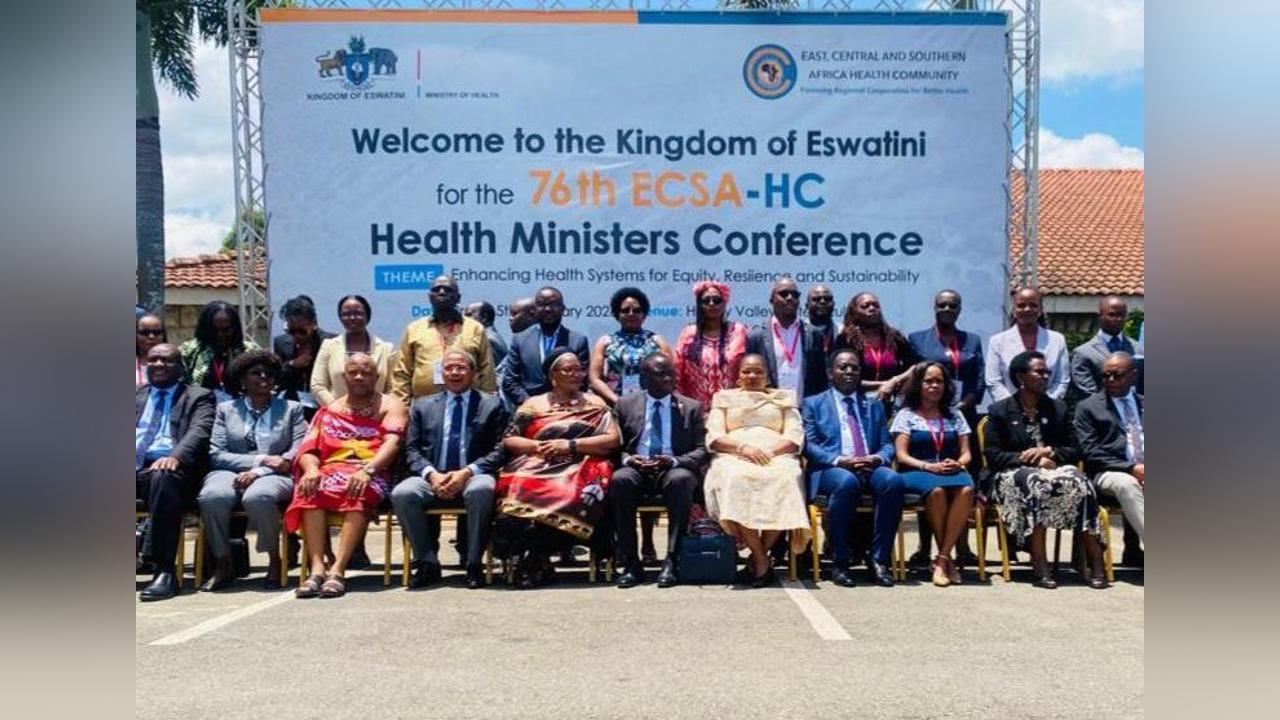
Africa-Press – Eswatini. Health ministers and policymakers from across East, Central, and Southern Africa gathered on 03 February for the 76th Eastern, Central and Southern Africa Health Community (ECSA-HC) Health Ministers’ Conference in Ezulwini Valley, and are calling for health sovereignty across all African countries.
Health sovereignty is the inherent right and capability of individuals, communities, and nations to govern their own health decisions, policies, and outcomes, reducing excessive dependence on external actors. It represents a shift from reactive, aid-dependent models to proactive, self-reliant, and sustainable health systems that respect local cultural, social, and ecological contexts. To achieve this, the health ministers and other African policy makers said this could be achieved by working to strengthen health systems and improve care for communities across the region.
Under the theme, “Enhancing Health Systems for Equity, Resilience, and Sustainability”, the two-day summit is set to move health policy from paper to practice, underscoring the urgency of resilient and self-sufficient health systems.
In the keynote address delivered by Deputy Prime Minister Thulisile Dladla on behalf of Prime Minister Russell Dlamini, the conference was challenged to rethink reliance on external assistance. “We must confront the reality that over-reliance on external funding and out-of-pocket expenses creates fragility,” Dlamini noted, calling for sustainable domestic financing as the foundation of Africa’s health resilience.
“Our region must invest in itself,” he emphasized. “We cannot wait for crises to expose our vulnerabilities; we must act proactively to secure the health of our people.”
Minister for Health, Honourable Mduduzi Matsebula, welcomed delegates with characteristic warmth, highlighting Eswatini’s “heavenly hospitality” while reiterating the summit’s serious agenda. Matsebula stressed the importance of aligning policies on human resources and climate change, recognizing that health threats transcend borders.
“The challenges we face, from workforce shortages to climate-related health risks,require collaboration, innovation, and regional solidarity,” Matsebula said.
Representatives from Africa CDC, the World Health Organization, and other global health institutions reinforced the conference’s strategic significance. The discussions are expected to translate lessons from recent pandemics into durable systems capable of withstanding future shocks, ensuring that East, Central, and Southern Africa remains inherently resilient.
For More News And Analysis About Eswatini Follow Africa-Press