
Africa-Press – Eswatini. His Majesty’s Correctional Services (HMCS) has reiterated that all rehabilitation programmes within the Service are implemented lawfully, fairly and in line with professional assessments.
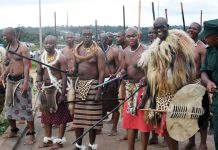
HMCS Deputy PRO Baphelele Kunene said the participation of inmates such as Ntuthuko Dlamini, Maponi Ngubane and Kakona in the Incwala ceremony took place strictly within the legal and rehabilitative framework of the Service.
“While these inmates are serving lengthy sentences, sentence duration alone does not automatically exclude an offender from rehabilitation programmes, particularly those that promote moral renewal, cultural identity and personal transformation,” Kunene explained.
He said rehabilitation in law is neither a reward nor a reduction of sentence, but a constitutional obligation aimed at correcting behaviour, restoring values and preparing offenders for responsible citizenship.
Maponi in striped lihiya
“Denying inmates access to rehabilitation purely based on public sentiment or the severity of an offence would amount to discrimination and would contradict both the law and correctional best practice,” Kunene said.
He further emphasised that the role of HMCS is not to impose additional suffering beyond what the courts have prescribed, but to ensure secure custody while promoting accountability, discipline and positive behavioural change among offenders.
“Rehabilitation is not a privilege for short‐term offenders. It is a fundamental principle of modern corrections and applies to all inmates, regardless of the length or nature of their sentence,” he added.
Kunene explained that eligibility to participate in cultural ceremonies is determined through strict internal procedures, including behavioural records, demonstrated remorse, compliance with institutional rules, risk and security assessments and recommendations from rehabilitation and security professionals.
“Only inmates who show a consistent positive response to rehabilitation efforts and who pose no threat to public safety are considered,” he said.
He also clarified that participation in cultural or rehabilitation activities does not grant privilege, special treatment or freedom.
“The inmates remain fully under lawful custody and continue serving their sentences as imposed by the courts. Participation is supervised, controlled and temporary — and its sole purpose is rehabilitation,” said Kunene.
He added that Eswatini’s cultural heritage continues to play a vital role in shaping discipline, respect and moral accountability among offenders, and integrating culture into rehabilitation strengthens national values and supports safer communities.
Kunene encouraged the public to distinguish between punishment and rehabilitation.
“A correctional system that focuses only on confinement without rehabilitation risks producing individuals who are more damaged and less accountable. Rehabilitation is not leniency, it is a lawful and responsible investment in safer communities,” he said.
According to records, Kakona is serving a 20‐year sentence, while Maponi is serving a 60‐year sentence.
For More News And Analysis About Eswatini Follow Africa-Press