
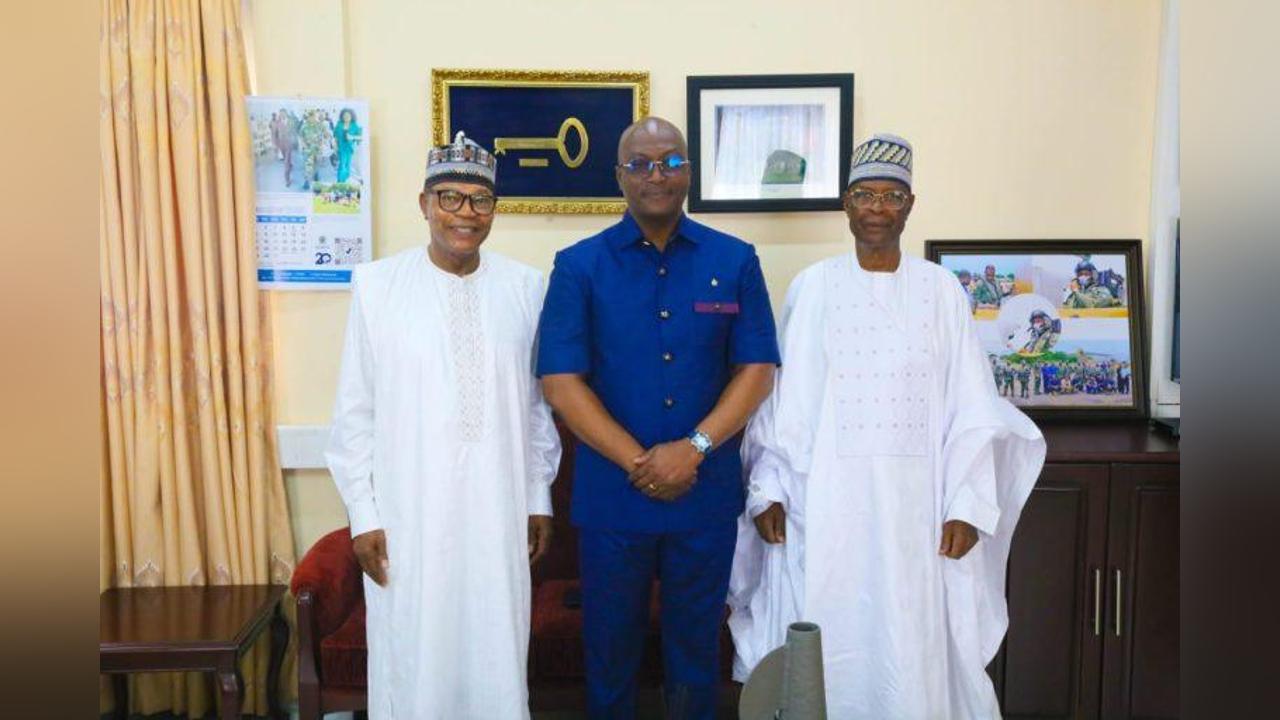
Africa-Press – Ghana. Dr Mohamed Ibn Chambas, one of Africa’s foremost peace diplomats, has been honoured at the Kofi Annan International Peacekeeping Training Centre (KAIPTC) for his decades-long contribution to conflict resolution and regional stability on his 75th birthday.
The event, hosted by the KAIPTC, marked the beginning of a series of activities celebrating Dr Chambas’ life, contributions to African diplomacy, and his upcoming 75th birthday.
It brought together former Heads of State, members of the diplomatic corps, security officials, scholars, and civil society organisations to pay tribute to the Ghanaian diplomat whose career has spanned
ECOWAS, the African Union, and the United Nations in conflict mediation, multilateral diplomacy and peacebuilding across West Africa and the wider continent.
Air Commodore David Anetey Akrong, Commandant of the KAIPTC, described the occasion not merely as a birthday celebration but a continental reflection on leadership, peacebuilding, and statesmanship, noting that Dr Chambas’ work continued to anchor the continent’s search for sustainable peace.
He said Dr Chambas’ impact extended beyond mediation to shaping continental institutions and inspiring practitioners and young diplomats who now considered him a benchmark in peace and security leadership.
“Your presence here today underscores the significance of Dr. Chambas’ legacy, his blend of wisdom and warmth,” Air Commodore Akrong told the audience.
He emphasized that the tribute reflected the collective appreciation of African states and global partners for his dedication to diplomacy and conflict transformation.
Air Commodore Akrong praised Dr Chambas’ defining role in nurturing future generations of peacebuilders, describing him as both a “respected leader and cherished friend” whose mentorship shaped the careers of diplomats, military officers and development practitioners engaged in conflict prevention.
Professor Emerita Takyiwaa Manuh, speaking on behalf of the planning committee, noted that the celebration was also designed as a platform to assess Africa’s security trajectory and the future of conflict prevention.
She said the symposium drew inspiration from Dr Chambas’ lifelong commitment to dialogue and mediation as the primary instruments of regional stability.
She outlined the thematic focus of the gathering: terrorism in the Sahel, democratic backsliding, resource conflicts, climate-related insecurity,
maritime threats in the Gulf of Guinea, and multilateral strain amid shifting geopolitical alliances.
These, she said, echoed the most critical peace and governance dilemmas Dr Chambas spent decades addressing in his various roles at ECOWAS, the ACP, AU, and the United Nations.
Over the course of more than 40 years, Dr Chambas has served in some of the toughest conflict mediation theatres on the continent.
Between 2014 and 2021, he was the United Nations Secretary-General’s Special Representative for West Africa and Head of UNOWAS, where he steered diplomatic efforts around political transitions, peace talks, and election-related tensions in the region.
His earlier leadership of the AU-UN Hybrid Mission in Darfur saw him navigate one of Africa’s most complex humanitarian and conflict environments.
When he served as Secretary-General of the African, Caribbean and Pacific (ACP) Group of States, Dr Chambas broadened development cooperation and South-South solidarity across more than 70 nations.
As Executive Secretary and subsequently the first President of the ECOWAS Commission, he played a pivotal role in the transformation of ECOWAS’ institutional framework, the operationalisation of its conflict prevention mechanism, and direct interventions in crises in Liberia, Sierra Leone and Côte d’Ivoire, among others.
Professor Manuh recounted that few African leaders had shaped regional conflict prevention as deeply as Dr Chambas, noting his role in establishing the ECOWAS Mechanism for Conflict Prevention, Management, Resolution, Peacekeeping and Security, and advancing trade liberalisation and cross-border cooperation.
She added that the event was also intended to preserve his legacy in written and visual form, and to document the lessons from decades of diplomatic leadership that had influenced peacebuilding trends far beyond West Africa.
Professor Manuh disclosed that the programme was funded solely by Africans and friends of Dr Chambas, a symbolic gesture reflecting continental pride in his contributions.
Dr Mohamed Ibn Chambas’ legacy continues to influence Africa’s diplomatic frameworks, particularly through his current mandate as the African Union High Representative for Silencing the Guns, the AU’s flagship agenda to end armed conflict on the continent.
His voice remains central to debates on multilateralism, regional integration, and preventive diplomacy.
A high-level panel, which included Mr Emmanuel Bombande, a conflict resolution, peacebuilding, development professional, explored the theme: “Inclusive Peacebuilding, Local Agency, and Multilevel Governance” and highlighted lessons from Dr Chambas’ mediation work.
The panel said the celebration was not merely about honouring a statesman but reflecting on the unfinished task of building durable peace across Africa.
With persistent insecurity in the Sahel, coups in parts of West Africa, maritime threats, geopolitical rivalries, and democratic fatigue, they acknowledged that Chambas’ guiding principles of dialogue, inclusivity and collective security remain as relevant today as when he first entered the mediation field.
For More News And Analysis About Ghana Follow Africa-Press