
Africa-Press – Ghana. The New Patriotic Party (NPP) Minority Caucus in Parliament has accused the National Democratic Congress (NDC) Government of attempting to undermine Ghana’s anti‐corruption architecture by allegedly restoring executive control over prosecutions.
The Caucus warned government against allegedly attempting to “restore exactly the structure of vulnerability that the Office of the Special Prosecutor (OSP) was designed to kill.”
The Caucus said recent legal and policy developments could place anti‐corruption prosecutions back under the authority of the executive branch, defeating the purpose for which the OSP was established.
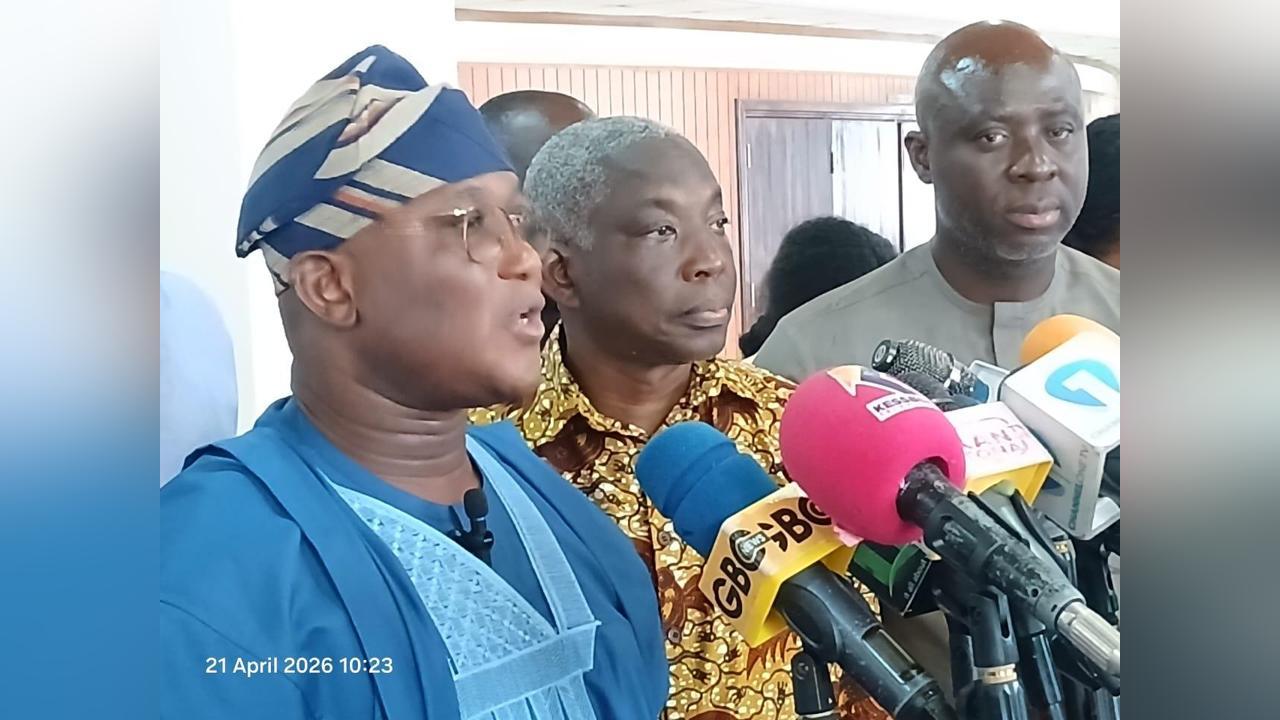
Addressing the Parliamentary Press Corps in Parliament on Tuesday, Mr Alhassan Tampuli Sulemana, Deputy Ranking Member of the Constitutional and Legal Affairs Committee, said the OSP was created because “government cannot be relied upon to prosecute itself.”
“It was created because the Attorney‐General, however distinguished, serves at the pleasure of the President,” Mr Sulemana stated.
“It was also created because history has shown repeatedly that corruption thrives when those who hold political power are also those who decide whether prosecutions should go forward.”
Speaking on behalf of the Caucus, Mr Sulemana alleged that actions by the NDC Government — including proposed legislative amendments, legal challenges and recent court decisions — were aimed at reversing the independence of the OSP.
“It was created because history has shown repeatedly that corruption in Ghana’s public life first is most vigorous when those who hold power are also those who decide whether it’s possible or not.
“What the NDC government has done through the repeal bill, through the petitions, through the Supreme Court violence, and now the High Court is to attempt to restore exactly the structure of vulnerability that the OSP was designed to kill,” he said.
He criticised arguments attributed to the Deputy Attorney‐General suggesting that the OSP must seek authorisation from the Attorney‐General before initiating prosecutions.
“They want an Attorney General who must authorise every prosecution. If you follow the argument of the Deputy Attorney General, he says that the Office of the Special Prosecutor must come to them. In other words every day he must take to the Attorney General Department. If he wants to prosecute Mister A, he goes for a warrant. He wants to prosecute Mister B, another to the Office of the Attorney General. Is that what we are saying? Is that the intendments of the law?” he asked.
According to the NPP MP for Gushegu, such an arrangement would amount to direct executive control over anti‐corruption prosecutions, allowing government to determine “case by case, ally by ally, which corruption case is pursued and which is dead.”
The Minority Caucus vowed to resist any such move.
“The NPP Minority will pursue every parliamentary, constitutional and legal avenue available. We will not rest until this is resisted,” Mr Sulemana declared.
He argued that Ghana’s anti‐corruption framework, built over years of reform, was being weakened within months of the NDC assuming office.
“The evidence of our warning is before the Ghanaian people, who will be the ultimate judges,” he said.
Mr Sulemana further stated that until the Supreme Court conclusively determines the matter, Act 959 — the Office of the Special Prosecutor Act — remains in force.
“Until the Supreme Court speaks, the OSP stands, and the principle that no one — not even the President or any public officer — is above the law remains intact,” he added.
Meanwhile, an Accra High Court has ruled that the OSP does not have the constitutional authority to independently prosecute criminal cases and must refer all such matters to the Attorney‐General’s Department.
The ruling, delivered on Wednesday, April 15, 2026, by Justice John Eugene Nyadu Nyante, has placed ongoing OSP prosecutions in abeyance pending further legal direction.
The Court held that while the OSP is empowered to investigate corruption‐related offences, the initiation of prosecutions falls within the exclusive mandate of the Attorney‐General under the Constitution.
For More News And Analysis About Ghana Follow Africa-Press