What You Need to Know
Imam Sheikh Nuno Mohamed Abdikadir has urged Kenyan political leaders to adopt a more civil tone in their rhetoric, warning that the current trend of insults and personal attacks is damaging public trust in leadership. He emphasized the importance of issue-based debates and called for leaders to act as role models for their supporters, advocating for a reset in the political culture of Kenya.
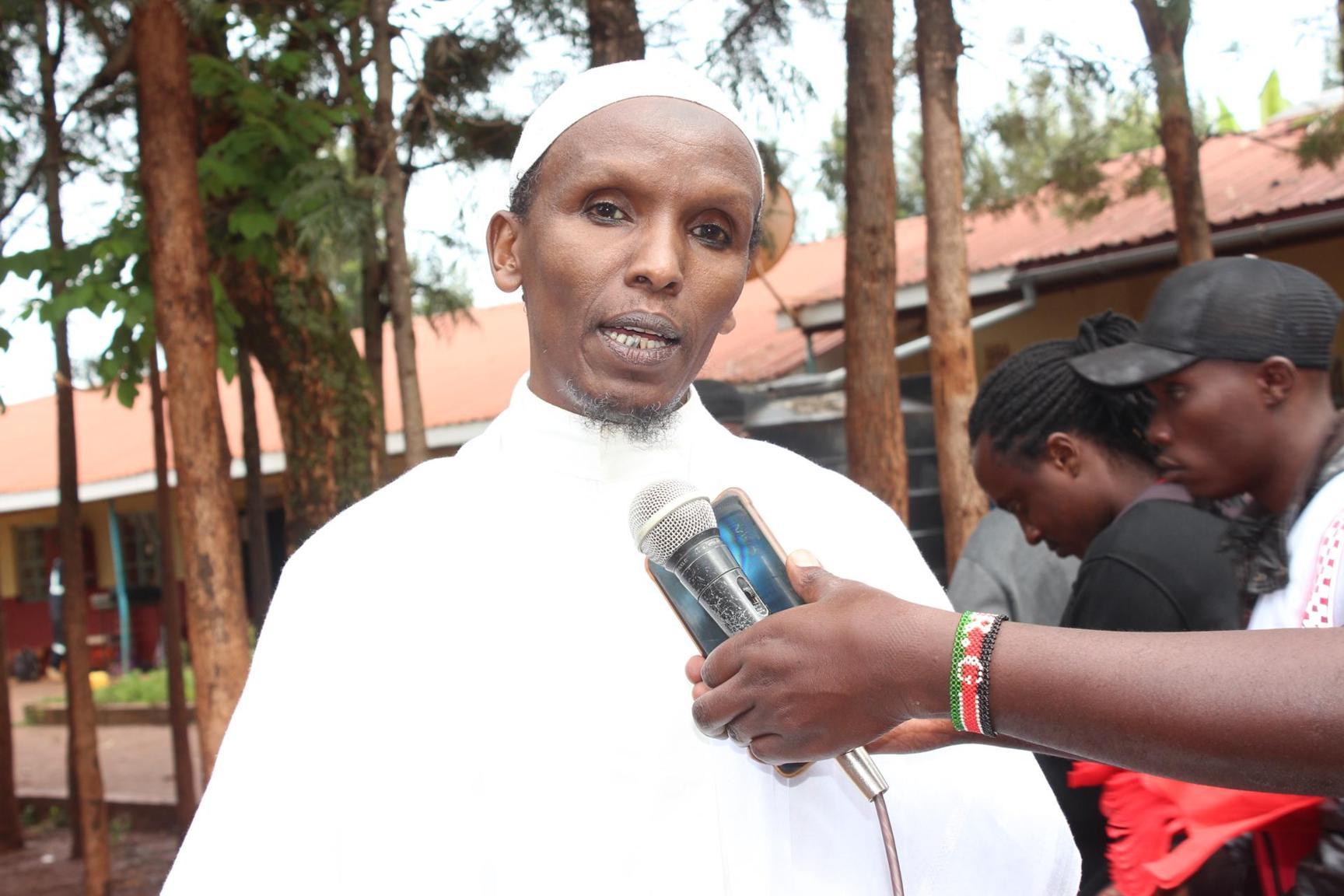
Africa-Press – Kenya. Murang’a Muslim community Imam Sheikh Nuno Mohamed Abdikadir has called on political leaders to tone down their rhetoric and embrace civility, warning that the country is sliding into a culture of insults and empty political exchanges.
Speaking at Mjini Primary School, where residents received gift hampers to celebrate Eid al-Fitr, the cleric expressed concern that political debates are increasingly being defined by personal attacks rather than issue-based engagement.
He urged leaders to act as role models for their supporters.
“The growing trend of abusive language in rallies and public forums reflects a lack of a substantive agenda and risks eroding public trust in leadership,” Sheikh Abdikadir said.
His remarks come against the backdrop of a sustained war of words between leaders during rallies.
In recent weeks, some opposition figures have intensified attacks on the government over the economy, cost of living, and governance, often using charged and provocative language.
The President has, at times, responded publicly to defend his administration’s record and address critics.
Sheikh Abdikadir emphasised that such exchanges should remain measured, stressing that restraint must apply to all sides.
“While leaders may feel compelled to respond to criticism, their responses should remain measured to set the right example,” he said, urging both government and opposition figures to prioritise constructive dialogue.
The cleric highlighted the need for a reset in the country’s political culture, stressing that Kenya’s stability depends not only on policies but also on the tone and conduct of those entrusted with leadership.
“We are praying for sanity, and that peace prevails. We encourage our leaders to engage in mature politics in Kenya,” he said.
Other religious bodies have echoed similar concerns. The Kenya Conference of Catholic Bishops has urged both President William Ruto and opposition leaders to exercise restraint, while clerics under the Pentecostal Voices of Kenya have warned that the culture of insults erodes public confidence in leadership and distracts from pressing national issues.
Sheikh Abdikadir called on all political actors to focus on issue-based debates and to set an example for citizens.
“When leaders resort to insults, it shows that they lack a proper agenda and indicates a failure to articulate clear policy alternatives,” he said, emphasising that respect for leadership should transcend political differences.
Kenya has a history of politically charged rhetoric, particularly during election periods, which often leads to heightened tensions among different political factions. The use of insults and personal attacks has been a recurring theme, undermining constructive dialogue and eroding public trust in leadership. Religious leaders have increasingly voiced concerns over the impact of such divisive language on national unity and stability, calling for a return to civility and respect in political discourse.