
What You Need to Know
Prime Cabinet Secretary Musalia Mudavadi has detailed the transformative impact of the cooperation agreement between the national government and Nairobi City County. He emphasized the pact’s potential to enhance infrastructure, service delivery, and the city’s global competitiveness, addressing long-standing urban challenges through a structured partnership.
Africa-Press – Kenya. Prime Cabinet Secretary Musalia Mudavadi has defended and detailed the far-reaching impact of the cooperation agreement between the national government and Nairobi City county.
Mudavadi said the framework will fundamentally transform the capital’s infrastructure, service delivery, and global competitiveness.
In submissions to the Senate Standing Committee on Devolution and Inter-governmental Relations, Mudavadi said the agreement between President William Ruto’s administration and Nairobi Governor Johnson Sakaja represents a structured and deliberate partnership aimed at resolving long-standing urban challenges.
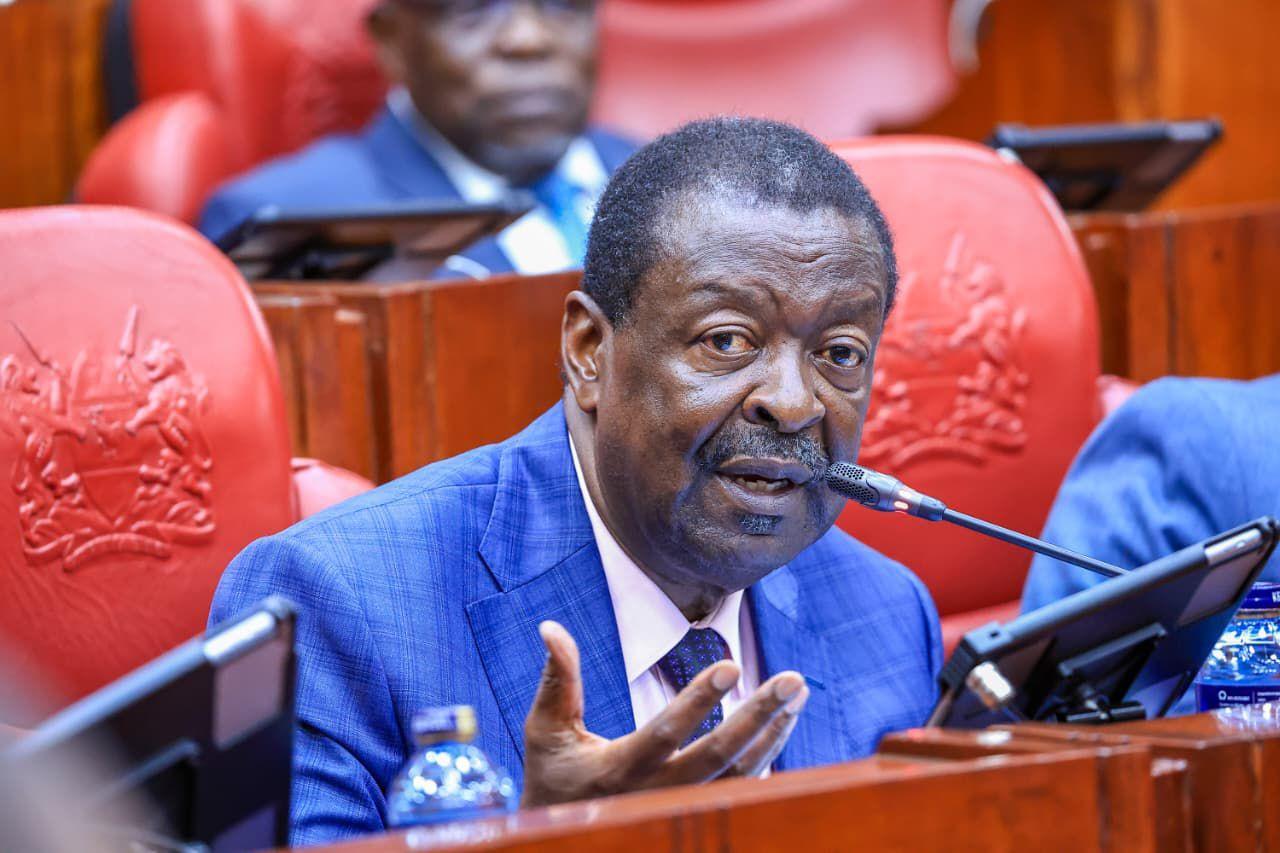
Prime CS Musalia Mudavadi before the Senate Committee on Devolution and Intergovernmental Relations on March 30, 2026./HANDOUTHe described the pact as a critical turning point in how both levels of government collaborate in managing the country’s capital.“This agreement represents a deliberate and structured effort by both levels of government to strengthen collaboration in the delivery of critical services and infrastructure within the Capital City,” Mudavadi told senators.
He said Nairobi occupies a unique position not only within Kenya but across the region and globally.
“Nairobi is far more than an ordinary county. It is the political and economic capital of East Africa, a critical international centre for the United Nations and a hub for diplomatic missions, global organisations and multinational corporations. Its performance therefore carries national, regional and global obligations that no other county bears,” Mudavadi said.
Prime CS Musalia Mudavadi with Nairobi Governor during the signing of the corporation deal/FILEThe Nairobi Rising Programme, a flagship initiative, was formalised on February 27 during the first Joint Steering Committee meeting.The programme commits approximately Sh80 billion toward urban transformation projects across the city.
According to Mudavadi, the scale of investment reflects the urgency and importance of addressing Nairobi’s infrastructure gaps and service delivery inefficiencies.
Citing the latest data from the Kenya National Bureau of Statistics, Mudavadi said Nairobi contributes 27.5 per cent of Kenya’s Gross Value Added and generates more than Sh4.1 trillion annually in economic output.
He argued that improving the city’s functionality would have a direct and significant impact on the national economy.
The cooperation agreement targets several key sectors that have historically faced challenges due to fragmentation between national and county agencies. These include refuse collection and solid waste management, road development and maintenance, non-motorised transport infrastructure, street lighting, market development, housing, water supply and sanitation services.
Mudavadi said these areas would now benefit from coordinated planning and execution.
“The agreement establishes a unified framework for planning and implementation, reducing fragmentation and duplication across agencies,” he said. “It ensures both levels of government work in a synchronised manner to deliver urban services efficiently.”
The prime cabinet secretary pointed to ongoing efforts such as desilting drainage systems and reopening rivers previously blocked by illegal developments as early indicators of the new approach.
Mudavadi further explained that the agreement introduces a two-tier governance structure to oversee implementation.
The Joint Steering Committee, which he chairs, provides strategic oversight and policy direction, while the Implementation Committee, chaired by Sakaja and co-chaired by the Principal Secretary for Housing and Urban Development, is responsible for day-to-day coordination and execution of projects.
“This collaborative architecture ensures continuous alignment between strategy and execution,” Mudavadi said. “It enables both levels of government to reduce duplication, accelerate delivery of priority services, and ensure accountability through continuous progress tracking and resolution of bottlenecks.”
Mudavadi said pooling of resources and joint oversight would help eliminate delays caused by institutional silos that have previously slowed down major projects in the capital.
As a result, key sectors such as roads, housing, waste management, water services and energy infrastructure are expected to see faster delivery timelines and improved quality of services.
Mudavadi revealed that his office has already developed seven white papers outlining commitments, procurement timelines, engagement frameworks with development partners and clear delivery milestones.
These documents, he said, will be used to hold both the national and county governments accountable for results.
“I wish to reiterate that the Cooperation Agreement is a lawful and constitutionally grounded framework that strengthens intergovernmental collaboration without undermining the principles of devolution,” he told the committee. “The government remains committed to ensuring that its implementation results in tangible improvements in service delivery, infrastructure development and overall quality of life within the Capital City.”
The agreement comes amid increasing pressure to address Nairobi’s rapid urbanisation, congestion, waste management challenges and strained public services.
With both levels of government now working under a unified framework, expectations are high that the initiative will mark a new chapter in the management and transformation of the city.
Mudavadi reiterated that the Cooperation Agreement is a lawful and constitutionally grounded framework that strengthens intergovernmental collaboration without undermining the principles of devolution.
“The government remains committed to ensuring that its implementation results in tangible improvements in service delivery, infrastructure development, and overall quality of life within the capital city,” he said.
The Sh80 billion package outlines a wide range of priority projects aimed at improving service delivery across the capital. Key allocations include Sh3.7 billion for the installation of approximately 50,000 street lights, Sh1.5 billion for electricity connections in informal settlements, and Sh3.3 billion for settlement upgrading through prepaid metering, transformers, and lighting.
The plan also sets aside Sh2.1 billion to boost water supply in areas such as Ng’ethu, Gigiri, and Shauri Moyo, alongside Sh33 billion for major sanitation and sewer infrastructure, including expansion works and a new treatment plant. Further investments include Sh8.7 billion for roads, bridges, and drainage improvements, and Sh6 billion for enhanced solid waste management systems.
A major highlight is the Sh50 billion earmarked for the Nairobi River regeneration programme, targeting the restoration of the river corridor and surrounding infrastructure. In addition, plans are underway to enhance urban security, with the establishment of a Nairobi Metropolitan Police Unit expected within 60 days.
Nairobi, as the capital of Kenya, plays a pivotal role in the country’s political and economic landscape. It serves as a hub for international organizations and diplomatic missions, making its governance and infrastructure critical not only for Kenya but for the East African region. The cooperation agreement between the national government and Nairobi City County aims to address the city’s pressing urban challenges, leveraging a significant investment to improve service delivery and infrastructure.