
What You Need to Know
The Kenyan government has revealed that over 250 nationals may be enlisted in Russian military operations, with concerns raised about missing individuals and exploitative recruitment practices. Prime Cabinet Secretary Musalia Mudavadi provided details during a Senate committee meeting, emphasizing the need for transparency and ongoing investigations to protect Kenyans abroad.
Africa-Press – Kenya. The Ministry of Foreign and Diaspora Affairs has said that over 250 Kenyan nationals may have been enlisted in Russian Special Military Operations, with some reported missing or detained abroad.
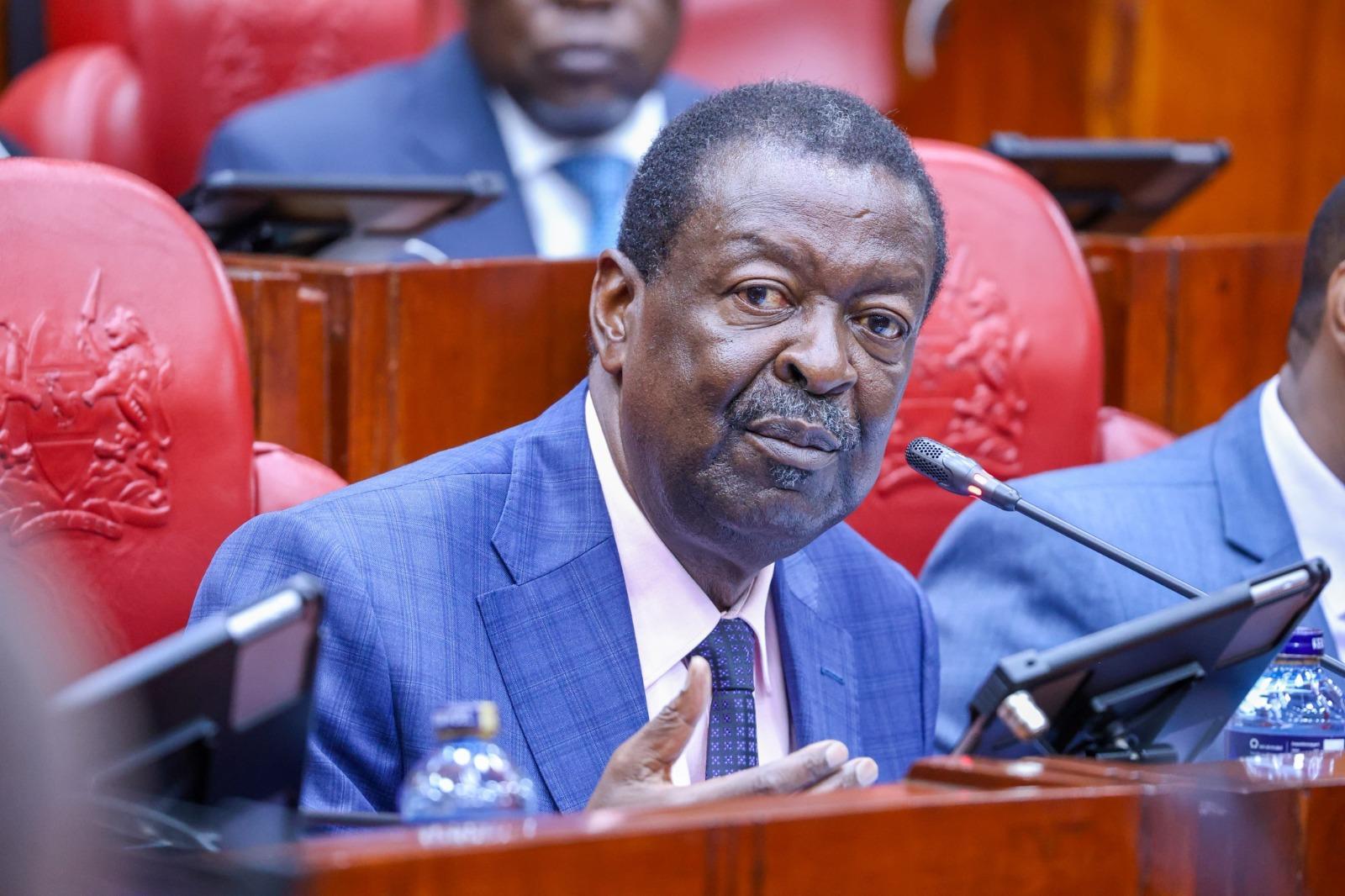
The disclosure was made by Prime Cabinet Secretary Musalia Mudavadi, during a Thursday appearance before the Senate Standing Committee on National Security, Defence and Foreign Relations.
Addressing concerns over exploitative recruitment practices, Mudavadi said 16 Kenyans have been reported missing in action, 38 are currently in various Russian hospitals under restricted access, leaving an estimated 165 actively involved in the Special Military Operations.
He added that, so far, forty-seven Kenyans have been rescued and safely repatriated with support from the Kenyan Embassy in Moscow.
The Cabinet Secretary noted that two Kenyan nationals are being held by Ukrainian authorities as prisoners of war.
While the Ministry’s records indicate that 252 Kenyans may have been enlisted in Russian operations, Mudavadi said the actual number could be higher.
“Contrary to prevailing reports, the majority of Kenyans enlisted in the Special Military Operations of Russia with full knowledge and willingly,” Mudavadi told the committee.
He explained that recruits signed valid contracts to serve either as logistics officers or in combat roles.
“The lucrative compensation ranging from Sh1.5 to 3 million upon joining, and a monthly salary of Sh50,000 to Sh350,000, promise of citizenship and hefty gratuity upon completion of the contract, have been a major motivation,” he said.
Some recruits, he noted, even joked about the risks, saying “kukufa ni dakika moja,” signalling awareness of the dangers involved.
The Cabinet Secretary provided context on the recruitment process, indicating that unregistered agencies and individuals in Kenya, Russia, and countries such as Qatar and the United Arab Emirates have been involved.
He said these operators often exploit tourist visas and transit routes to bypass security at major entry points.
The recruitment, Mudavadi added, mainly targets ex-security personnel and unemployed individuals, though some Kenyans working in security jobs in the Middle East have voluntarily joined Russian operations amid regional instability.
Beyond military recruits, Mudavadi reported that over 1,000 Kenyan nationals are living, studying, or working in Russia. This includes approximately 300 students and 450 people engaged in various economic sectors. He highlighted the vast geography of Russia, noting that some frontline areas are 450 to 500 kilometres from Moscow, with others as far as 800 kilometres.
On the investigations into deceptive recruitment, the Cabinet Secretary said the Directorate of Criminal Investigations (DCI) leads the probe, supported by the National Intelligence Service, the Office of the Director of Public Prosecutions (ODPP), and the Ministry of Foreign and Diaspora Affairs.
The Senate committee had sought clarity on both the scale of the issue and the steps being taken to protect Kenyans abroad. Mudavadi reassured lawmakers that the Ministry continues to monitor developments closely, working to ensure the safety of nationals and prevent further exploitative recruitment.
He concluded by emphasising the Ministry’s commitment to transparency and accountability in handling the matter, stating that the situation remains under active investigation and that efforts are ongoing to safeguard Kenyan citizens in foreign jurisdictions.
Kenya has a complex history with foreign military engagements, often influenced by economic factors and regional instability. The recruitment of Kenyans into foreign military operations, particularly in conflict zones, raises significant concerns about the safety and welfare of these individuals. The Kenyan government has previously faced challenges in monitoring and regulating such enlistments, leading to calls for stricter oversight and protective measures for its citizens abroad. Recent developments highlight the need for enhanced cooperation between government agencies to address these issues effectively.