Africa-Press – Mauritius. A shortage of qualified human resources remains a major obstacle in the implementation of projects in the energy sector, particularly in the field of energy efficiency, according to expert studies and recent work carried out by consultants from the United Nations Environment Programme (UNEP).
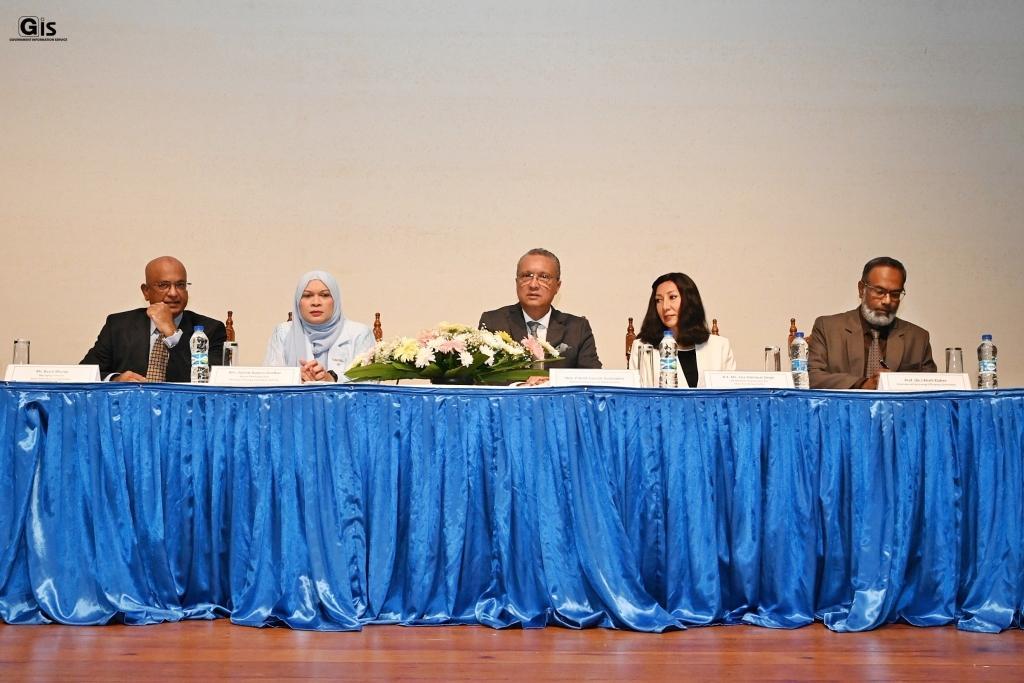
The issue was highlighted by the Minister of Energy and Public Utilities, Mr Patrick Gervais Assirvaden, at the opening of a one-day education and job fair for energy titled “A Conference and Exhibition for Energy Services and Energy Efficiency”.
The event was organised by the Ministry of Energy and Public Utilities and the Energy Efficiency Management Office, in collaboration with the UNEP Copenhagen Climate Centre and the University of Mauritius, at the Paul Octave Wiéhé Auditorium in Réduit.
Among those present were the United Nations Resident Coordinator for Mauritius and Seychelles, Ms Lisa Simrique Singh, and the Chairman of the Energy Efficiency Committee, Professor Khalil Elahee.
The aim is to inform students about education and employment opportunities in the energy and energy efficiency sectors, while also providing a platform for engagement with professionals regarding careers, collaboration and potential investment opportunities.
In his address, the Minister stressed that energy efficiency will be instrumental in achieving development, sustainability and energy security objectives.
He urged young people to consider energy efficiency as a niche sector capable of supporting the main pillars of the economy and potentially emerging as a strategic sector in its own right.
The Minister also outlined Government’s vision for the energy sector, emphasising the need not only to increase the share of renewable energy but also to shift towards a managed grid saturation supported by storage solutions, flexibility and energy efficiency.
Referring to the concept of “negawatts”, or unused energy, he pointed out that the target should no longer solely be about production, but about managing abundance.
The Minister cited Australia’s public policy approach as an example, noting the large-scale deployment of solar and wind energy, which at times supplies more than 70% of national demand.
According to him measures such as free electricity during certain hours, targeted financial incentives and innovative mechanisms to manage household solar injections have been introduced to address electricity oversupply.
Calling on public institutions to intensify their efforts, Mr Assirvaden expressed concern over the performance of the Central Electricity Board in the development of renewable energy, particularly regarding delays in project implementation.
He urged the Board to accelerate ongoing renewable energy projects, specifically mentioning the floating solar panel project at Tamarind Falls, with a proposed capacity of between 17.5 and 20 megawatts.