What You Need to Know
The military in Guinea-Bissau has justified its recent coup, stating it was necessary to avoid bloodshed during a politically turbulent time. The coup occurred just before the announcement of election results, leading to the ousting of President Umaro Sissoco Embaló.
Africa. The military authority in Guinea-Bissau stated that it executed its coup about a month ago “to avoid bloodshed,” while the country, often shaken by political unrest, awaited election results.
On November 26, the eve of the anticipated announcement of the preliminary results of the presidential and legislative elections in Portuguese-speaking Guinea-Bissau, located in West Africa, military personnel ousted the outgoing President Umaro Sissoco Embaló, who had been in power since 2020.
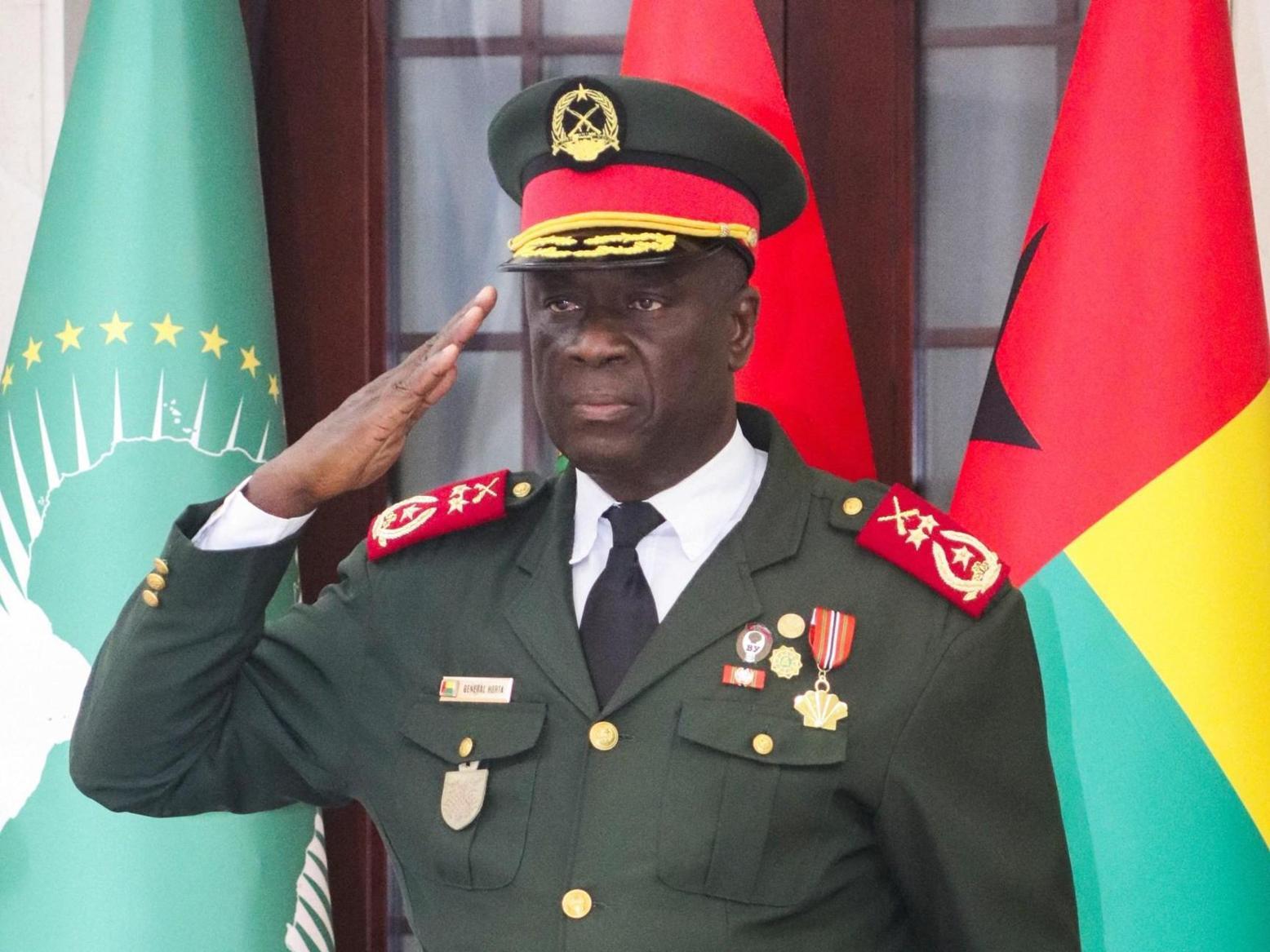
The military appointed General Horta N’Tam, a close ally of Embaló, as the head of a transitional government expected to last one year.
In a statement on Friday evening, N’Tam said the coup allowed for “avoiding bloodshed among supporters of competing parties,” rejecting claims that the coup halted the electoral process.
The head of the military council added that “the current electoral model has not been effective in resolving political and military crises in Guinea-Bissau,” emphasizing that “elections are not a solution.”
At the time of the coup, both the camp of the outgoing President Umaro Sissoco Embaló and his opposition rival Fernando Dias de Costa were publicly claiming victory.
This coup marks the fifth in Guinea-Bissau since its independence from Portugal in 1974. The country has been plagued by political crises and several coup attempts.
Last week, the Economic Community of West African States threatened to impose “targeted sanctions” on any party attempting to prevent the return of civilian rule in Guinea-Bissau.
A delegation of chiefs of staff from the bloc is expected to visit Guinea-Bissau on Sunday.
ECOWAS intervened militarily two weeks ago in an attempted coup in Benin.
The bloc has witnessed a series of military coups between 2020 and 2023 in Burkina Faso, Guinea, Mali, and Niger, countries that remain under military rule.
Guinea-Bissau has a history of political instability since gaining independence from Portugal in 1974, marked by multiple coups and crises. The country has experienced five coups, with the most recent occurring amid tensions surrounding presidential and legislative elections, reflecting ongoing struggles within its political landscape.
The Economic Community of West African States (ECOWAS) has been involved in addressing the political turmoil in the region, recently threatening targeted sanctions against those obstructing the return to civilian rule in Guinea-Bissau.