What You Need to Know
The recent U.S. military strikes in Nigeria, ordered by President Trump, targeted ISIS militants in response to alleged persecution of Christians. The strikes, which involved Tomahawk missiles launched from a Navy ship, have sparked controversy over the portrayal of the conflict as a religious persecution issue.
Africa. International newspapers reviewed the details of the U.S. military strikes that targeted ISIS in northwestern Nigeria, and the reality of how the attack relates to the issue of persecuting Christians.
The strikes came after weeks of U.S. President Donald Trump threatening the Nigerian government with direct military action if what he described as the “killing of Christians” by armed Islamist groups did not stop.
Trump wrote on his Truth Social platform: “The United States launched a powerful and deadly strike against the scum of ISIS terrorists in northwestern Nigeria, who targeted and killed innocent Christians at levels we haven’t seen in many long years—indeed, even centuries!”
By contrast, Nigeria’s official position maintains that the conflict—which has claimed Christian and Muslim victims alike—is driven by multiple armed groups with different motives, and that reducing it to a framework of “religious persecution” of one side misunderstands the crisis.
1- What are the details of the strike?
A military source told The New York Times that the strike was carried out using a U.S. Navy ship in the Gulf of Guinea, which launched more than 12 Tomahawk cruise missiles and hit two ISIS training camps in Sokoto State in northwestern Nigeria.
The military official—speaking on condition of anonymity—added that the operation was coordinated with the Nigerian army.
Sokoto lies on Nigeria’s border with Niger, and an ISIS affiliate operates there known as the “ISIS Sahel branch” or “Lakurawa,” which attacks government forces and civilians alike, according to The New York Times, citing counterterrorism analyst Caleb Weiss.
An initial assessment by U.S. Africa Command (AFRICOM) concluded that “many ISIS terrorists” were killed, according to The New York Times.
According to The Washington Post, armed groups in Nigeria include two factions linked to ISIS, as follows:
– the “ISIS Sahel branch” or “Lakurawa,” based in the northwest of the country;
– the “Islamic State West Africa” faction that split from Boko Haram, active in the northeast of the country.
The U.S. newspaper quoted security analysts as saying the branch most likely targeted was “Lakurawa,” which became more active after the 2023 military coup in Niger.
2- Why did Trump attack Nigeria?
The British newspaper The Guardian highlighted the political dimension of the strikes, arguing that targeting Nigeria came amid a growing narrative within the American right that has for years promoted the idea that Christians face systematic persecution in Nigeria.
This narrative has been amplified by Republican politicians, including Senator Ted Cruz, who called for action against Nigerian officials for “being lenient toward violence against Christians.”
Nigerian authorities rejected Washington’s accusations that Christians were facing genocide.
The paper noted that the “persecution of Christians” file is an important tool for mobilizing Trump’s base—especially evangelicals—which contributed to escalating pressure on the administration to take military steps.
While AFRICOM commander General Dagvin Anderson said the strike’s goal was “to attack extremist organizations,” the U.S. outlet The Intercept stressed the need for caution and for assessing the strikes’ impact on civilians, given Washington’s long record of civilian deaths in similar military operations.
The outlet pointed out that the U.S. military declined to provide details about the number of civilian or militant casualties from the strike, citing the need to “preserve operational security.”
In the same context, the report recalled previous incidents in which civilians were killed during Nigerian airstrikes carried out with U.S. support, including the bombing of a displaced persons’ camp in 2017 that killed more than 160 civilians, including children.
3- How did Nigeria respond?
Nigerian authorities rejected Washington’s claims of genocide against Christians, stating that the network of violent armed groups—driven by differing motives and spread across the country—kills similar numbers of Muslims and Christians, according to The Guardian.
Nigerian President Bola Ahmed Tinubu emphasized that Nigeria is a democratic country governed by constitutional guarantees that ensure freedom of religion.
He added that portraying Nigeria as “religiously intolerant” does not reflect reality, pointing to the government’s efforts to protect all Nigerians regardless of their affiliations, according to the British newspaper’s report.
Nigeria’s foreign ministry expressed cooperation with the United States, stating: “We confirm that we remain engaged with the United States in structured security cooperation.”
4- What does the conflict map look like?
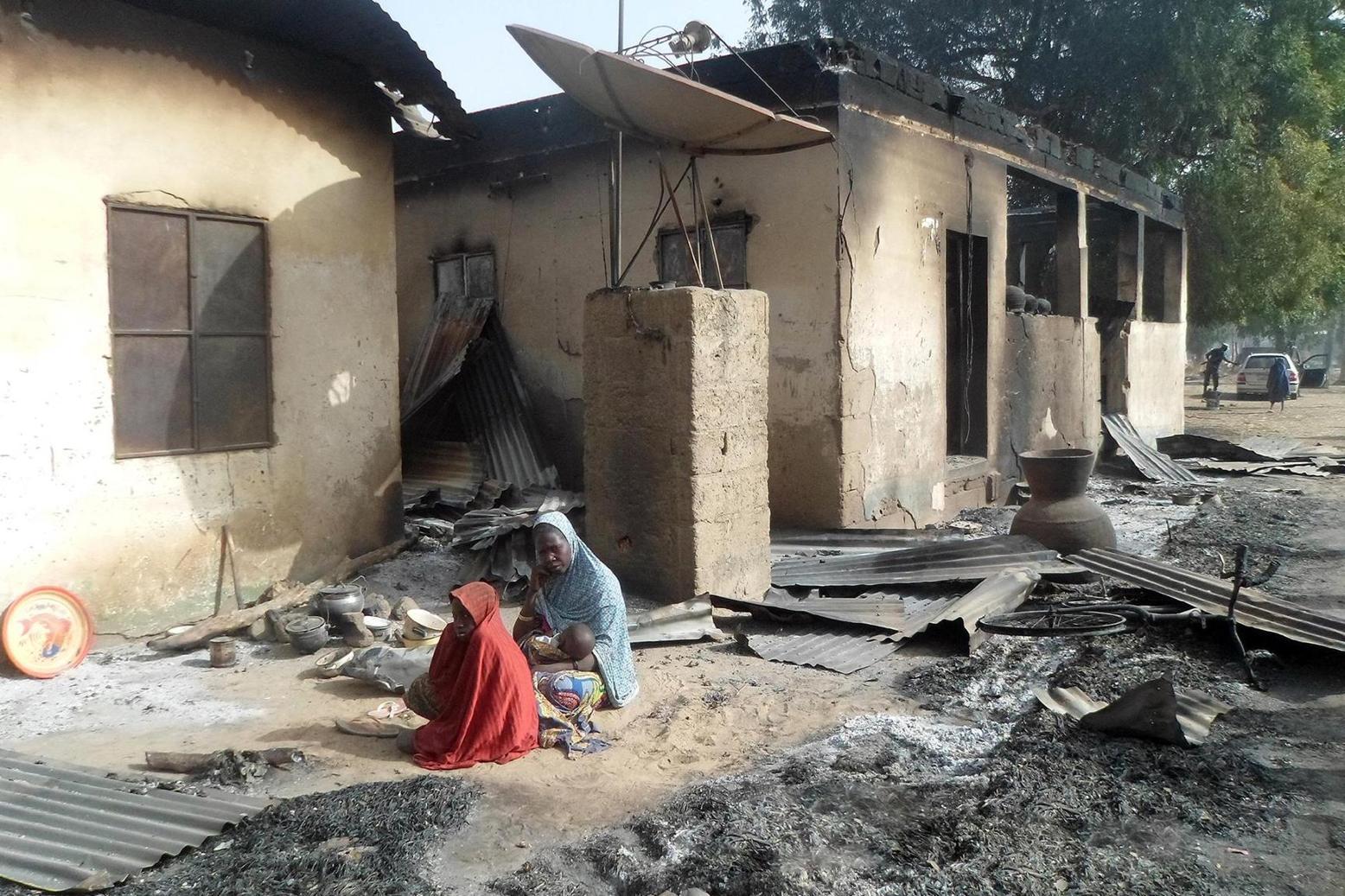
Press analyses indicate that violence in Nigeria is not only a religious conflict; it also involves extremist armed groups with different objectives, as well as competition over basic resources driven by poverty and a weak economy.
In Sokoto State—where the strikes were carried out—violence is fueled by gunmen and criminal gangs engaged in kidnappings for ransom, harming Muslim and Christian communities alike, according to The Guardian.
Nigeria has faced a sustained armed insurgency for more than a decade, concentrated in the country’s northeast, where groups such as Boko Haram and the “Islamic State in West Africa” have killed tens of thousands of Muslim and Christian civilians over the past decade, according to another New York Times report.
Although Nigeria is not officially at war, its death toll exceeds the number of victims in most countries experiencing armed conflict.
According to what The New York Times reported, citing the Armed Conflict Location & Event Data Project (ACLED), armed groups in Nigeria have killed more than 12,000 people in Nigeria this year alone.
The New York Times said U.S. military officials expressed doubts—while preparing the strike plan last November—about the effectiveness of the attack given the deeply entrenched nature of the conflict in the region.
5- Are Christians really being targeted?
The Guardian noted that Nigeria is officially secular, with Muslims (53%) and Christians (45%) sharing the population, while the remainder follow local beliefs.
Central Nigeria—according to The Guardian—has seen repeated bloody clashes between Muslim herders, particularly Fulani, and Christian farmers, in a conflict fueled by resource scarcity and Nigeria’s massive population growth in recent years.
In the newspaper’s view, violence is often driven by economic and social interests. This is reflected in the fact that herder–farmer disputes are typically over land and water, and that kidnappings of clergy—taken by some as evidence that Christians are persecuted—are often carried out for financial ransom.
Observers have expressed concern that the strikes could inflame religious tensions in Africa’s most populous country, which has previously suffered waves of sectarian violence—especially since the U.S. administration has not provided evidence to support its claims that Christians are being systematically targeted.
6- How did Nigerians react?
Business Insider Africa added that the strike triggered sharp reactions inside Nigeria, reflecting a clear divide over the role of foreign military intervention and its implications for national sovereignty.
Prominent Nigerian cleric Ahmad Gumi called, via his Facebook page, on the Nigerian government to halt all forms of military cooperation with the United States.
He warned that U.S. intervention could complicate the security crisis rather than resolve it, arguing that “terrorists do not fight terrorists,” and that such operations often result in civilian casualties and conceal political agendas.
Nigerian activists and human-rights advocates warned against portraying the operation as a humanitarian intervention, stressing that violence in the country targets Muslims and Christians alike.
On social media, opinions were sharply divided, according to the outlet. In the United States, some pro-Trump commentators praised the strike and saw it as fulfilling his pledge to protect Christians.
Some commentators in northern Nigeria also defended the strike, saying that targeting ISIS does not amount to an attack on Islam, but rather strikes groups that have also killed large numbers of Muslims.
By contrast, Nigerian activists and human-rights advocates cautioned against framing the operation as humanitarian, emphasizing again that violence in the country affects Muslims and Christians equally.
The outlet reported concerns among Nigerian commentators that the strike could open the door to broader escalation and a permanent foreign military presence in the country, threatening national sovereignty.
Nigeria has been grappling with violence from various armed groups for over a decade, with conflicts often framed as religious but rooted in deeper socio-economic issues. The rise of groups like Boko Haram and the Islamic State in West Africa has led to significant casualties among both Muslim and Christian communities, complicating the narrative of religious persecution.
The U.S. has been involved in military operations in Nigeria, often citing the need to combat terrorism. However, these interventions have raised concerns about civilian casualties and the effectiveness of military solutions in addressing the underlying causes of violence, such as poverty and political instability.