What You Need to Know
US President Donald Trump announced military strikes against ISIS fighters in Sokoto, Nigeria. This article explores the geographical and demographic characteristics of the region, the presence of armed groups, and the historical context of Islam in the area, highlighting the challenges faced by local communities amid rising violence and insecurity.
Africa. US President Donald Trump announced in a post on “Truth Social” that his forces launched a “strong and deadly strike against ISIS fighters in the Sokoto region of northwestern Nigeria.
The following report highlights key information to understand the nature of the area and its inhabitants, as well as the ongoing situation.
What is the nature of the region geographically and demographically?
Northwestern Nigeria is home to a large number of rural communities with wide ethnic and linguistic diversity, encompassing the states of Sokoto, Zamfara, Katsina, Kaduna, and Niger.
The total area of these states is approximately 206,000 square kilometers, which represents 22.5% of Nigeria’s total area of 911,500 square kilometers.
This region is estimated to have around 34.5 million inhabitants as of 2024, accounting for a small percentage of 14.4% of Nigeria’s total population of approximately 240 million.
The area suffers from widespread poverty and a lack of essential services due to the weak presence of the state, which has, in turn, facilitated the spread of criminal organizations. As a result, residents remain reliant on tribal and ethnic ties, with the Hausa and Fulani being the most prominent ethnic groups in the region.
The majority of the population has been Muslim for centuries, having previously established Islamic kingdoms and sultanates that played a significant role in spreading Islamic civilization in this part of Africa, notably the Sokoto Caliphate.
What armed groups are present in the region?
In these states, there are groups of bandits, which are criminal organizations that engage in robbery and kidnapping for ransom or cattle theft. Security agencies refer to them as “armed gangs,” with an estimated number of around 30,000 individuals, although they do not have a hierarchical organization.
In November 2021, the government classified these groups as “terrorist organizations,” which entails penalties under anti-terrorism laws for those suspected of belonging to these groups, their collaborators, and supporters, such as those caught transporting weapons, fuel, or food to these groups.
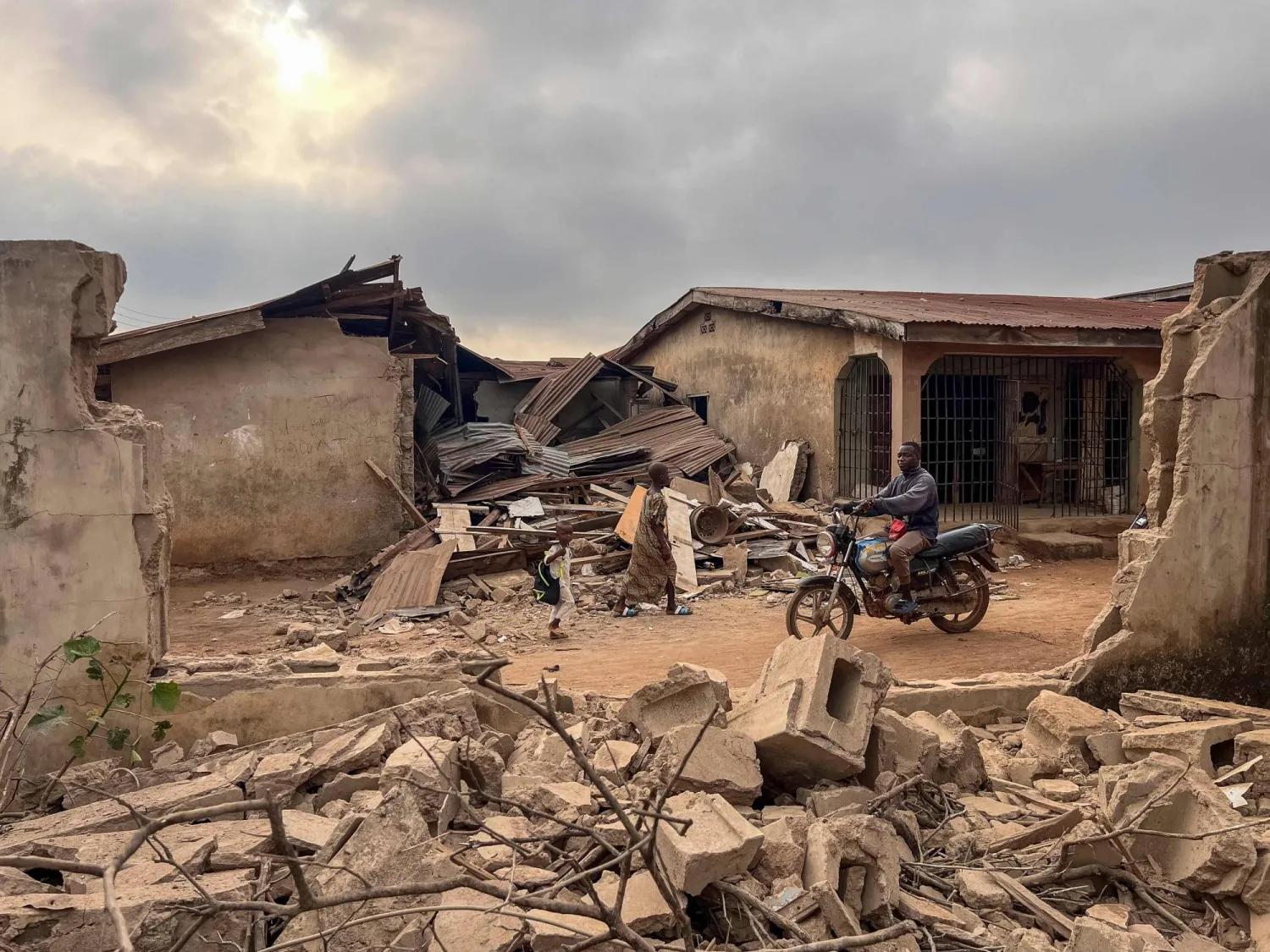
The activities of these groups have caused widespread displacement of residents from villages and rural areas to cities and shelters, with an estimated 1.1 million displaced individuals. The violence from these gangs has resulted in 1,348 reported killings according to statistics covering the period from 2010 to May 2023.
According to available data, the vast majority of the population in these areas are currently Muslims, who are the most affected by violence alongside the rest of the local population, while the Christian minority resides in southern Nigeria.
What is the relationship between these groups and ISIS?
Although the Nigerian government and the United States announced strikes in Sokoto against ISIS in the region, ISIS has not claimed any presence or operations in northwestern Nigeria specifically.
However, ISIS has a clear presence in Nigeria, beginning with the pledge of allegiance by Boko Haram leader Abubakar Shekau to ISIS leader Abu Bakr al-Baghdadi, before later announcing his split from the group.
The organization is also active in Niger, Mali, and Burkina Faso, which are neighboring countries not far from Nigeria’s northwestern borders.
Northwestern Nigeria is home to diverse rural communities with significant ethnic and linguistic diversity, including the Hausa and Fulani groups. The region has a long history of Islamic influence, having established notable kingdoms and sultanates that contributed to the spread of Islamic civilization in West Africa, particularly the Sokoto Caliphate.
In recent years, the area has faced increasing violence from armed groups, leading to widespread displacement. The Nigerian government has classified these groups as terrorist organizations, resulting in severe humanitarian crises as communities struggle with poverty and insecurity, exacerbated by the weak presence of the state.